
2024 new Toyota 4Runner Unleash Your Off-Road Power with 270 Horses

Toyota enthusiasts, get ready to embrace the latest and greatest in off-road adventure with the upcoming release of the 2024 Toyota 4Runner. On October 3, 2023, Toyota North America officially unveiled the 2024 model, and it promises to be a game-changer in the world of mid-size SUVs.
The 4Runner, a vehicle with a rich heritage dating back to its introduction in 1984, has been a beloved choice for those seeking rugged capability and dependable performance. In Japan, this iconic SUV was known as the “Hilux Surf” up to the fourth generation. The 2024 4Runner represents the fifth generation and is packed with exciting updates.
Design and Features:
The 4Runner’s design has always been associated with toughness, and this latest iteration doesn’t disappoint. The 4Runner boasts a sturdy frame structure and a 4-link coil rear suspension with lateral rods and stabilizer bar, delivering excellent off-road capability.
For the 2024 model year, Toyota has introduced new colors and enhanced safety equipment. The 4Runner now comes in a variety of stylish color options to suit different tastes, making it not only a capable off-roader but a head-turner on the streets as well.
Performance:
Under the hood, you’ll find a powerful 4.0-liter V-6 engine, churning out an impressive 270 horsepower and 278 lb-ft of torque. This engine is mated to a 5-speed automatic transmission, offering smooth and responsive power delivery. The drive system is versatile, offering part-time 4WD, rear-wheel drive (FR), and full-time 4WD on certain grades, ensuring you can tackle various terrains with ease.
The 4Runner features advanced technologies like the Kinetic Dynamic Suspension System (KDSS), Crawl Control (CRAWL), and Active Traction Control (A-TRAC). These systems enhance both on-road and off-road performance, ensuring that the 4Runner is ready for any adventure you throw at it.
Safety:
Safety is a top priority for Toyota, and the 2024 4Runner is no exception. All trim levels come standard with Toyota Safety Sense P, which includes essential features like emergency braking with pedestrian detection, lane departure warning with sway warning, rear cross-traffic alert, blind spot warning, and a monitor. These features provide peace of mind and protection for both the driver and passengers.
Special TRD Pro Model:
For those who crave the ultimate off-road experience, the 4Runner offers a “TRD Pro” grade. This special model comes with a unique exterior design and a special suspension tuned for rough terrain. The “TRD Pro” grade also introduces a striking new dark orange color called “Terra,” which is exclusive to Toyota’s off-road lineup in North America. Additionally, the “Underground” color option is available for other trim levels.
Pricing:
While the official pricing for the 2024 4Runner has yet to be announced as of October 4, 2023, it’s worth noting that the 2023 models range from $40,155 to $54,620. With the new features and updates introduced in the 2024 model, it’s expected to offer exceptional value for the adventurous at heart.
The 2024 Toyota 4Runner is set to continue its legacy of adventure, durability, and style. Stay tuned for further updates on pricing and availability as the official release date approaches. If you’re in the market for a versatile and rugged SUV, the 4Runner should be at the top of your list.
Toyota Estima: Once Revolutionary Minivan, Now Faces Dark Clouds with 90% Sales Plunge!

The Mysterious Disappearance of Toyota’s “Original Luxury Minivan” – The Story of the Estima
Toyota, a renowned automaker known for its innovation, has seen numerous successes in the automobile industry. However, amidst its triumphs, there lies a tale of a beloved minivan that eventually faded into oblivion – the Toyota Estima. The Estima, considered the original luxury minivan, once captured the hearts of drivers with its unique design and spacious interior. So, what led to the disappearance of this pioneering vehicle from the market?
In 1990, Toyota unleashed the first-generation Estima, a bold departure from traditional minivans. Instead, it presented itself as a “new luxury car” with its strikingly smooth and rounded egg-shaped body. Nicknamed the “genius egg,” the Estima stood out due to its rare underfloor midship layout. This innovative design placed the engine sideways at a 75-degree angle, while the front tires were positioned in front of the driver’s seat. As a result, the midship layout achieved an impressively spacious interior, a comfortable ride, and remarkable quietness, elevating the minivan experience to unprecedented heights.
Despite its higher price point, around 3 million yen at the time, the first-generation Estima garnered immense popularity and quickly became one of Japan’s representative minivans. Building on its success, Toyota introduced the Estima Lucida/Emina in 1992. These models, smaller in size, became known as the “child Estima” due to their affordability, priced approximately 1 million yen cheaper than the original Estima. The Lucida and Emina achieved significant success, further solidifying the Estima’s position as a standard minivan model.
With the turn of the millennium, Toyota embarked on a full model change for the Estima, giving rise to the second-generation Estima in 2000. The company also introduced the “Estima Hybrid,” equipped with a cutting-edge hybrid system, offering both powerful acceleration and improved fuel consumption. The future looked bright for the Estima, and its popularity seemed destined to soar.
However, dark clouds began to gather over the Estima’s fate when Toyota introduced another upscale minivan under the same brand in 2002 – the “Alphard.” Based on the second-generation Estima’s framework, the Alphard boasted a larger body and a luxurious, spacious interior. It featured a more “powerful” design, clearly distinguishing it from the Estima’s gentle-looking front mask. Despite the competition, many loyal Estima fans persisted, but a crucial turning point was approaching for both models.
In 2006, Toyota launched the third-generation Estima and followed up with the second-generation Alphard in 2008. The Alphard’s “stiff” front mask appealed to a broad audience, leading to an increase in sales. On the other hand, the Estima’s reasonable pricing made it challenging to compete with the Alphard and Vellfire, and the number of Estima sales began to decline significantly. By the first half of 2019, the monthly average of registered Estima units plummeted to a mere 791, representing less than 10% of the combined Alphard and Vellfire sales.
As the shadows grew darker, the Estima’s role came to an end in October 2019, and the vehicle disappeared from the market without undergoing a model change. Though the Estima had once carved its name in automotive history, the shifting landscape of the automobile industry played a significant role in its fate.
Fast forward to 2023, Toyota continues to innovate, releasing the new luxury minivans “Alphard” and “Vellfire,” along with the upcoming “LM” under the Lexus brand. These new offerings are replete with luxurious exteriors, powerful engines, and opulent interiors, capturing the attention of automotive enthusiasts.
While the Estima may have vanished from the scene, the automotive landscape has changed dramatically, providing potential opportunities for new and improved models. As the market evolves, who knows if a modern, high-tech reincarnation of the “original luxury minivan” may find its way back into the hearts of drivers once more, solidifying its place as an upper-class minivan for the ages. Only time will tell what Toyota has in store for its minivan lineup.
Revolutionary Toyota bZ3 Sedan Impresses with 616 km Range – A Game-Changer
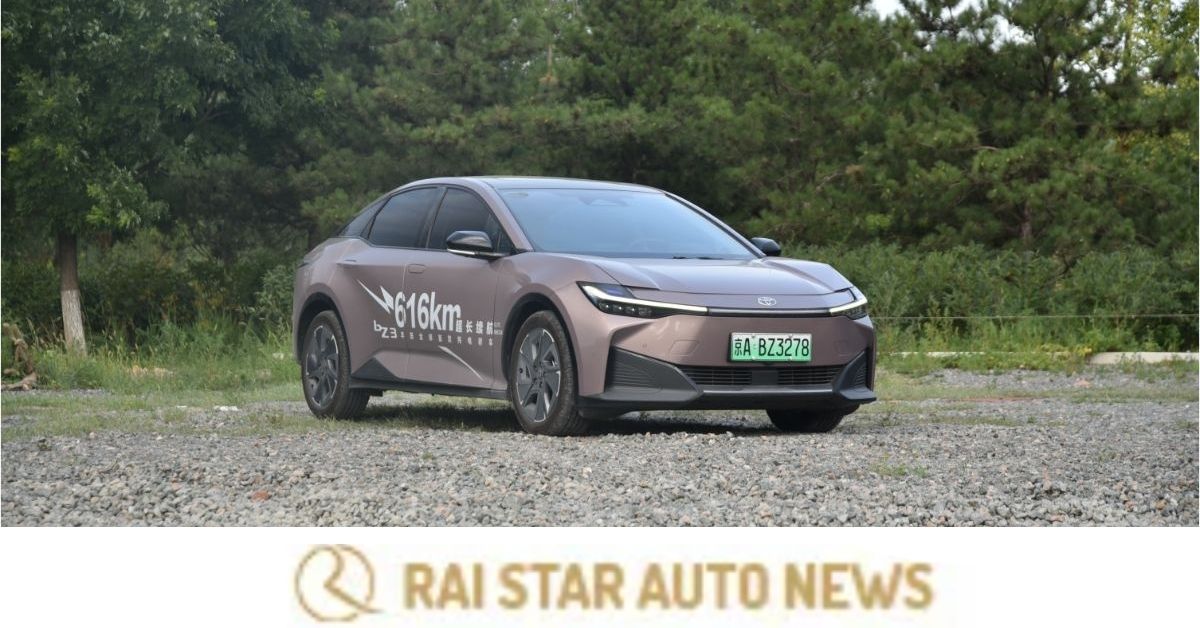
Toyota, the renowned Japanese automotive manufacturer, has introduced its latest addition to the battery electric vehicle (BEV) series, the “bZ3” sedan. This model marks the second installment in the “bZ” series, following the “bZ4X” released in Japan. However, the bZ3 carries a unique distinction as it was exclusively developed for the Chinese market. Let’s delve into the exciting features that make this collaboration between Toyota and BYD a noteworthy venture.
The bZ3 is the fruit of an extraordinary collaboration between Toyota and BYD, a major electric vehicle manufacturer in China. Notably, the joint venture between the two companies, known as BYD TOYOTA EV TECHNOLOGY (BTET), takes the lead in the creation of this sedan-type BEV. The model’s battery, a lithium-ion iron phosphate battery, is produced by Fudi Battery, a part of the BYD Group. However, it is crucial to clarify that BYD is solely responsible for the battery peripherals, while Toyota handles the essential aspects of basic body design and driving performance. Moreover, the manufacturing is carried out by FAW Toyota, a joint venture between Toyota and FAW, further cementing the collaborative effort behind this innovative BEV.
The bZ3 boasts a body size of 4725mm in length, 1835mm in width, and 1475mm in height, with a wheelbase measuring 2880mm. This puts the model’s dimensions between the popular Toyota models “Prius” and “Camry.” The vehicle is available in two battery capacities: a 49.92 kWh version with a range of 517 km (CLTC method) and a larger 65.28 kWh variant offering a cruising range of 616 km. The front-wheel-drive system powers the bZ3, with two motor options depending on the grade – 181 horsepower for the former and 241 horsepower for the latter.
Toyota has embraced a trendy coupe-style design for the bZ3, with aerodynamic elements infused throughout its exterior, contributing to an impressive Cd value of 0.218. Moving inside, the interior exudes a sense of specialness rarely seen in Japanese cars. Centered around an 8-inch vertical display, the interior design surrounds the selector and storage tray. The dashboard is elegantly simple, adorned with rose gold accents, emanating an aura of sophistication. The bZ3’s operation layout may differ from traditional vehicles, with a button-based turn signal on the handle and paddle shifts serving functions other than regeneration adjustments, yet it remains intuitive and easy to use after a brief acclimation period.
In the Chinese market, the bZ3 is available in three grades, with the entry-level 49.92 kWh model priced at 169,800 yuan (approximately 3,282,000 yen), the intermediate 65.28 kWh model at 189,800 yuan (approximately 3,668,000 yen), and the higher-grade 65.28 kWh model at 199,800 yuan (approximately 3,862,000 yen). Notably, considering the content, the pricing is highly competitive, and Toyota’s presence in China’s burgeoning electric vehicle market is evident as the bZ3 secured a respectable 12th position in new car sales rankings in June 2023, encompassing both gasoline and electric vehicles.
With the success of the bZ3, Toyota is committed to further expanding its BEV lineup exclusively tailored for the Chinese market. The company unveiled exciting concept cars at the Shanghai Motor Show in April 2023, such as the “bZ Sport Crossover Concept” and “bZ FlexSpace Concept,” with the former developed in collaboration with BYD. With China at the forefront of electrification, Toyota’s active development of various types of electric vehicles, including hybrids, plug-in hybrids, and fuel cell electric vehicles, is poised to solidify the company’s presence and impact in this dynamic market.
In conclusion, Toyota’s “bZ3” sedan marks a remarkable achievement as a product of collaboration with BYD, showcasing a blend of cutting-edge technology, sleek design, and futuristic features. As Toyota continues to expand its BEV lineup in China, the company’s contribution to the advancement of electric mobility in the region is set to grow even further.
Exciting Toyota Fortuner Unveiled at Gunma Parts Show 2023, Demand Surges among Japanese Car Enthusiasts

Fortuna,” the SUV that made a splash at the recent “Gunma Parts Show 2023,” has become the talk of the town in Japan. The three-day event, held from July 7th to 9th, showcased a range of exclusive automotive innovations, including the coveted Fortuner, a model that has not been officially available in the Japanese market until now.
In recent times, automakers have been catering to the diverse demands of the global market by producing models exclusively for overseas markets. Japanese automakers are no exception to this trend. Although these foreign-market cars boast unique features that would undoubtedly captivate Japanese consumers, they have seldom made their way to the shores of Japan. However, car enthusiasts have found ways to get their hands on these appealing models, resorting to purchasing them through Japanese parallel import car specialty stores.
The Fortuner has been primarily deployed in regions such as Asia, the Middle East, Central and South America, Africa, and Oceania since its inception in 2004 as part of the Innovative International Multi-purpose Vehicle (IMV) project. The first-generation Fortuner, born in 2005, shares its platform with the seventh-generation Hilux, while the second-generation, introduced in 2015, also shares its platform with the current Hilux produced in Thailand.
One of the Fortuner’s distinguishing features is its practicality, designed to accommodate the needs of regions where multi-passenger transport is standard. With three rows of seats, it offers ample space for passengers and cargo alike. The robust ladder frame, suitable for less developed road infrastructures in countries like Thailand and Australia, supports the vehicle’s sturdiness, along with its front double wishbone and rear leaf rigid suspension, setting it apart from the contemporary SUVs in the Japanese lineup.
The Fortuner’s exterior boasts Toyota’s classic “Keen look,” but the side body lines exude a sense of high space utility, offering a distinctive appearance not commonly seen in the Japanese model lineup. Measuring approximately 4795mm in length, 1855mm in width, and 1835mm in height (Thai specification), with a wheelbase of 2750mm, the Fortuner strikes a balance between size and maneuverability.
Under the hood, the Fortuner houses either a 2.4-liter in-line 4-cylinder diesel engine producing around 150 horsepower and 400 Nm of torque, or a 2.8-liter in-line 4-cylinder diesel engine churning out approximately 200 horsepower and 500 Nm of torque. The powertrain options include a 6-speed manual transmission or a 6-speed automatic transmission for the 2.4-liter model, while the 2.8-liter model is available solely with a 6-speed automatic transmission. Some regions also offer the sporty “GR Sports” variant, featuring design enhancements like a black grille with the GR emblem, 20-inch aluminum wheels, and sporty interior touches such as exclusive seats with red stitching and GR emblems.
Enthusiasts who caught a glimpse of the Fortuner at the Gunma Parts Show 2023 were thoroughly impressed, expressing their desire for it to be officially available in Japan. Comparisons were drawn to the Land Cruiser Prado, but the Fortuner’s unique features and affordable size and price have sparked interest among potential Japanese buyers. Many believe that the Fortuner could be considered the long-awaited successor to the Hilux Surf, which was last sold in Japan in 2009. If the Fortuner were to come equipped with features like downhill assist control and an easy-to-use 4×4 switch as standard, it is likely to garner even more attention and interest.
As the exhibition was stated to be for “Japanese market research purposes,” it seems that Toyota is testing the waters to gauge the potential demand for the Fortuner in Japan. If introduced, this ladder frame SUV with its practicality and appeal is expected to resonate with Japanese consumers, and its pricing strategy will be critical in determining its success in the market. As anticipation grows, Japanese car enthusiasts are hopeful that the Fortuner will soon become a permanent fixture on Japanese roads, providing a breath of fresh air to the SUV segment and meeting the needs of adventure-seeking drivers.
Unleash the Mighty Potential: All-New Toyota Vellfire Undergoes Phenomenal Transformation with 20 Custom Parts!

On June 21, 2023, Toyota made a significant impact on the automotive market by launching the highly anticipated full model change of their luxury minivan, the “Vellfire.” This 3rd generation Vellfire comes with a complete design overhaul, boasting a distinct coolness that sets it apart from its predecessors. With various custom parts available, the new Vellfire offers a unique and powerful styling that is sure to captivate discerning drivers.
One of the most striking features of the new Vellfire is the black-based metallic decoration that adds a sense of refinement to its already aggressive stance. The front face has undergone a major transformation, sporting newly designed two-stage headlights that exude an assertive aura. At the rear, a dedicated bumper and stylish tail lamps contribute to the minivan’s luxurious yet sporty look.
Toyota’s renowned customization division, Toyota Customizing & Development (TCD), has outdone itself with the introduction of the Modellista brand and its impressive “BEAST RAZOR” design concept. The Modellista Aero Parts Set, exclusively tailored for the new Vellfire, enhances the vehicle’s aggressive design with sharp-edged plated aero parts. Notable additions include a dynamic and powerful front grille and signature illumination blade with U-shaped plating and blue illumination, creating an advanced and fierce impression.
For those looking for a touch of luxury, the “Cool Shine Kit” is the perfect choice. This kit adds plating accents to various exterior parts, achieving a sophisticated and opulent style that sets the Vellfire apart from other minivans. Additionally, the new Vellfire offers unique accessories, such as a stunning “20-inch aluminum wheel and tire set” and a customizable “multi-color interior illumination” that allows drivers to choose from seven different colors to match their mood.
TOYOTA GAZOO Racing (GR) has also made its mark on the new Vellfire, providing an array of sporty and dynamic “GR” brand aero parts. Under the design concept of “IGNITE SPORT FEEL,” these parts, including the “GR front spoiler,” “GR side skirts,” and “GR rear spoiler,” not only enhance the vehicle’s aerodynamic performance but also contribute to its overall sporty appearance. The “GR dress-up muffler” further elevates the minivan’s power and performance from the rear.
Toyota has taken passenger comfort to new heights by introducing the “Performance Damper.” This innovative technology, previously installed on the chassis, is now placed at the bottom of the rear seats, resulting in improved ride comfort for rear-seat passengers.
The all-new 2023 Vellfire has truly raised the bar for luxury minivans with its remarkable design and performance enhancements. Toyota’s commitment to pushing the boundaries of automotive innovation is evident in every detail of the revamped Vellfire, making it a top contender for drivers seeking a powerful, luxurious, and fiercely stylish ride.
Toyota may announce a new Century SUV later this year

Toyota may announce a new “Century SUV” later this year, as hinted during the unveiling of the new Alphard and Vellfire models. The Century is a luxury chauffeur car, first introduced in 1967 to commemorate the 100th anniversary of Toyota’s founder. The current third-generation Century, launched in 2018, features a luxurious interior and exterior crafted by skilled artisans, including a front emblem of a phoenix that took over a month to carve by hand. While Toyota has not provided any details on the rumored Century SUV, it would mark a significant departure from the traditional sedan design of previous models.
Toyota Customizing & Development has released GR PARTS

Toyota Customizing & Development has released GR PARTS, a line of customized parts under the GR brand, to coincide with the unveiling of the new Alphard and Vellfire, Toyota’s luxury minivan models. The aero parts are only available for the Vellfire and are based on the “IGNITE SPORT FEEL” design concept. The set of front spoiler, side skirts, rear bumper spoiler, and dress-up muffler costs 423,500 yen (tax included, pre-painted). A new “interior” version of the “performance damper” is also available to improve the ride comfort of the rear seats. A GR sports side visor and a set of GR 20-inch cast aluminum wheels and tires are also available.
Toyota has unveiled the new Vellfire minivan, which has been completely redesigned after 8 years

Toyota has unveiled the new “Vellfire” minivan, which has been completely redesigned after 8 years. The third generation Vellfire has a more aggressive and sporty design than the new Alphard. It aims to make a comeback with prices starting from 6.55 million yen. The body size is 4995mm x 1850mm x 1945mm and the wheelbase is 3000mm. The exterior has evolved from the previous model with a powerful and stylish design, including a two-tier headlight and a unique rear bumper and taillight. The interior features a 14-inch display in the center console, a super long overhead console, and various switches and air conditioning outlets that are easy to use from any seat.
Tokyo Auto Salon 2023 looks amazing Toyota

Why is the “AE86” hiding? Toyota is making a surprise announcement? Tokyo Auto Salon 2023 looks amazing!
Expect surprises from Toyota! Ola, we’re excited!
TOYOTA GAZOO Racing (TGR) and LEXUS will exhibit at Tokyo Auto Salon 2023, which will be held from January 13 to 15, 2023. LEXUS and TOYOTA will also exhibit at TOKYO OUTDOOR SHOW 2023, which will be held on the same day at the same venue.
The outline of the concept and booth image were revealed on the 6th of the same month.
Is this really a live-action photo? More Triple Drift of All-Generation Hachi Roku
Will there be a surprise announcement at Tokyo Auto Salon 2023? I can’t stop getting excited! By the way, why is the AE86 on display?
Under the common theme of “”Toyota will not leave any car enthusiast behind,”” vehicles and parts will be exhibited in line with the three concepts of “”carbon neutrality to protect your car,”” “”creating better cars with motor sports as the starting point,”” and “”a variety of lifestyles to enjoy with your car. The “”Carbon Neutral”” exhibit will be held in the center of the exhibition.
With “”Carbon Neutral to Protect Your Car,”” Toyota aims to provide users with more choices by offering a full lineup of products to achieve carbon neutrality.
On the other hand, it is expected to take some time before all new cars become carbon neutral, so it is very important to simultaneously promote the carbon neutralization of not only newly sold cars, but also cars that users can already drive.
In this context, TGR and LEXUS plan to exhibit a concept car that proposes that users can continue to drive their beloved cars indefinitely while facing the issue of CO2 emission reduction.
In the “”Better Cars with Motorsports as the Starting Point,”” TGR has been practicing “”Better Cars with Motorsports as the Starting Point,”” in which cars trained to win races are made commercially available.
At the Tokyo Auto Salon 2023, TGR will unveil products commemorating its WRC drivers’ title win and products that utilize the knowledge gained through WRC participation, and will hold demonstration runs on January 14 and 15.
In the “”Various Lifestyles to Enjoy with Your Car”” section, vehicles that have been customized and supervised by professional drivers will be exhibited, as well as GR parts and GR Heritage parts that are scheduled to be newly released from 2023.
In addition, LEXUS and TOYOTA will exhibit at TOKYO OUTDOOR SHOW 2023 for the first time.
LEXUS is promoting the “”OVERTRAIL PROJECT”” to provide various experiences and the enjoyment of vehicles that color outdoor lifestyles while living in harmony with the great outdoors, based on the desire to “”deliver outdoor experiences that help people understand, enjoy and protect nature”” toward the realization of a carbon-neutral society. The OVERTRAIL PROJECT”” will provide a variety of experiences and the enjoyment of a car that can add color to an outdoor lifestyle while living in harmony with nature.
Why is the “”AE86″” hiding? Toyota is making a surprise announcement? Tokyo Auto Salon 2023 looks amazing!
LEXUS to Exhibit at TOKYO OUTDOOR SHOW 2023 for the First Time
In recent years, TGR has taken the lead in exhibiting at the Tokyo Auto Salon.
The world premiere of the GR Yaris in 2020, the world premiere of the GR GT3 Concept and the unveiling of the GR Yaris GRMN in 2022, and other surprises are a regular feature of the show every year.
If you look closely at the image of the booth unveiled this time, you can see the “”AE86″” in the back of the image.
The AE86 is the model name for the Corolla Levin/Sprinter Treno that Toyota used to sell.
Later, the first generation “”86″” appeared in 2012, inheriting the DNA of the “”86 = Hachi Roku,”” and in 2021, it evolved into the second generation and was renamed the “”GR86.
It is unclear at this stage why the AE86, which symbolizes Toyota’s sports car, is being displayed at the booth, but we can expect a lot from GR, which likes surprises.
In addition, a “”Virtual Garage by TGR/LEXUS”” will be held on cluster, Japan’s largest metaverse platform to further enjoy Tokyo Auto Salon 2023.
Visitors will be able to freely enjoy the exterior, interior structure, and video images of some of the exhibited vehicles without worrying about time or congestion, and a “”Customer Participation Motor Sports Future Conference”” will also be held.
Toyota unveiled two new SUV models the bZ SPORT Crossover Concept and bZ FlexSpace Concept

Toyota unveiled two new SUV models, the “bZ SPORT Crossover Concept” and “bZ FlexSpace Concept,” at the Shanghai Motor Show. The former has received praise for its sporty style and has been compared to a “Prius SUV.” These models are part of Toyota’s BEV brand, the “bZ Series,” and are set to be released in China by 2024. Toyota plans to sell 10 models under this brand by 2026. The bZ SPORT Crossover Concept was developed jointly by Toyota and Chinese companies BYD TOYOTA EV TECHNOLOGY, FAW Toyota, and Toyota Motor Engineering & Manufacturing China.