
Denza D9 Electric Minivan Gains Remarkable Momentum with 5-Star

Beijing, China – Denza, the premium electric vehicle (EV) brand born out of a collaboration between Chinese automaker BYD and Germany’s Daimler in 2010, has recently unveiled its latest addition to the electric lineup, the Denza D9 electric minivan. Having experienced the vehicle firsthand in Beijing, we dive into the details of this electrifying newcomer.
Denza made its debut in 2014 with the release of the “Denza EV,” initially based on the Mercedes-Benz “B Class” platform. The project was unique in its nature, with BYD handling the powertrain and battery while Daimler took charge of the interior and exterior styling. At the time, amid a market saturated with nascent designs, the Denza EV stood out as a remarkable offering.
Nevertheless, Denza’s journey has been marked by challenges, characterized by a lack of new models and only minor updates to its initial offering. The Denza EV, later rebranded as the Denza 500, was eventually discontinued in 2019. In the same year, the Denza X emerged, based on BYD’s Tang SUV, once again featuring styling by Mercedes-Benz. However, in 2021, Daimler reduced its stake in Denza to 10%, signaling a shift away from the Mercedes-Benz identity.
Despite appearing destined to fade into obscurity amongst the ever-expanding sea of generic EV brands, BYD surprised industry watchers by announcing the revival of the Denza brand in 2022. The rejuvenated lineup categorizes models under Denza’s D, E, N, Z, and A series, with the electric minivan D9 leading the charge.
The Denza D9 offers two powertrain options: Plug-in Hybrid (PHEV) and Battery Electric Vehicle (BEV). The PHEV variant boasts a 1.5-liter inline 4-cylinder direct injection turbo engine known as “Yuun,” paired with an electric continuously variable transmission (E-CVT), an electric motor, BYD’s specialty iron phosphate engine, and a lithium-ion battery. It’s available in both front-wheel drive and four-wheel drive configurations, with outputs ranging from 296 hp to 400 hp and battery capacities of 11.06kWh or 40.06kWh, providing impressive NEDC method ranges of up to 1040km.
The BEV variant solely relies on a 103.36 kWh battery, delivering a range of 600 km to 620 km according to the CLTC method. Dimensionally, the D9 is notably spacious at 5250 mm in length, 1960 mm in width, and 1920 mm in height, making it a formidable presence among minivans.
China’s growing appetite for luxury minivans, including popular models like the Toyota Alphard and Crown Vellfire, underscores the importance of electrification in maintaining competitiveness. During our test drive, we sampled the PHEV model “DM-i,” featuring four-wheel drive. Notably, “DM” denotes the PHEV models by BYD, signifying “dual mode.”
Externally, the PHEV version differentiates itself with a blocky front grille, exuding luxury with matte silver accents. The interior maintains a balance between simplicity and complexity, fostering a serene ambiance. However, some finer details, like the air conditioner louvers, felt slightly rough, and the selector and buttons seemed identical to regular BYD models, lacking differentiation.
While the Denza D9 offers a comfortable ride akin to luxury minivans, a subsequent test drive of Geely’s EV brand, “G-Car” “009,” left us yearning for more. The G-CAR 009 outperformed the Denza D9 in terms of ride comfort, interior design aesthetics, the richness of the infotainment system, and user interface.
Nevertheless, this performance disparity is unsurprising when considering the price point. The Denza D9 starts at 335,800 yuan (approximately 6,679,000 yen) for the PHEV model and 395,800 yuan (approximately 7,872,000 yen) for the BEV variant. In contrast, the G-CAR 009 is exclusively available as a BEV, with prices ranging from 499,000 yuan (approximately 9,925,000 yen) to 588,000 yuan (approximately 11,696,000 yen), boasting superior CLTC cruising ranges of 702km/822km.
Overall, the Denza D9 impresses with its cost performance, offering good value for the price. Furthermore, Denza recently unveiled the compact SUV “N7” at the Shanghai Motor Show in April 2023, with pre-orders already indicating strong demand. While pricing for the N7 remains undisclosed, the surge in orders within hours of pre-order commencement underscores the heightened expectations for this forthcoming model.
Toyota Yaris Cross: Impressive 40mm Ground Clearance Sets it Apart

On August 4, 2023, Toyota’s subsidiary in the Philippines made an exciting announcement, unveiling the all-new Yaris Cross. This revelation sent shockwaves through the automotive world, as it became evident that this Yaris Cross was unlike any other bearing the same name, especially when compared to its Japanese counterpart.
In Japan, the Yaris Cross has long been associated with the compact “Yaris” model. However, the newly introduced Yaris Cross, which had its grand debut in Indonesia in May 2023, proved to be a revolutionary departure in terms of design and chassis. The Philippine unveiling of the Yaris Cross echoed this transformation, with the model embodying the concept of “Solid Scarlet & Dynamic.”
This iteration of the Yaris Cross boasts dimensions of 4310mm in length, 1770mm in width, and 1615mm in height, with a wheelbase spanning 2620mm. What sets it apart is its impressive minimum ground clearance, standing at 210mm, a substantial 40mm increase from its Japanese counterpart. These generous proportions create a bold and imposing exterior, with distinctive character lines exuding an air of grandeur that defies its compact classification.
The exterior design showcases a harmonious blend of a sloping roof and wide fenders, resulting in a stable and captivating silhouette that commands attention from every angle. The interior complements this sporty aesthetic with a spacious, soft-touch dashboard panel, delivering a sense of luxury that exceeds its segment’s standards.
Under the hood, the Yaris Cross offers two powertrain options. First is the gasoline engine model, featuring a robust 1.5-liter inline 4-cylinder engine capable of producing 106 hp and a peak torque of 138 Nm. The alternative is the hybrid model, combining a 1.5-liter in-line 4-cylinder engine with an electric motor, boasting a total output of 91 hp. Both variants exclusively employ a continuously variable transmission (CVT).
The Yaris Cross is available in three distinct trims: G and V for the gasoline engine models, and S HEV for the hybrid variant. Safety is a top priority, with the inclusion of Toyota Safety Sense (TSS), incorporating features such as Pre-Collision System (PCS), Automatic High Beam (AHB), Lane Departure Alert (LDA), Lane Tracing Assist (LTA), and Adaptive Cruise Control (ACC), available on HEV and V trims. The G trim comes equipped with essential safety features like electronic brake force distribution system (EBS), anti-lock brake system (ABS), vehicle stability control system (VSC), and hill start assist control (HAC).
The Yaris Cross is offered in a selection of eye-catching body colors, including dark turquoise and white pearl, all available with a two-tone black roof. Pricing is competitive, with the S HEV starting at 1.598 million Philippine pesos (approximately 4.07 million yen), the V at 1.296 million pesos (around 3.3 million yen), and the G at 1.199 million pesos (approximately 3.05 million yen).
Atsuhiro Okamoto, the representative of Toyota’s Philippines subsidiary, expressed his enthusiasm for the new Yaris Cross, emphasizing the company’s commitment to making hybrid models more accessible to Filipinos. He stated, “With the new Yaris Cross, we want more Filipinos to feel more familiar with hybrid models. At Toyota, we believe in approaching carbon neutrality from multiple paths. Widespread adoption is essential to maximizing the environmental benefits of electric vehicles, which is why we are starting with the most popular hybrid electric vehicle (HEV) on the market. While expanding the range of affordable and practical HEVs Toyota offers customers, it also offers attractive, modern designs, advanced vehicle features, and life-enhancing technologies that are ideally suited to today’s drivers in pursuit of their various passions. It is a valuable one that combines.”
Alpha Wolf’s 2023 Electric Pickup Truck Prototype Stuns Global Enthusiasts with Remarkable Performance

In a groundbreaking moment for electric vehicle (EV) enthusiasts worldwide, Alpha Motors, the emerging EV manufacturer based in California, USA, took the automotive world by storm on July 31, 2023, when they unveiled the much-anticipated prototype of their new “Wolf” model. This momentous occasion marked the first-ever public appearance of a drivable Wolf, and the running video showcased its impressive performance, even on challenging terrain.
Alpha Motors, known for its commitment to blending cutting-edge EV technology with timeless retro designs, has been generating buzz in the automotive industry with their unique approach. The “Wolf” represents their foray into the electric pickup truck segment, offering a blend of classic aesthetics and modern electric power.
The journey towards the “Wolf” began a few years ago when Alpha initially announced its plans and released digital renderings of the vehicle, captivating car enthusiasts with its classical design. However, until now, the world had only seen mockups, leaving eager fans yearning for a glimpse of a functioning model. Alpha had previously announced several car models, but none had made it to the streets, making the “Wolf” unveiling all the more significant.
The revelation of the running prototype of the “Wolf” marked a pivotal moment for Alpha Motors. They proudly declared that testing had been successfully completed, substantiating the authenticity of their creation. The accompanying running video showcased the vehicle’s prowess as it effortlessly maneuvered through desert terrain, leaving no doubt that it was a tangible, working prototype.
Specific details about the “Wolf” were divulged in the video presentation. The power unit boasts an impressive output of approximately 288 horsepower, propelling the truck to a top speed of 125 miles per hour (approximately 201 kilometers per hour). Accelerating from 0 to 60 mph (approximately 96 km/h) takes just 8 seconds. The vehicle’s drive system is all-wheel drive (AWD), and it boasts a commendable cruising range of 275 miles (approximately 442 km), with a stated goal to push it even further, aiming for a range of up to 300 miles (approximately 482 km) or more.
In terms of dimensions, the “Wolf” measures 4828mm in total length, 1900mm in total width, and 1768mm in total height. The base model accommodates two passengers, while the “Super Wolf” model can carry up to five people, providing versatility for various customer needs.
Alpha Motors expressed their excitement about the successful development and testing of the “Wolf,” stating, “Alpha has developed the new Wolf according to the expected schedule and conducted a series of test drives in a variety of difficult environments. We are pleased that the test drives have been successfully completed.”
The “Wolf” was initially announced around 2021, and for those who had been eagerly awaiting its arrival, the unveiling of this prototype was a momentous occasion. The comments section of the announcement video was flooded with elated voices, with enthusiasts exclaiming, “It was definitely worth the wait!” “That’s a great job!” and “I can’t wait for Wolf to come!” The “Wolf” prototype has not only met but exceeded expectations, setting the stage for Alpha Motors to revolutionize the electric pickup truck market.
Australian Subsidiary Unveils Thrilling Toyota Hilux GR Sport Announcement Set for 2023
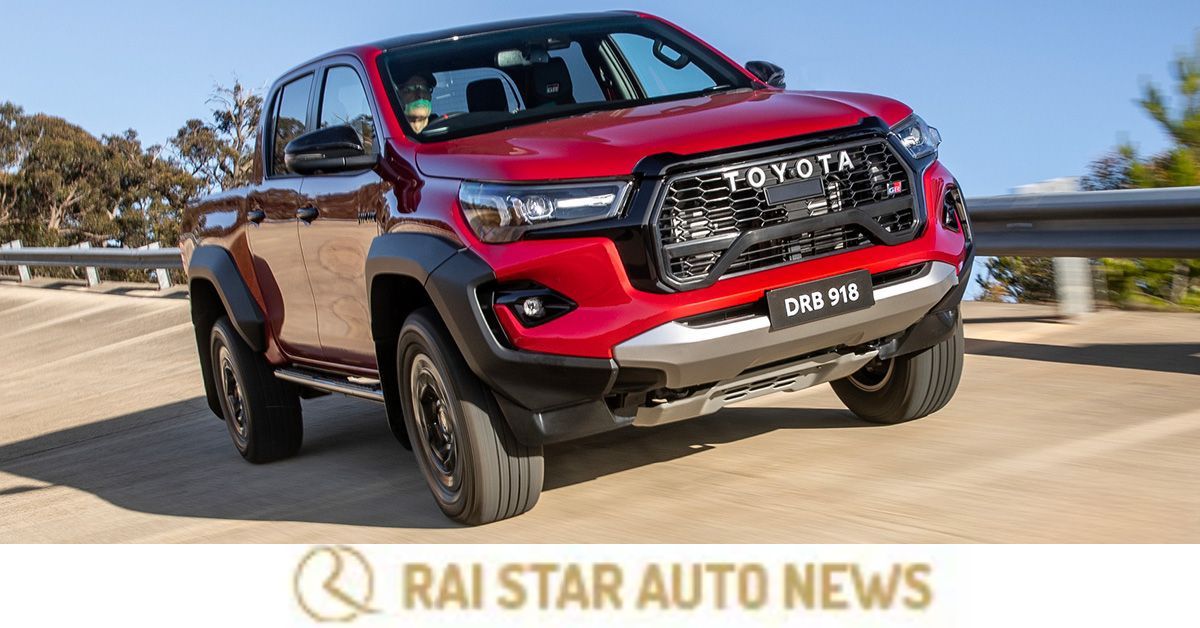
In a thrilling announcement on July 28, 2023, Toyota’s Australian subsidiary has pulled the covers off a remarkable addition to their lineup, the “Hilux GR Sport.” While this name may ring a bell for some Japanese enthusiasts, the Australian version of the Hilux GR Sport boasts entirely unique specifications and a character all its own.
A Pickup with a Rich Heritage
The Hilux, renowned for its long history, traces its roots back to 1968. Over the decades, it has evolved into a global icon, sold in approximately 180 countries and regions. The current iteration, the 8th generation model, returned to the Japanese market in September 2017 after a hiatus of approximately 13 years. Measuring in at 5,340 mm in length, 1,855 mm in width, and 1,800 mm in height, the Hilux carries a substantial presence. This places it in the same league as Toyota’s North American offerings, the Tundra and Tacoma.
On the flip side, the “GR Sport” moniker is synonymous with TOYOTA GAZOO Racing’s sports-oriented models. Alongside the Hilux GR Sport, the GR series includes the thrilling “GR Yaris” and offers GR parts for standard-grade vehicles.
Aussie Exclusive: The Highest Specification Hilux
Toyota’s Australian arm has positioned the forthcoming Hilux GR Sport as the “highest specification Hilux” yet. A bold claim indeed, backed by an array of enhancements that set it apart from its counterparts in Japan. Compared to the standard Hilux, it packs the most potent diesel engine ever found in a Hilux, an upgraded suspension, and an all-new design.
With dimensions measuring 5,320 mm in length, 2,020 mm in width, 1,880 mm in height, and a 3,085 mm wheelbase, this Hilux GR Sport significantly expands its overall footprint. It rides on a “wide tread” platform, elevating the stance by 15 mm and widening the track width by 135 mm at the front and 155 mm at the rear compared to the regular Hilux series. The satin black overfenders blend seamlessly into the bumpers, lending the exterior a muscular appearance. The front bumper receives an approach angle boost, further enhancing its off-road capabilities.
Inside, the cabin boasts a leather steering wheel featuring paddle shifters, adorned with a striking red center stripe and the GR logo. The front sports seats combine leather and suede, accentuated by red seat belts, aluminum pedals, a novel “technical mesh” dashboard, and a GR Sport shift lever, exuding a sporty aura.
Under the hood, the powertrain boasts an impressive maximum output of approximately 224 horsepower and a peak torque of 550 Nm, thanks to its 8-liter turbo diesel engine. The transmission is a 6-speed automatic. To further augment its performance, Toyota engineers have fine-tuned the front coils and rear leaf springs, incorporated KYB monotube shock absorbers with a larger piston diameter, and removed the rear sway bar to bolster grip on uneven terrain. Not to be overlooked, the upgraded braking system now features a 338 mm x 28 mm 4-piston fixed caliper at the front and a 312 mm x 18 mm single-piston floating caliper at the rear, delivering exceptional stopping power.
For those who relish choices, the Hilux GR Sport offers five body colors: Glacier White, Frosted White, Stunning Silver, Eclipse Black, and Feverish Red. Among these, Glacier White, Frosted White, and Feverish Red can be paired with a black roof.
The Hilux GR Sport comes with a price tag of 73,990 Australian dollars, approximately equivalent to 7,030,000 yen. Sean Hanley, Vice President of Sales, Marketing, and Franchise Operations at Toyota Australia, expressed his excitement about the new Hilux GR Sport, saying, “The all-new Hilux GR Sport takes the performance of the Hilux series to a new level. With input from Australian engineers and designers, we have made comprehensive enhancements to both design and interior, making the popular Australian Hilux even more attractive. Australians love powerful, high-performance pickups, and the Hilux GR Sport meets that need.”
In Conclusion
The introduction of the Hilux GR Sport marks an exciting chapter for Toyota enthusiasts in Australia, offering a unique blend of power, style, and performance that is bound to resonate with pickup truck enthusiasts Down Under. With its distinctive design and impressive specifications, the Hilux GR Sport is poised to make waves in the Australian automotive market, continuing the legacy of the iconic Hilux name.
Daihatsu Copen SUV Dominates Off-Road Terrain with Impressive 200mm Ground Clearance

The Copen, a distinctive 2-seater convertible, has emerged as a rare gem among open-top models, boasting a range of customization options tailored for both street and circuit enthusiasts. Since its initial debut in 2002, the Copen has garnered attention for its sporty driving experience and versatile customizability. Now in its second generation, released in 2014, this compact powerhouse continues to captivate with its dynamic appeal and exceptional performance.
One of the standout features of the Copen is its adaptability for sporty driving, a trait underscored by the numerous custom cars optimized for the racetrack. Amidst its illustrious history, a remarkable variant known as the “Daihatsu Copen SUV” has emerged, pushing the boundaries of off-road capabilities. This unconventional iteration is characterized by a rugged exterior featuring a robust kangaroo bar, a sturdy skid plate, expansive LED lights, and dual sets of exhaust mufflers on either side. Elevating its off-road prowess, lift-up kits borrowed from the Suzuki Jimny and enhanced by off-road tires culminate in a remarkable 200mm ground clearance, even surpassing the benchmark set by the Jimny at 205mm. This newfound capability allows the Copen SUV to tackle rough terrains with surprising ease, debunking preconceived notions about its limitations.
The genesis of the Daihatsu Copen SUV traces back to Mr. Morimoto, the CEO of Mo. Faku, a specialized Copen workshop located in Hyogo Prefecture. Mr. Morimoto’s vision for the Copen SUV was rooted in expanding the horizons of what this iconic vehicle could achieve. He envisioned a Copen that could navigate rough roads with the same prowess it displayed on traditional surfaces. By meticulously customizing the Daihatsu Copen SUV while maintaining the essence of the original design, Mr. Morimoto and his team achieved an extraordinary feat.
Furthermore, Mr. Morimoto expounds on the transformative nature of the Copen, articulating that the vehicle is a canvas for endless personalization possibilities. Drawing comparisons to his experiences customizing other vehicles such as the Jimny and Civic, he highlights the Copen as a unique platform for enhancing performance. His passion for the Copen led him to establish a specialty store, with a keen focus on circuit modifications that have led to lap times surpassing those of other renowned sports cars. This unwavering commitment to pushing boundaries and improving the Copen’s standing in the automotive hierarchy has been the driving force behind the birth of the Daihatsu Copen SUV.
Mo.Faku offers the Copen SUV kit at approximately 300,000 yen, with the total cost of customization including additional components and labor amounting to around 900,000 yen. Opting for the 4WD conversion entails an additional investment of about 1 million yen. As the Copen continues to evolve and unveil its potential, enthusiasts and onlookers alike are left intrigued by the possibilities that lie ahead.
In a world of automobiles where conformity often reigns, the Copen SUV emerges as a trailblazer, defying conventions and embarking on uncharted territories. With Mr. Morimoto’s passion igniting a spark of innovation, the Copen SUV showcases the boundless potential that emerges when a vehicle’s design is met with unyielding dedication and creative imagination.
Innovative Pioneer Display Audio Transforms Voice Control for Toyota Yaris Cross in Indonesia, Enhancing Smoothness Tenfold

The Pioneer Display Audio is a standard feature on the new Toyota Yaris Cross for the Indonesian market. This announcement was made by Pioneer on July 19, 2023. The Yaris Cross is a hybrid vehicle model, and it will be installed in all hybrid versions and S-grade gasoline vehicles in Indonesia.
One of the key features of the Pioneer Display Audio in this vehicle is its 10.1-inch large screen monitor, a first for Pioneer’s display audio systems in Toyota vehicles in Indonesia. This sizable display allows for easy interaction with various features and functions.
The system also supports wireless connections such as “Apple CarPlay” and “Android Auto,” enabling seamless connectivity with compatible smartphones. Users can easily mirror their smartphone’s apps on the large screen without needing to use a cable.
In addition to typical audio functions like radio and music playback from USB memory devices or smartphones via Bluetooth, the display audio also offers hands-free calling capabilities. It goes beyond audio features and provides various instrument information such as the compass, inclinometer, altimeter, fuel efficiency, and cruising range, enhancing the driving experience.
Notably, this Pioneer display audio system boasts a voice recognition function, which is a first for Pioneer’s overseas display audio systems. The voice recognition supports multiple languages, including English and Indonesian. With this feature, users can operate certain vehicle functions by voice, such as turning the air conditioning on/off, adjusting the temperature, controlling ambient lighting, and changing color tones. This voice-operated functionality aims to enhance the safety and comfort of using the display audio system while driving.
Overall, the Pioneer Display Audio system in the new Toyota Yaris Cross for the Indonesian market offers a range of features and convenient options, including a large screen monitor, smartphone connectivity, and voice recognition for hands-free and safe operation while driving.
Toyota Estima: Once Revolutionary Minivan, Now Faces Dark Clouds with 90% Sales Plunge!

The Mysterious Disappearance of Toyota’s “Original Luxury Minivan” – The Story of the Estima
Toyota, a renowned automaker known for its innovation, has seen numerous successes in the automobile industry. However, amidst its triumphs, there lies a tale of a beloved minivan that eventually faded into oblivion – the Toyota Estima. The Estima, considered the original luxury minivan, once captured the hearts of drivers with its unique design and spacious interior. So, what led to the disappearance of this pioneering vehicle from the market?
In 1990, Toyota unleashed the first-generation Estima, a bold departure from traditional minivans. Instead, it presented itself as a “new luxury car” with its strikingly smooth and rounded egg-shaped body. Nicknamed the “genius egg,” the Estima stood out due to its rare underfloor midship layout. This innovative design placed the engine sideways at a 75-degree angle, while the front tires were positioned in front of the driver’s seat. As a result, the midship layout achieved an impressively spacious interior, a comfortable ride, and remarkable quietness, elevating the minivan experience to unprecedented heights.
Despite its higher price point, around 3 million yen at the time, the first-generation Estima garnered immense popularity and quickly became one of Japan’s representative minivans. Building on its success, Toyota introduced the Estima Lucida/Emina in 1992. These models, smaller in size, became known as the “child Estima” due to their affordability, priced approximately 1 million yen cheaper than the original Estima. The Lucida and Emina achieved significant success, further solidifying the Estima’s position as a standard minivan model.
With the turn of the millennium, Toyota embarked on a full model change for the Estima, giving rise to the second-generation Estima in 2000. The company also introduced the “Estima Hybrid,” equipped with a cutting-edge hybrid system, offering both powerful acceleration and improved fuel consumption. The future looked bright for the Estima, and its popularity seemed destined to soar.
However, dark clouds began to gather over the Estima’s fate when Toyota introduced another upscale minivan under the same brand in 2002 – the “Alphard.” Based on the second-generation Estima’s framework, the Alphard boasted a larger body and a luxurious, spacious interior. It featured a more “powerful” design, clearly distinguishing it from the Estima’s gentle-looking front mask. Despite the competition, many loyal Estima fans persisted, but a crucial turning point was approaching for both models.
In 2006, Toyota launched the third-generation Estima and followed up with the second-generation Alphard in 2008. The Alphard’s “stiff” front mask appealed to a broad audience, leading to an increase in sales. On the other hand, the Estima’s reasonable pricing made it challenging to compete with the Alphard and Vellfire, and the number of Estima sales began to decline significantly. By the first half of 2019, the monthly average of registered Estima units plummeted to a mere 791, representing less than 10% of the combined Alphard and Vellfire sales.
As the shadows grew darker, the Estima’s role came to an end in October 2019, and the vehicle disappeared from the market without undergoing a model change. Though the Estima had once carved its name in automotive history, the shifting landscape of the automobile industry played a significant role in its fate.
Fast forward to 2023, Toyota continues to innovate, releasing the new luxury minivans “Alphard” and “Vellfire,” along with the upcoming “LM” under the Lexus brand. These new offerings are replete with luxurious exteriors, powerful engines, and opulent interiors, capturing the attention of automotive enthusiasts.
While the Estima may have vanished from the scene, the automotive landscape has changed dramatically, providing potential opportunities for new and improved models. As the market evolves, who knows if a modern, high-tech reincarnation of the “original luxury minivan” may find its way back into the hearts of drivers once more, solidifying its place as an upper-class minivan for the ages. Only time will tell what Toyota has in store for its minivan lineup.
Unveiling the Luxurious 2nd Generation Nissan Elgrand: A Powerhouse of Comfort and Elegance!

The Nissan 2nd generation “Elgrand” remains an iconic minivan that set the standards for luxury and comfort, challenging the Toyota “Alphard” for its popularity. While the current model may not match the Alphard in terms of sales, the 2nd generation “Elgrand” released in 2002 was a true contender, boasting an interior that was nothing short of spectacular.
At its core, the 2nd generation Elgrand was designed as a high-end minivan, aiming to offer a space that exuded dreams, relaxation, and excitement. Stepping inside the Elgrand was akin to entering a cozy living room, with an abundance of luxurious features. The interior was adorned with wood grain decorations and plated parts, creating an ambiance of opulence.
One standout feature was the unique display arrangement in the center of the instrument panel. Seamlessly integrated with the round, oblong meter panel, the display could be adjusted back and forth to minimize glare and ensure optimal visibility, particularly when driving in bright sunlight.
The versatility of the second multi-center seat was another aspect that set the Elgrand apart. It allowed for various seat arrangements, making it convenient for passengers to move between the second and third rows. Transforming the second row into captain’s seats was effortless, and the seat’s backrest could fold forward to create an armrest with a built-in drink holder. Moreover, a large storage box under the cushion added practicality, accommodating items like game consoles and personal belongings.
Family trips became even more enjoyable as the second-row seats could be rotated to face the third-row seats, fostering a fun and interactive atmosphere within the vehicle. Nissan continued to innovate, introducing the groundbreaking “Around View Monitor” in the 2007 minor model update, making parking and maneuvering the Elgrand a breeze.
As a testament to its dedication to luxury, Nissan released several special specification models, showcasing premium materials and sophisticated features like genuine leather seats, elegant instrument panels, and electric curtains.
Under the hood, the 2nd generation Elgrand stayed true to its roots, maintaining the rear-wheel-drive (FR) configuration introduced in the first generation. Some variants also offered the option of a 4WD system. Engine options included a 2.5-liter and a powerful 3.5-liter V6 gasoline engine, emphasizing not only luxurious interior comfort but also delivering an enjoyable and sporty driving experience.
The combination of a luxurious interior and a focus on sporty performance endeared the 2nd generation Elgrand to a devoted fan base. While the current model might not be the top seller, its legacy lives on, and it continues to be remembered as a pioneer in the luxury minivan genre.
In conclusion, the 2nd generation Nissan “Elgrand” has left an indelible mark on the automotive world with its incredible interior, offering a serene and lavish space that rivaled the best in the segment. Its innovative features, versatility, and sporty driving dynamics have solidified its place in the hearts of Elgrand enthusiasts, ensuring its status as a timeless classic in the realm of luxury minivans.
Unsurpassed Excellence Honda Vezel SUV Delights with 5-Star High-Quality Interior

Honda’s Vezel, the flagship compact SUV, has been making waves with its exceptional features, and now, it’s the interior that’s stealing the spotlight. Boasting a “high-quality interior” that surpasses its class, the Vezel’s “Glass Ceiling” and “Greige Interior” have left automotive enthusiasts in awe.
The Vezel, introduced as a compact crossover SUV in 2013, immediately captured hearts with its powerful SUV-like image coupled with an elegant coupe-style body. Its stylish design, convenient size, and availability of a hybrid version contributed to its immense popularity as a compact crossover SUV. Now in its second generation, launched in April 2021, the Vezel features a square design with a horizontal tone, further accentuating its coupe-like styling.
Under the hood, Honda equips the Vezel with its unique 2-motor hybrid system, known as “e: HEV.” This hybrid system not only ensures impressive fuel efficiency but also delivers substantial power output. Moreover, safety takes the forefront with the inclusion of the advanced driver assistance system “Honda Sensing,” standard across all variants, enhancing the SUV’s safety performance.
The Vezel’s lineup offers diverse options, with the 1.5-liter gasoline model exclusively available in the “G” mono grade, and the hybrid model coming in three variants: “e: HEV X,” “e: HEV Z,” and “e: HEV PLaY.” Additionally, 4WD models are available for all grades except “e: HEV PLaY.” Prices range from 2,399,100 yen to 3,418,800 yen (consumption tax included, applicable from July 27).
Among these fantastic options, the top-tier “e: HEV PLaY” truly stands out, presenting a high-quality interior that sets new standards for compact SUVs. The interior showcases a tasteful two-tone color scheme, with black as the base color and a striking greige accent in the central part of the instrument panel and door trim. The seats are upholstered with a combination of prime smooth material and dark gray fabric, highlighted by vibrant orange stitching on the prime smooth material and elegant light gray stitching on the fabric.
Honda pays meticulous attention to detail, even extending the luxurious accents to the center console and steering wheel, which feature eye-catching orange accents. The center console receives a special tactile paint finish, elevating the overall sense of refinement. The interior is further adorned with piano black and silver decorative panels, exuding a premium ambiance that rivals higher-end SUVs.
For those who crave a more expansive view and a brighter cabin, the “e: HEV PLaY” model can be complemented with the exclusive “panoramic roof,” adding a sense of openness to the already splendid interior.
Honda’s Vezel has undoubtedly set a new benchmark for compact SUVs with its exceptional “Glass Ceiling” and “Greige Interior,” redefining what it means to have a high-quality cabin. As automotive enthusiasts eagerly await the opportunity to experience this exceptional SUV, the Vezel continues to solidify its position as a leading choice in the compact crossover SUV segment.
Revolutionary GAZOO Racing Thrills with 3Carbon-Neutral Toyota GR Yaris Models at Goodwood Festival of Speed 2023

“The Goodwood Festival of Speed, a prestigious motorsport event held in the UK, witnessed a remarkable showcase of Toyota’s commitment to sustainability and carbon neutrality. TOYOTA GAZOO Racing (TGR) took center stage at the event held from July 13th to 16th, 2023, with a stunning array of exhibitions and demonstration runs.
One of the highlights of the festival was the appearance of the iconic comedian and motorsports enthusiast, Rowan Atkinson, known worldwide for his portrayal of Mr. Bean. To the delight of the spectators, Atkinson got behind the wheel of the “”GR YARIS H2,”” a revolutionary vehicle powered by a cutting-edge hydrogen engine.
The Goodwood Festival of Speed has been captivating audiences since its inception in 1993, thanks to the hill climb event featuring cars of various genres. This year, the spotlight was on sustainability and innovation. Toyota embraced this theme wholeheartedly, showcasing their vision for a brighter future through the “”GR YARIS H2″” and other pioneering concepts.
The “”GR YARIS H2″” is a true testament to Toyota’s dedication to carbon neutrality. Developed with advanced carbon-neutral hydrogen combustion engine technology, this high-performance vehicle aims to provide drivers and spectators alike with the speed, sound, and excitement synonymous with motorsports. Rowan Atkinson’s exhilarating demo run in the “”GR YARIS H2″” on the Goodwood Hill Climb left the audience in awe.
In a post-ride interview, Atkinson expressed his sheer joy and enthusiasm for the experience, labeling it as “”incredibly fun.”” The actor, who is a proud owner of a road-legal GR Yaris, hailed hydrogen as a promising direction for the future of motorsports. He remarked, “”(Hydrogen) is one of the directions in which Toyota feels the potential for motorsports to go, and one of the options for maintaining the internal combustion engine so as not to lose emotion.””
But the excitement didn’t stop there. Toyota’s exhibition at Goodwood encompassed a wide range of cutting-edge vehicles. Among them, the “”GR H2 Racing Concept,”” a hydrogen engine vehicle concept car, and the “”MIRAI SPORT CONCEPT,”” a fuel cell vehicle, captured the imaginations of visitors. These cars, along with the “”GR Supra GT4 EVO”” running on e-fuel, demonstrated Toyota’s multi-pathway approach towards a sustainable future.
The festival also paid tribute to Toyota’s remarkable achievements in the world of motorsports. Vehicles that played pivotal roles in securing victories across three world championships and notable events like Le Mans and Dakar Rally in 2022 were proudly displayed.
Notable drivers, including Jari-Matti Latvala, Elfyn Evans, Sebastian Ogier, and Juha Kankkunen, showcased their driving prowess by taking the wheel of three “”GR Yaris”” models. The “”GR YARIS Rally1 HYBRID,”” which secured the 2022 WRC title, the upcoming “”GR Yaris Rally2 Concept,”” and the hydrogen-powered “”GR Yaris H2″” enthralled the audience during these demonstration runs.
The participation of Rowan Atkinson as a guest pilot added a touch of glamour and excitement to the event, further solidifying Toyota’s position as a leader in combining motorsports with eco-consciousness.
As Toyota continues to champion sustainable mobility solutions, their display at the Goodwood Festival of Speed serves as a beacon of hope for a greener and more exciting future in the world of motorsports. The “”GR YARIS H2″” and other innovative concepts on display truly embody the spirit of racing while paving the way towards a carbon-neutral era in the automotive industry.”