
Positive Grows for Suzuki’s New Grand Vitara SUV in Indonesia 2023

In a dazzling display of automotive innovation and international collaboration, Suzuki’s Indonesian subsidiary took center stage at the “GAIKINDO Indonesia International Auto Show 2023,” held over an 11-day period from August 10, 2023. The event saw the unveiling of Suzuki’s latest offerings to the Indonesian market, including the much-anticipated “Ertiga” and “XL6.” However, it was the revelation of the flagship SUV, the Grand Vitara, that truly stole the spotlight. This exciting model, not available in Japan, has been developed in partnership with Toyota, marking a significant leap forward for Suzuki’s SUV lineup.
The Grand Vitara has a storied history, with the first and second-generation models being sold in Japan under the name “Escudo.” The latest iteration, the third-generation Grand Vitara, represents a new chapter in Suzuki’s global SUV strategy. Production of this model commenced in India during the summer of 2022, and as of September 2023, there are no comparable models available in Japan. Interestingly, while the Grand Vitara isn’t available in Indonesia, its Toyota counterpart, the “Urban Cruiser High Rider,” is sold in the Indian market.
The Indonesian-spec Grand Vitara showcased at the event boasts a compact yet spacious design, with dimensions measuring 4,345 mm in length, 1,795 mm in width, and 1,645 mm in height. Its wheelbase of 2,600 mm places it in the same size category as the Toyota Yaris Cross, a popular choice among Japanese consumers. The exterior exudes a perfect blend of aggressiveness and elegance, featuring three LED lamps, a striking chrome bar connecting the left and right lamps, and a polygonal grille that enhances its sense of luxury.
Step inside the Grand Vitara, and you’ll find an interior designed with modern comfort and convenience in mind. The powertrain is equally impressive, consisting of a 1.5-liter inline 4-cylinder engine with a maximum output of 103 horsepower and a peak torque of 136 Nm, complemented by a mild hybrid system. This robust engine is paired with a responsive 6-speed automatic transmission. The Grand Vitara offers two distinct grade configurations: the base “GL” and the upscale “GX,” which comes with premium features like a leather-wrapped steering wheel.
Buyers can choose from an array of stylish body colors, including Pearl Celestial Blue, Pearl Arctic White, Pearl Splendid Silver + Black, and Pearl Midnight Black. Pricing for this remarkable SUV starts at 359.4 million rupiah (approximately 3.43 million yen) for the GL variant and goes up to 387.4 million rupiah (approximately 3.69 million yen) for the GX.
As for Japan, the current Escudo model on sale is the fourth generation, introduced in 2015, and it differs from the Indonesian-spec Grand Vitara. While it remains uncertain whether this exciting new Grand Vitara will make its way to Japanese shores in the future, history has shown that Suzuki has introduced similar models in the past, keeping enthusiasts eagerly awaiting what’s next in the world of Suzuki SUVs.
New Red Demand for Suzuki Jimny 5-Door Sparks Color Controversy.

High expectations surround the Suzuki Jimny 5-door as it made its grand entrance into the Indian market in early 2023. Impressions and videos from India have already been circulating, building anticipation for its eventual release in Japan. Yet, one question lingers: why isn’t the striking red body color available in Japan?
In India, the Jimny 5-door boasts a straightforward lineup comprising two grades: “Zeta” and “Alpha.” In addition to classic monochrome options like white, blue, and gray, Indian customers have the opportunity to choose from two-tone body colors like “yellow/black” and “red/black.” It’s the absence of the red hue that piques curiosity in Japan. While similar shades are available, red remains conspicuously absent.
The reason behind this color discrepancy appears to be rooted in regional preferences. Once upon a time, red cars were all the rage in Japan, particularly “red sports cars” that were the envy of many drivers. This penchant for red extended beyond sports cars to minivans and rugged 4WD vehicles. However, a prevailing perception emerged that “red paint fades easily,” which led people in rain-prone Japan to steer clear of the color.
Mazda played a pivotal role in reshaping the perception of red. Starting with the CX-5 in 2012, Mazda adopted red as the image color for their models, introducing hues like Soul Red Premium Metallic, Soul Red Crystal Metallic, Artisan Red Premium Metallic, and more. The rarity of red in other automakers’ offerings helped Mazda’s red colors gain popularity. These hues appealed to drivers who desired a car with a distinctive personality that set them apart.
Interestingly, there is a parallel between fashion and cars in Japan. Just as primary colors tend to be popular during good economic times and achromatic colors during bad times, a similar trend is observable in car color preferences. In the late 2010s, Japan experienced an outdoor boom, influencing fashion and car colors alike. During economic prosperity, bright outdoor fashion and car colors were prevalent, but as the trend shifted towards low-visibility colors, these too gained prominence in the automotive world.
The Jimny 5-door aligns with this trend by offering both “low-visibility colors” that blend with nature and “high-visibility colors” like yellow, catering to professionals such as forestry workers. Jungle green is the most favored color among buyers, followed closely by black and ivory, despite Suzuki initially promoting yellow as its image color.
Surveys by a research company reveal that red remains the top choice for a “cool car” in countries like India, Thailand, Vietnam, and Indonesia. In Asia, which is currently experiencing rapid motorization, the allure of the color red remains strong.
While Suzuki did have red options in some of its earlier models, such as the first-generation Escudo and X-90, the urban-oriented colors didn’t align with the image Japanese consumers had of wild SUV styles, limiting their popularity.
Suzuki, however, isn’t ruling out the possibility of offering red in Japan in the future, should the market demand it. Given current Japanese tastes, colors like sand beige and blue-gray might become more popular choices down the road.
1993 Toyota Hiace Auction: 7 Surprising Reasons This Classic Van Sold for Over 2 Million Yen

Toyota Hiace Fetches Toyota HToyoToyota Hiaceta Hiaceiace 2023.09.26( Toyota Hiace ) by RAI STAR 1993 Toyota Hiace Auction: A 30-Year-Old Van That Surprised the Market 1993 Toyota Hiace auction news has caught the attention of enthusiasts around the world after a fourth-generation Toyota Hiace Wagon Super Custom Limited sold in the United States for […]
Unvelied Toyota Alphard Features Innovative Turn Signals’ for Enhanced Safety
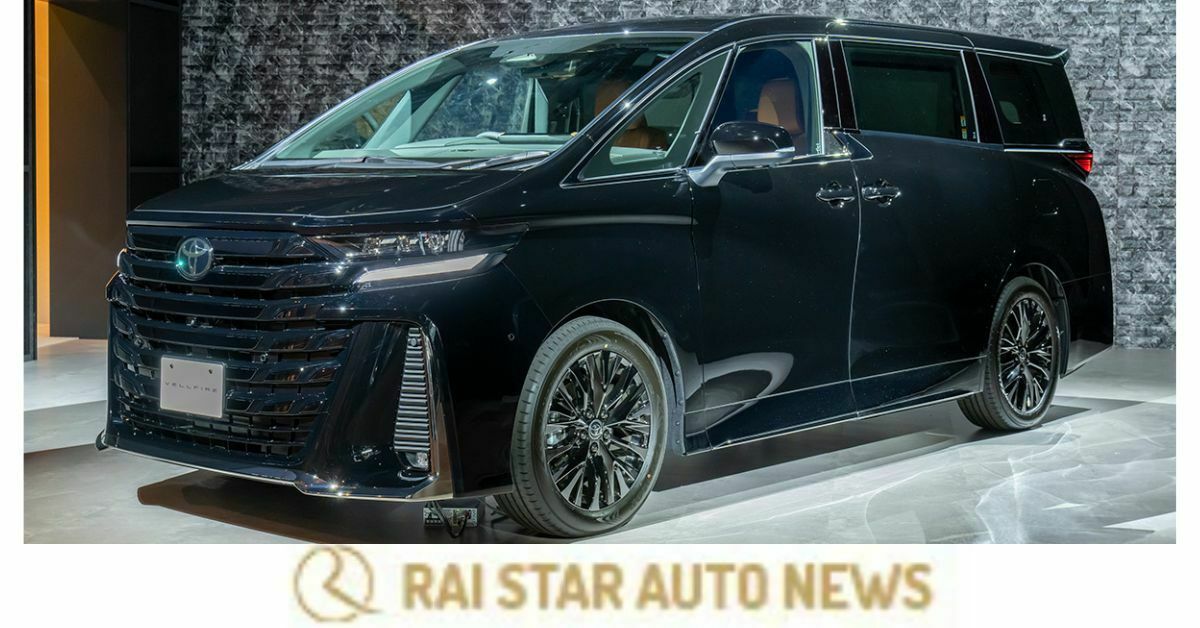
In June 2023, Toyota is set to unveil the fourth generation of its luxurious minivan, the Alphard, promising an evolution in design and features that cater to diversified lifestyles. The all-new Alphard aims to redefine the concept of “comfortable transportation happiness” with its impressive size, comfortable interior, and cutting-edge technology.
The exterior of the new Alphard showcases a bold departure from its predecessors while retaining its imposing presence. The front design, in particular, exudes opulence with an expansive shield-shaped ultra-large grille and a distinctive side profile. However, one of the most striking elements that contribute to the dynamic facade of the new Alphard is its innovative lighting system.
The lighting arrangement at the front of the vehicle is a three-tiered marvel, featuring a triple-lens LED headlamp with high/low beam and auto-leveling function at the top tier, and LED clearance lamps with a daytime running lamp function in the middle and lower tiers. Yet, it’s the intriguing “sequential turn lamps,” often referred to as “flowing turn signals,” that are generating considerable attention. But where exactly are these elusive signals?
The answer lies in the lower portion of the LED clearance lamp, which ingeniously doubles as a blinker. The Alphard’s LED clearance lamps seamlessly blend into the plated parts of the front grille, forming four distinct light units both at the top and bottom. When activated, the four lower lights elegantly illuminate in sequence from the inside to the outside, effectively serving as turn signals. This subtle yet sophisticated lighting design not only enhances safety but also adds a touch of futuristic elegance to the Alphard’s front profile.
The rear of the Alphard follows suit with its own flowing turn signal, positioned at the top of the LED rear combination lamp. Featuring numerous LEDs, the rear turn signal creates an even smoother and more captivating lighting sequence, further accentuating the vehicle’s premium appeal.
Not to be outdone, Toyota’s sibling model, the Vellfire, underwent a complete overhaul simultaneously with the Alphard, incorporating the same sequential-type turn signals. The Vellfire’s headlights also feature a three-lens LED headlamp coupled with an LED clearance lamp, albeit with a single stage. Here, too, the LED clearance lamp takes on the role of a flowing turn signal, adding a unique touch to the Vellfire’s lighting aesthetics.
In conclusion, Toyota’s Alphard and Vellfire have raised the bar in exterior lighting innovation with their captivating “flowing turn signals.” These intricate designs not only enhance visibility and safety but also elevate the aesthetics of these luxury minivans, setting a new standard for automotive lighting technology. As Toyota continues to push the boundaries of automotive design and technology, it’s clear that the “way of lighting” is taking an exciting and innovative turn.
Subaru Exciting New Levorg Layback A Positive Shift for SUV Fans

Subaru enthusiasts, mark your calendars! The renowned Japanese automaker, Subaru, has officially announced the upcoming release of their latest addition to the SUV lineup, the all-new “Levorg Layback.” Set to ignite the automotive scene, this intriguing vehicle has already sparked curiosity, thanks in part to its association with the beloved Levorg and promises to deliver a unique driving experience tailored to the Japanese market.
Subaru aficionados were treated to a tantalizing glimpse of the Levorg Layback when reservations opened on September 7th, 2023. The announcement, complete with a series of enigmatic photos, took center stage on Subaru’s official website, leaving prospective buyers eager to uncover the finer details of this upcoming SUV.
So, what is the Levorg Layback, and what sets it apart from Subaru’s existing models? Let’s dive into the available information and explore the mystery surrounding this exciting new vehicle.
First and foremost, it’s essential to note that the Levorg Layback represents a “new model” in Subaru’s SUV lineup. Unlike a mere facelift or incremental update, this SUV embodies an entirely fresh approach to design and performance. Subaru’s classification of it as an “SUV” suggests that it’s been engineered with ample road clearance, making it well-suited for a variety of driving conditions.
In a press release dated August 3, 2023, Subaru emphasized that the Levorg Layback is purpose-built for the Japanese market, where discerning drivers demand a unique blend of style and functionality. The sharp-eyed among you might have noticed the presence of “LEVORG” in the model’s name, which serves as a significant clue regarding its lineage.
While Subaru has intentionally obscured many of the initial photographs, some details have managed to emerge. From these glimpses, it’s apparent that the Levorg Layback is a crossover SUV, proudly carrying the elevated body of the Levorg. Drawing parallels with Subaru’s “Impreza” and “Crosstrek” models, the Levorg Layback shares its base structure with the Levorg but stands out with large-diameter tires, specialized suspension, and unpainted resin cladding on the bumper and lower body. These enhancements imbue it with a rugged, SUV-like aesthetic.
To gauge its ground clearance, one can look to Subaru’s Crosstrek, which boasts a minimum ground clearance of 200mm—a substantial 65mm higher than the Impreza. It’s reasonable to assume that the Levorg Layback will feature a similar elevation, making it adept at handling rough terrain and inclement weather conditions.
Speaking of size, Subaru’s current station wagon-based crossover SUV, the Outback, is designed primarily for North America. Its dimensions measure 4,870mm in length and 1,875mm in width, making it a sizable choice for daily driving in Japan. In contrast, the Levorg, tailored to the domestic market, is more compact at 4,755mm in length and 1,795mm in width. This distinction could prove to be the Levorg Layback’s most significant advantage over the Outback, offering Japanese drivers a more maneuverable and convenient option for their daily commute.
In essence, the Levorg Layback can be seen as a smaller sibling to the Outback, preserving Subaru’s signature ruggedness and dependability while catering to the specific needs of the Japanese market. Not only is it expected to be more compact in size, but it may also come with a more modest price tag—a prospect that has surely piqued the interest of Subaru enthusiasts.
Subaru loyalists and automotive enthusiasts alike are eagerly awaiting the arrival of the Levorg Layback, anticipating a fresh take on Subaru’s classic formula. Stay tuned for further updates as we approach its official release, and get ready to experience a new dimension of driving excellence with Subaru’s “New SUV,” the Levorg Layback.
Indonesia’s Thrilling Revelation Unveils Larger Toyota Yaris Cross

The Toyota Yaris Cross GR that was unveiled in Indonesia in August 2023 is indeed different from the Yaris Cross model available in Japan and some other markets. Here are some key differences and specifications for the Indonesian version:
Design and Body: The Yaris Cross GR in Indonesia features a design that is larger and distinct from the Japanese version. It has a more robust and imposing appearance, characterized by bold body lines and a sloping roof design. The dimensions of the Indonesian model are as follows: 4310mm in length, 1770mm in width, 1615mm in height, 2620mm in wheelbase, and 260mm in ground clearance. This makes it slightly larger than the Yaris Cross sold in Japan.
Interior: The interior of the Indonesian Yaris Cross GR Sports model is unique and designed to create a sporty and luxurious atmosphere. It includes a wide, soft dashboard panel and blue stitching on seats and other parts to enhance the sense of quality.
Model Variant: The model showcased in Indonesia is the Yaris Cross GR Sports, which suggests a sportier and more performance-oriented variant. It is powered by a hybrid powertrain, but specific technical details about the hybrid system are not provided in the information you provided.
Ground Clearance: The Indonesian Yaris Cross has a ground clearance of 260mm, which is notably higher than the Japanese version’s ground clearance of 160mm-170mm. This increased ground clearance could be designed to cater to the local market’s driving conditions and preferences.
It’s not uncommon for car manufacturers to offer different variations of the same model in different regions to meet local preferences and market demands. In this case, Toyota has adapted the Yaris Cross for the Indonesian market by making design and size adjustments to better suit the tastes and requirements of Indonesian consumers.
Unveils Nissan Skyline NISMO in Limited 1,000 Units

Tokyo, Japan – September 18, 2023
Nissan, one of the world’s leading automobile manufacturers, has ignited the excitement of car enthusiasts with the announcement of their latest creation, the “Skyline NISMO.” This remarkable vehicle, set to hit the market in early September 2023, is poised to take the automotive world by storm with its impressive blend of performance enhancements and a meticulously designed interior that screams sophistication.
A Legacy Reimagined
The Skyline has a rich heritage that dates back to 1957, known for its sporty engines and impeccable handling. This 13th-generation sedan/coupe, introduced in November 2013, remains the sole sedan model sold by Nissan in Japan. The “Skyline NISMO” is built upon the foundation of the high-performance 400R grade, undergoing numerous refinements. It pays tribute to its predecessors, especially the second-generation “Skyline GT,” aiming to be the ultimate grand touring (GT) car for those who demand speed, comfort, and peace of mind.
Under the hood, the “Skyline NISMO” boasts a 3-liter V6 twin-turbo engine that churns out an impressive 420 horsepower and 550 Nm of torque. This power is seamlessly harnessed through a 7-speed automatic transmission, with a rear-wheel-drive (FR) system ensuring a thrilling driving experience. To enhance its performance further, it adopts several features from the iconic GT-R, including front window adhesive for improved rigidity, specially tuned suspension, stabilizer, electronic controls, and bespoke tires, wheels, and aero components.
Crafted Interior Elegance
While the exterior pays homage to its predecessors, it’s the interior of the “Skyline NISMO” that truly sets it apart as a grand tourer. Drawing inspiration from the 400R, the interior is drenched in a unified black tone, creating a serene and luxurious driving environment. Red accents are strategically placed around the driver’s seat, adding a touch of NISMO’s sporty character.
The special steering wheel features red markings and red stitching to highlight the center position, while the tachometer boasts a striking red ring. With a full-scale speedometer displaying 280 km/h, it ensures the driver is always in control. The center console follows suit with red stitching, and customers have the option to include carbon decorative panels for the door trims and center console, enhancing the sporty aesthetic while reducing weight.
The Recaro sports seats, also available with carbon panels, are semi-bucket seats. These seats showcase a striking combination of red and black, with perforations in key areas for added comfort. Nissan’s engineers have meticulously designed the seats to optimize body pressure distribution, ensuring a comfortable driving experience even during long journeys.
Moreover, the integration of carbon panels and the absence of trunk-through rear seats have resulted in a 20 kg reduction in the vehicle’s weight, enhancing its overall performance.
Yukio Kamiyama, the head of vehicle evaluation at NMC, shared insights into the seat selection process: “The seat angle has been verified to be the best. Although there is no height adjustment, we have comprehensively evaluated the seat to find the best position. The seat design is GT-R NISMO, and the seat back is a combination of that of ‘Note Aura NISMO.’ Manual adjustment was chosen to maintain vehicle weight.”
Limited Edition: An Ultimate Expression
For those who desire an even more exclusive experience, Nissan will release a limited edition of the “Skyline NISMO” in the summer of 2024. This version, aptly named “LIMITED,” will be produced in a limited run of just 100 units and will feature a high-precision engine hand-assembled by skilled craftsmen. Additionally, craftsmen will meticulously apply decals by hand, ensuring each car is a unique masterpiece.
The “LIMITED” edition will be priced at 7,884,000 yen (including consumption tax), offering an even more exclusive experience to the most discerning enthusiasts. It will include the same NISMO items that define the Skyline NISMO but with a level of craftsmanship and exclusivity that sets it apart from the rest.
With its outstanding performance enhancements and a meticulously designed interior, the Nissan “Skyline NISMO” is set to become a coveted addition to the world of grand touring. Only 1,000 units of this masterpiece will be available in early September 2023, with prices starting at 7,880,400 yen (including consumption tax). Enthusiasts who desire the pinnacle of luxury and performance should keep an eye out for the limited “LIMITED” edition, arriving in the summer of 2024.
5 Key Positives and Negatives in the Battle Between Honda N-BOX and Fit

When considering the purchase of a smaller car, the choice between a compact car and a light car often perplexes potential buyers. This predicament is particularly pronounced in Japan, where two popular options, Honda’s N-BOX and Fit, reign supreme. To assist prospective buyers, we’ll conduct a thorough comparison of these vehicles, taking into account specifications, pricing, and owner feedback. Furthermore, we’ll highlight the upcoming release of the third-generation N-BOX scheduled for the fall of 2023.
Price Comparison:
The pricing spectrum for the 2020 Fit (including consumption tax) ranges from ¥1,624,700 (BASIC/FF) to ¥2,718,100 (e: HEV LUXE/4WD). Meanwhile, the second-generation N-BOX, introduced in 2017, ranges from ¥1,468,500 (G/FF) to ¥2,288,000 (custom, L turbo coordination style, 4WD). While the lowest prices differ by around ¥150,000, the highest prices vary by approximately ¥430,000. The disparity is primarily due to the Fit’s higher cost, especially in the case of hybrid models. The highest-priced gasoline Fit, at ¥2,361,700 (LUXE/4WD), narrows the gap with the N-BOX to less than ¥80,000.
Tax Considerations:
When it comes to taxes, both the N-BOX (L, naturally aspirated, FF) and Fit (e: HEV HOME, FF) have a tax rate of 0% for “Automobile Tax Environmental Performance Percentage.” The “Automobile weight tax” is ¥3,300 for the N-BOX and zero for the Fit. Automobile tax is ¥17,700 on a monthly basis if registered in August, but the light vehicle tax lacks a monthly installment system and is imposed from the following year, at ¥180,800, making the N-BOX tax-free. In total, the difference in tax between the two cars amounts to ¥14,400. Comparatively, the Fit gasoline car (HOME, gasoline, FF) incurs an environmental performance tax of ¥46,500 and a vehicle weight tax of ¥36,900, totaling ¥101,100. This results in a ¥97,800 difference with the N-BOX.
Insurance Costs:
“Compulsory automobile liability insurance (37 months)” costs ¥24,190 for both Fit and N-BOX, regardless of whether it’s a gasoline or hybrid model. However, voluntary insurance prices vary depending on enrollment conditions and insurance providers, but light cars tend to have roughly 20% lower insurance costs.
Power and Fuel Efficiency:
The Fit offers two power units: a 1.3-liter inline 4-cylinder engine (118 hp) and a hybrid (e:HEV) combining a 1.5-liter in-line 4-cylinder engine (106 hp) with an electric motor (123 hp). This hybrid configuration provides superior fuel efficiency at 29.0 km/L (WLTC mode, HOME, FF). Gasoline Fit owners report, “Performance is just right, with actual fuel efficiency around 15 km/L,” while hybrid owners praise its power and smoothness, achieving up to 30 km/L when driven carefully.
In contrast, the N-BOX boasts a 658cc inline 3-cylinder gasoline engine, available in naturally aspirated (58 hp) and turbo (64 hp) variants. Fuel efficiency is approximately 21.2 km/L and 20.2 km/L (WLTC mode, L, FF), with little difference in catalog values. Owners note the distinct driving experiences, with some saying that the turbo version feels vastly different, while others appreciate the naturally aspirated version’s power delivery, likening it to a mini-turbo from the past.
Handling and Dimensions:
Both vehicles are compact, but handling performance varies. The Fit measures 3995 mm in length, 1695 mm in width, and 1540 mm in height, with a minimum turning radius of 4.9 m (e: HEV HOME/FF). On the other hand, the N-BOX is notably smaller, with dimensions of 3395 mm in length, 1475 mm in width, and 1790 mm in height, offering a minimum turning radius of 4.5 m (L, naturally aspirated, FF), making it more maneuverable.
Visibility and Comfort:
Visibility from the Fit’s driver seat is commendable, thanks to its low dashboard. However, some owners mention slight blind spots on the A-pillars. Conversely, N-BOX owners, while enjoying a high viewpoint, have noted that the current model’s thicker dashboard and meter placement above the steering wheel have slightly compromised visibility.
In terms of ride comfort, Fit owners occasionally find it “pushy,” while some N-BOX owners express concerns about body roll during cornering. Despite the N-BOX’s smaller exterior, its interior dimensions (length x width x height) surpass the Fit, providing a spacious feel. Fit enthusiasts appreciate the meticulous interior design of the current generation, even though the dimensions are similar to the previous one.
Safety Features:
Both cars come equipped with “Honda SENSING” as standard safety equipment. The Fit additionally includes “short-distance collision mitigation braking” and “traffic jam assist,” which assists in low-speed highway driving, introduced in the fall of 2022. N-BOX models, updated in December 2021, all feature “electronically controlled parking brake with auto brake hold” as standard. The ACC has evolved to include a traffic congestion tracking function, reducing the load during expressway congestion.
Conclusion:
While the Fit has traditionally held a strong position in sales rankings, it now faces competition from the N-BOX. Both cars offer their unique strengths and features, making it a challenging decision for potential buyers. With the new N-BOX set to launch in the fall of 2023, the trends in Honda’s light and compact car offerings are sure to evolve. The choice between a light car and a small car ultimately depends on individual preferences and priorities.
Positive Breakthrough Unveils Honda CR-V e:HEV at Indonesia Auto Show 2023

South Tangerang, August 10th, 2023 – Honda’s Indonesian subsidiary, commonly referred to as Honda, has taken the automotive world by storm with the debut of the latest iteration of their renowned flagship crossover SUV, the “CR-V,” at the Gaikind Indonesia International Auto Show 2023. The event, which runs from August 10th to 20th, 2023, has become the stage for the unveiling of this remarkable addition to Honda’s lineup.
The CR-V, a nameplate that has graced roads worldwide since its inception in 1995, has undergone a remarkable transformation. The new model, now in its 6th generation, continues to embody Honda’s commitment to innovation and performance. However, it’s worth noting that despite its global presence, as of August 2023, the CR-V is not available for sale in Japan.
One look at the new CR-V is all it takes to appreciate its refined aesthetics and sporty, modern interior. Honda has ensured that this SUV offers not just an elegant exterior but also a thrilling driving experience. The CR-V has always been known for its active driving performance and enjoyable ride, and this latest model continues to uphold that legacy.
What truly sets the 2023 CR-V apart is its adoption of Honda’s cutting-edge hybrid technology known as “e:HEV.” This marks the first introduction of Honda’s latest electrification and hybrid system in the Indonesian market. Under the hood, the CR-V e:HEV combines a 2-liter engine with an electric motor, boasting the highest output in its class. This powertrain is complemented by an intelligent power management system and battery power regeneration technology, ensuring that it delivers optimal performance while keeping fuel consumption to a minimum. Moreover, this environmentally conscious approach aligns with Honda’s commitment to reducing its carbon footprint.
Safety and quality remain paramount with the CR-V, and this model is no exception. It upholds the premium quality and high safety standards that the CR-V name is known for.
But the advancements don’t end there. For the first time in Indonesia, the CR-V incorporates high-tech features like the latest generation Honda Connect, elevating the driving experience to new heights. With three rows of seats and a spacious interior, this luxury SUV can comfortably accommodate up to seven passengers while ensuring their safety on the road.
In a surprising move, Honda also announced its plans to showcase five electric vehicles at the Indonesia International Auto Show 2023. Among them is the eagerly awaited N-Van EV prototype. This prototype, making its Indonesian debut, is part of Honda’s ongoing research into electrification technology in Indonesia and its potential use in urban and commercial settings. Reports suggest that Honda is even considering employing the N-Van EV prototype as a transport vehicle for delivering car parts from the Honda factory to various dealers in the Jakarta area.
The debut of the CR-V e:HEV and the N-Van EV prototype at the Gaikind Indonesia International Auto Show 2023 marks a significant milestone for Honda, emphasizing their dedication to innovation, sustainability, and providing cutting-edge solutions for the Indonesian automotive market.
5 Positive Factors Behind Suzuki Jimny’s Outstanding Success

Even half a decade since its initial release, the Suzuki Jimny continues to command the spotlight, boasting a staggering one-year waitlist for prospective buyers. The extraordinary success of this compact SUV can be attributed to the skyrocketing popularity of SUVs in general, accounting for a substantial 30% of new small and regular passenger cars sold. SUVs have overtaken minivans, establishing themselves as the most sought-after category after light cars and compact vehicles.
When scrutinizing the vehicle registration numbers for the first half of 2023 (from January to June), the Toyota Yaris Cross emerged as Japan’s best-selling SUV, with a monthly average of 8,370 units sold. Following closely behind, the Toyota Harrier secured the second spot with 7,333 units, while the Toyota Corolla Cross claimed third place with 6,182 units. The Toyota Rise, with 5,539 units, snatched the fourth spot.
Despite Toyota’s dominance in the SUV sales rankings, two models from Suzuki have stolen the spotlight: the Suzuki Jimny and its compact counterpart, the Jimny Sierra. These models have been averaging monthly sales volumes of 3,352 and 2,254 units, respectively, during the first half of 2023. Together, they total a remarkable 5,606 units, inching close to the fourth-place Rise.
The Jimny Sierra, in particular, has been garnering attention as a popular SUV. A Suzuki dealer staff member attributed this sales performance to the vehicles’ full remodeling in 2018, which led to a rapid surge in popularity. Although production capacity increased, delivery times haven’t seen significant improvements, with orders still taking over a year to fulfill. Despite the five-year mark since their debut, the Jimny and Jimny Sierra continue to reign supreme among SUVs.
If production capacity were further boosted, Suzuki could potentially ramp up sales even more. Comparing current figures to the previous model’s sales in 2016, it’s evident that the Jimny series has seen sales grow nearly fivefold. The question then arises: what has driven this unprecedented success?
One crucial factor lies in the sales ratio between the Jimny and Jimny Sierra. The previous model in 2016 boasted an average of 1,106 units for the Jimny and 94 units for the Jimny Sierra, resulting in a 9:1 ratio. However, the current model’s monthly averages for the first half of 2023 show a 6:4 ratio, with 3,352 Jimnys and 2,254 Jimny Sierras. This signifies a remarkable 24-fold increase in Jimny Sierra sales, expanding the sales ratio in favor of the compact version.
Originally categorized as a light car, the Jimny was renowned as an SUV for rough terrains and constituted the majority of sales. However, the current model has seen a shift in the reasons for choosing the vehicle. Fewer buyers are drawn to its light vehicle status for tax benefits, and more are opting for it simply because it’s a Jimny. Consequently, a growing number of users are selecting the Jimny Sierra due to its inline 4-cylinder 1.5-liter engine, offering more power than the standard Jimny, accounting for 40% of the Jimny series overall.
The primary reason behind the Jimny’s continued popularity is the car’s inherent appeal. Sporting a linear exterior design reminiscent of the original 1970 model, it exudes a robust aura befitting an SUV built for rugged landscapes. The interior, predominantly black with minimal chrome accents, exudes a sleek and stylish impression.
Retaining its highly durable ladder frame and rear-wheel drive-based part-time 4WD system equipped with an auxiliary transmission, the Jimny emphasizes performance on rough roads. With an axle-type suspension for all four wheels, it excels in off-road capabilities. This simple yet robust exterior and interior design aligns perfectly with its rugged underpinnings, reinforcing its image as a bona fide SUV for challenging terrains.
What truly sets the Jimny series apart is its steadfast commitment to a ladder frame and a focus on rough-road capabilities, traits that have waned in most other SUVs. While SUVs based on passenger car platforms have surged in popularity, the Jimny series’s unwavering dedication to off-road prowess has become increasingly appealing to consumers.
Another key factor behind the Jimny series’s soaring popularity is the escalating prices of Japanese cars, particularly SUVs. Two decades ago, prices for mid-sized SUVs hovered around 2 million yen. Today, even the most basic models such as the X-Trail, Forester, and RAV4 command significantly higher prices—3.51 million yen, 3.069 million yen, and 2.938 million yen, respectively. These prices have surged by 1.4 to 1.0 times over the past 20 years, a sevenfold increase.
In contrast, the current Jimny series offers a budget-friendly alternative. The light car Jimny “XC” costs 1,903,000 yen (with a 4-speed automatic transmission), while the small car Jimny Sierra “JC” is priced at 2,084,500 yen (with a 4-speed automatic transmission)—comparable to the X-Trail, Forester, RAV4, and other models from two decades ago.
In summary, the Jimny series’s enduring success can be attributed to its appealing design, rugged capabilities, and the stark contrast it presents to the flood of passenger car-based SUVs. Combined with the rising prices of Japanese vehicles, the Jimny series has become a symbol of the contemporary car-buying landscape in Japan.