
Toyota’s Hiace Super GL Unbeatable Luxury and Practicality with 19 Years of Success

Toyota’s Hiace commercial van, known for its reliability and versatility, is gaining popularity among both commercial and individual users. The Hiace has been a mainstay in the market for almost two decades, with the current 5th generation Hiace (200 series) continuing the tradition. The lineup offers various body types, including a spacious “wagon” and a minibus specification called the “commuter,” all of which have garnered positive sales due to their stylish design and high-quality features reminiscent of passenger cars.
Over the years, Toyota has continuously improved the Hiace by enhancing power performance, advanced driving support functions, and comfort equipment. The top-of-the-line model, the Hiace Super GL, represents the pinnacle of luxury and practicality. While typical commercial vans prioritize cargo capacity and cost-effectiveness, the Hiace Super GL stands out with its minivan-like seating configuration. Equipped with three-seater seats that slide and recline, the Super GL offers exceptional comfort and a refined interior and exterior design. With its range of premium features, the Super GL caters to individual users who desire a passenger car-like experience.
The price of the Hiace Super GL starts at 3,145,700 yen for a 2-liter gasoline vehicle (2WD) with a long, standard body and standard roof specification. Compared to the more basic Hiace Van DX, which costs 2,448,600 yen for a 2WD gasoline model with 3 to 6 seats, the Super GL comes at a premium of approximately 700,000 yen. Despite the higher price, many sole proprietors appreciate the Hiace Super GL for its versatility, often utilizing it as both a work vehicle on weekdays and a family car on weekends.
Furthermore, the Hiace Super GL has gained popularity among individuals who engage in outdoor leisure activities and require ample space for equipment such as bicycles, boats, and surfboards. The ability to transform the vehicle into a comfortable sleeping area has also attracted a growing number of users. Due to its wide appeal, the Super GL maintains a strong resale value, particularly among used Hiaces.
Apart from the gasoline engine option, the Hiace Super GL can be equipped with a 2.8-liter diesel turbo engine, and both 2WD and 4WD drive systems are available. In addition to the long, standard body and standard roof specifications, customers can choose the long, wide body, and middle roof type.
In response to the demands of Hiace Van Super GL enthusiasts, Toyota frequently introduces special edition models with enhanced luxury features. The current offering is the “Super GL” DARK PRIME II, which debuted in August 2018 and remains on sale. The Dark Prime II distinguishes itself from the base model Super GL through various detailed specification changes. The front grille and back door garnish feature dark plating, providing a distinctive appearance. The headlamps showcase a clear smoked finish, adding to the overall texture. Inside, black wood grain mahogany decorations adorn the steering wheel, shift knob, and door trim, while the silver decorative parts of the switch panels have been transformed into dark silver. The quality improvements extend to the seat surfaces and the blackening of the interior trim, including the roof, pillar trim, and separator bar. Although the Hiace series received updates in April 2022, the Dark Prime II special edition continues to be offered as a standard specification, surpassing its initial status as a limited edition.
According to a Toyota dealer staff member in the Tokyo metropolitan area, the Dark Prime II model is a popular choice among customers who prefer the Super GL. The starting price for the Hiace Van Special Edition Dark Prime II is 3,280,600 yen for a 2WD gasoline model with a long van and standard body. Compared to the standard Super GL with the same specifications, the Dark Prime II carries a price difference of 134,900 yen. Considering the additional features and enhancements, many customers find the price difference justified, making the Dark Prime II an attractive option.
With its enduring reputation and continuous improvements, the Toyota Hiace remains a top choice for commercial and individual users alike. Whether for business or leisure purposes, the Hiace’s versatility, comfort, and premium features make it a standout option in the commercial van market.
Toyota Corolla Cross Dominates Sale with 50% Market Share, Igniting SUV Craze

“Toyota’s Corolla series has been a mainstay in the automotive market, and the current 12th generation offers customers a diverse range of options with four variations: the Corolla sedan, Corolla Touring, Corolla Cross, and Corolla Sport. In the fiscal year 2022, which spanned from April 2022 to March 2023, the total number of registered Corolla vehicles reached an impressive 139,588 units. While each model has its appeal, there is one clear front-runner in terms of sales.
The Corolla Cross, Toyota’s first SUV in the Corolla lineup, emerged as the best-selling model, constituting approximately 50% of the total registrations for the series. The popularity of SUVs played a significant role in this achievement. However, it is worth noting that the Corolla Cross’s success is not solely due to the SUV trend. The vehicle’s positioning, which distinguishes it from other models, has resonated well with customers, leading to its strong performance on dealership sales floors.
With a length of 4490 mm and a width of 1825 mm, the Corolla Cross boasts a powerful SUV design while remaining suitable for Japanese roads. Its spacious interior and ample cargo capacity further enhance its appeal. Moreover, with a price tag of under 2 million yen, the Corolla Cross offers an affordable option to customers. These factors contribute to its popularity as it fulfills a wide range of customer needs and desires flawlessly. Surprisingly, the Corolla Cross has even influenced customers who initially considered higher-end SUVs like the “”Harrier”” or “”RAV4,”” ultimately leading them to choose the Corolla Cross instead.
The second best-selling model within the Corolla series is the Corolla Touring, albeit with a much lower share of approximately 3%. The Corolla Touring attracts customers across various age groups, particularly appealing to younger buyers. Many individuals transitioning from the previous Corolla Fielder have also gravitated toward the Touring model. Similar to the Corolla Cross, the Touring’s versatility, including its cargo space and maneuverability, plays a significant role in its appeal.
The Corolla sedan and Corolla Sport account for just under 10% of total registrations, with the sedan slightly edging out the Sport variant in sales. The Corolla sedan tends to attract an older demographic, with customers who place a premium on traditional sedans. On the other hand, the Corolla Sport’s popularity leans towards customers who have a distinct preference for its sporty design and features. Both models are often chosen based on personal preference rather than pure convenience.
Despite their individual characteristics, the Corolla series shares a common trait that enhances its appeal—ease of use in daily life. Regardless of the specific model chosen, customers can expect a seamless and convenient ownership experience. While there may be differences in load-carrying capacities among the models, everyday usability remains consistent across the entire Corolla lineup.
The Corolla’s enduring popularity can be attributed to its ability to offer customers a wide array of choices that cater to their personal tastes. With four distinct body types available, buyers have the freedom to select the Corolla that best suits their preferences. Over the years, the Corolla series has introduced numerous variations, but this versatility, combined with the shared ease of use, has undoubtedly contributed to its unwavering popularity among consumers.”
Unveiling the All-New Toyota Harrier: A Luxurious SUV Redefined for the 21st Century

Toyota’s Harrier luxury SUV has gained immense popularity among SUV enthusiasts, thanks to its stylish design and high-quality interior. As the fourth-generation model, which underwent a complete overhaul in June 2020, the Harrier continues to impress with its captivating features.
One of the standout aspects of the Harrier is its exterior design, setting it apart from other SUVs on the market. The vehicle boasts a sleek and flowing coupe form that combines elegance with toughness, all while maintaining a sense of simplicity. The double L-shaped front daytime running lights and the distinctive single letter tail lamp contribute to the Harrier’s urban and sophisticated appeal.
Step inside the Harrier, and you’ll be greeted by a comfortable and luxurious interior space. The designers aimed to create an ambiance of high quality and comfort. The wide and commanding center console draws inspiration from a horse’s saddle, exuding a sense of generous toughness. When combined with the instrument panel, it creates a visually striking and cohesive look.
The top-of-the-line “Z Leather Package” in the Harrier’s advanced grade offers an exquisite experience with high-quality genuine leather seats reminiscent of a plush sofa. You have the option to choose between two interior colors: black and brown. The brown interior features gray wood-like decorations on the center console and door switch base panel, along with satin brown piping ornaments on the instrument panel and door trim, adding an extra touch of sophistication. The “Z” grade also offers an elegant gray interior option, with ivory accents on the center console and door switch panels, providing a dash of opulence. For the pinnacle of luxury, the Z plug-in hybrid model showcases a dark red piping ornament with a metallic mesh texture running from the instrument panel to the door trim, creating a premium ambiance.
In terms of functionality, the Harrier introduces Toyota’s first “dimmable panoramic roof.” This innovative feature uses a large dimming glass that covers the center of the front seat and the overhead area of the rear seat. It allows for a soft, inviting light to filter through, reminiscent of the gentle glow of a shoji screen when the light is dimmed. The dimming function enables instant switching between dimming and transmission, complemented by the convenience of voice recognition operation. Additionally, the Harrier features an “illuminated entry system” that illuminates the interior lighting, including the engine start switch, open tray, front footwell, and front door handles, upon unlocking the door locks, offering a welcoming experience.
Further enhancing the Harrier’s appeal, some improvements were introduced in October 2022. Certain grades now feature a 12.3-inch TFT color meter and multi-information display. This cutting-edge digital meter, gradually making its way into Toyota’s latest models, provides a large and easily customizable display, allowing drivers to tailor the information to their preferences.
While the Harrier caused a stir with the removal of the Chuuhi emblem, traditionally placed in the center of the front face in previous models, it now proudly displays the iconic Toyota mark in that position. However, the Harrier emblem still finds its place on the door trim, ensuring that the design that symbolizes the Harrier heritage is faithfully carried forward.
With its striking design, luxurious interior, and innovative features, the Toyota Harrier continues to captivate SUV enthusiasts and solidify its position as a sought-after luxury SUV in Toyota’s extensive lineup.
800-Horsepower Honda CR-V Hybrid Racer Unleashes Exhilarating Performance

Honda’s U.S. subsidiary made waves on June 27, 2023, with the launch of their highly anticipated racing concept car, the “CR-V Hybrid Racer.” This groundbreaking vehicle was officially unveiled to the world on February 28, 2023, and is the result of a collaborative effort between Honda Performance Development (HPD), engineers from the Auto Development Center (ADC) of Honda’s U.S. development division, and designers from the North American Auto Design Division.
The CR-V Hybrid Racer aims to redefine the boundaries of high-performance automobiles, positioning itself as the “ultimate high-performance Beast.” Drawing inspiration from iconic racing machines of the 1980s and 1990s, as well as rally cars from the Group B category, the car was meticulously designed at a mass production car studio in Los Angeles, California. While certain elements of the sixth-generation “CR-V” can still be seen in its exterior, the CR-V Hybrid Racer is an entirely different beast altogether.
Distinguishing features of this concept car include a chromoly tube frame for its body structure, a significantly wider rear wing compared to the body’s width, full carbon front and rear over fenders, and a front splitter. The front doors have been transformed into “butterfly half-cut doors” that open upwards, while the sides feature a canard spoiler to enhance aerodynamics and large air ducts for improved performance. Inside the cabin, the CR-V Hybrid Racer boasts a Spartan setup with full bucket seats and a racing steering wheel, departing from the standard CR-V’s design.
Powering this beastly machine is a hybrid drivetrain situated at the rear, featuring a 2-liter V-type 6-cylinder twin-turbo engine and a motor. This hybrid configuration, akin to the engines used in IndyCar series machines, delivers an astonishing 800 horsepower and is paired with a paddle-shift XTRAC 6-speed transmission. The CR-V Hybrid Racer also incorporates the front suspension and front brakes from the Acura “NSX GT-3 Evo22,” developed by HPD, as well as the rear suspension and rear brakes from the Dallara “IR-18 IndyCar.” It rides on fat Firestone super high-performance summer tires (285/35 at the front, 305/35 at the rear) mounted on 20-inch alloy wheels.
In an exclusive video showcasing the CR-V Hybrid Racer’s development and production process, viewers are treated to scenes of the car’s body being mounted onto the tube frame, intricate decorative touches being added, and the assembly of its engine and powertrain. Additionally, the video features rare footage of the car before its body decoration was applied, providing a unique behind-the-scenes glimpse. David Salters, President and Technical Director of HPD, expressed his enthusiasm for the CR-V Hybrid Racer, stating, “The CR-V Hybrid Racer is a passionate project for all Honda employees involved in design, engineering, and manufacturing. It embodies the tradition of racing.”
Excitement surrounding the CR-V Hybrid Racer continues to mount as it prepares for an exhilarating showcase on May 10, where it will be driven by the esteemed Red Bull Racing F1 driver and two-time F1 world champion, Max Verstappen. The event will be accompanied by a captivating video capturing Verstappen’s mastery behind the wheel.
The Honda CR-V, a beloved medium-sized SUV, made its debut in 1995. Although production of the fifth-generation model ceased in August 2022 in Japan, the sixth-generation model is still available in overseas markets such as North America. For fans of the CR-V, there is an additional treat—a video featuring Max Verstappen driving this remarkable vehicle is also accessible, allowing enthusiasts to witness the fusion of Honda’s expertise in both SUVs and high-performance racing.
Unbelievable Powerhouse: Customized Toyota Prius Lifts and Sips Fuel at 14km/L

Prepare to be amazed by the extraordinary custom car owned by Pisuta, aka @Shunya17V, that has been causing a sensation on social media platforms. Based on the third-generation Toyota Prius, this remarkable creation features a striking lifted design that has captivated car enthusiasts worldwide.
Social media has been buzzing with excitement as users share their awe and exclaim, “I found an Amazing Prius!” The attention-grabbing modifications and powerful presence of this custom Prius have set it apart from the rest. Pisuta himself has shared the fascinating journey behind the creation of this exceptional vehicle.
Initially purchased as a regular mode of transportation, the stock appearance of the Prius proved unbearable for Pisuta, an avid hobby car owner. Starting with a lowered Shakotan-inspired design, Pisuta gradually became drawn to the challenges and possibilities offered by a lifted customization.
Determined to prove that a lifted Prius could be just as intriguing, Pisuta embarked on the gradual process of lifting the vehicle. Unlike the limitations of a Shakotan customization, the lifted design allowed for a whole new realm of creativity. Once the lifting process began, there was no turning back, resulting in the impressive appearance the car proudly boasts today. Throughout the customization journey, Pisuta prioritized maintaining the ability to drive the Prius normally.
One notable feature of Pisuta’s customization is the intentional decision to keep the car’s body in its original state. This sets the custom Prius apart from other vehicles, even among domestic SUVs. The ability to use stock tires is a favorite element of Pisuta’s design, adding to its uniqueness.
Adding a touch of humor to the already attention-grabbing vehicle, Pisuta recently installed a “LAND CRUISER” emblem on top of the existing “PRIUS” emblem, further enhancing the car’s playful personality.
When navigating city streets, Pisuta’s custom Prius commands considerable attention. People frequently approach Pisuta at traffic lights, eager to capture photos or videos of the car. Despite its unconventional appearance, Pisuta assures that getting in and out of the vehicle is manageable. Pisuta recommends a specific technique, involving lifting the left foot, grabbing the seat and door, and jumping in with the right foot.
In terms of fuel consumption, Pisuta’s customized Prius achieves an impressive average of 13 to 14 kilometers per liter in city driving conditions. Considering the modifications made, this fuel efficiency is noteworthy. Pisuta acknowledges a slight decrease in fuel economy at higher speeds but within acceptable limits.
In a closing message to those who encounter his beloved custom car, Pisuta shares a unique perspective. “People often say, ‘You like the Prius,’ but in reality, they appreciate the aroma of gasoline, not necessarily the Prius itself. If you spot it, don’t hesitate to say hello.”
With the growing number of sightings and posts showcasing Pisuta’s Prius SUV on public roads, there’s a high chance you may come across this captivating vehicle during your own travels. Keep your eyes peeled for this attention-grabbing and boldly customized creation, destined to leave a lasting impression.
Toyota Unveils Striking New C-HR: 2nd Generation Model Packs Powerful Upgrades

Toyota’s European subsidiary has recently unveiled the highly anticipated second generation of the C-HR model. This marks the first complete overhaul of the C-HR in seven years since its initial debut. The C-HR’s roots trace back to the “TOYOTA C-HR Concept” showcased at the 2014 Paris Motor Show, and it officially entered the market as a “coupe-style compact SUV” in December 2016, gaining popularity worldwide, including in Japan.
In 2019, the C-HR underwent minor changes in Japan, such as enhancements to the exterior design, including an expanded front air intake, the introduction of manual transmission models, and sequential turn signals. However, production of the current generation C-HR is set to conclude in late July 2023, with no future sales planned.
The second generation of the C-HR was recently unveiled in Europe, marking its global debut on June 26th. The new C-HR boasts dimensions of 4360mm in length, 1830mm in width, and a height ranging from 1558mm to 1564mm. Compared to its predecessor, the new model is slightly shorter (-25mm) but wider (+35mm). The wheelbase measures 2640mm, with a front overhang of 915mm and a rear overhang of 805mm (Australian spec).
Under the hood, the new C-HR offers a range of powertrain options. Customers can choose between a 1.8-liter or 2.0-liter engine hybrid specification, as well as three different 2.0-liter engine plug-in hybrid configurations.
The exterior design of the new C-HR closely resembles the “C-HR Prologue” concept car, which was unveiled as the precursor to the next C-HR on December 5, 2022. While the first generation of the C-HR broke SUV design norms with its coupe-like form, the new model takes it a step further, embodying a “super coupe” design language. The front fascia showcases Toyota’s signature “hammerhead” design, creating a futuristic and advanced impression. Along the sides, diamond-cut character lines accentuate the vehicle’s sleek profile. Notably, the new C-HR introduces the retractable flush door handle, a first for Toyota, which contributes to the overall concept car-inspired design. The rear of the vehicle features a robust yet lightweight design, highlighted by the distinctive “TOYOTA” branding positioned at the center of the tail lights, along with the recognizable “C-HR” emblem. Additionally, the new C-HR offers large wheels with a maximum diameter of 20 inches, and a two-tone paint scheme that spans from the roof to the rear, creating a striking contrast.
Moving to the interior, the new C-HR embodies a sporty design while elevating luxury and sophistication. The driver’s zone is ergonomically optimized, ensuring all buttons and controls are within easy reach. The cabin adopts a “wings” design theme, providing a sense of envelopment for all passengers. Moreover, the interior boasts customizable ambient lighting, offering a choice of up to 64 colors. The ambient lighting system even syncs with the passage of time, gradually transitioning from vibrant hues in the morning to more relaxing shades in the evening. This advanced lighting system is integrated with safety features, turning red to alert the driver of approaching vehicles, effectively enhancing situational awareness.
The new C-HR is set to open for pre-orders in Europe concurrent with its announcement and is scheduled to hit the Australian market in the first half of 2024. Toyota will release further details, including pricing information, as the launch dates for specific regions draw near. Car enthusiasts and prospective buyers alike are eagerly anticipating additional updates on this exciting model.
Breaking News: Toyota to Halt Production of C-HR SUV by July 2023

On June 26, 2023, Toyota Europe unveiled the new C-HR for the first time in the world. After a full model change in about seven years, it has become the second generation, but production of the current C-HR will soon end in Japan. The C-HR is a compact crossover SUV that debuted in 2016 and features excellent handling stability thanks to the adoption of the TNGA platform, and a stylish design with a diamond motif that follows the concept car that was first unveiled in 2015.
All vehicles will be electric vehicles, hybrid and PHEV will be available, the latest advanced driving assistance “Toyota Safety Sense”, adoption of connected services with enhanced functions, weight reduction and use of sustainable materials, etc. Environmental performance has been improved. The design also incorporates new elements while following the current C-HR, such as the sharp front face with the “hammerhead” motif common to the latest Toyota vehicles, and the straight tail lamps.
In Europe, online reservations started on the same day, and it is expected to be officially released later, but the situation is different in Japan. In Japan, minor changes were made in 2019, including a design renewal and the setting of a sporty “GR SPORT” model, further improving driving performance. Furthermore, a 6-speed iMT (intelligent transmission) model has been added to the model equipped with a 2-liter turbo engine. As of 2023, it remained as one of the few cars that can choose MT.
When the C-HR first appeared, there were no compact models in Toyota’s SUV lineup, and it was positioned at the top of the sales volume ranking when it was first released. In fiscal 2017, 102,465 units were sold, ranking first among SUVs and fourth among all registered vehicles. However, demand for crossover SUVs has increased due to the recent outdoor boom, and compact SUVs such as the Rise, Corolla Cross, and Yaris Cross are appearing one after another. At the same time, the sales volume of the C-HR gradually declined.
In fiscal 2022, production lines have stopped due to the spread of coronavirus infection, and the supply of parts has been unstable due to semiconductor shortages. Due to these factors, sales of the current model are expected to end. Toyota has not announced any official information regarding the domestic introduction of the new model announced this time in Europe. It is said that it was supported by a certain number of users because it was a valuable SUV that emphasized driving performance and design and was also equipped with MT. Many people are also waiting for the introduction of the new model in Japan. We are looking forward to follow-up reports on the future development of C-HR.
New Suzuki Jimny Rhino Edition: The Ultimate Off-Road Machine for Retro Fans at RM174,900

Suzuki’s Malaysian subsidiary has just announced the release of the new “RHINO Edition” of the Suzuki Jimny (known as the Jimny Sierra in Japan) on June 20, 2023. The Jimny series is a compact 4WD vehicle that is widely used in 194 countries and regions around the world. The Jimny Sierra is a model that is based on the body and frame of the Jimny, a minicar, with overfenders to expand the size and is equipped with an engine for ordinary cars with a large engine displacement. The Jimny Sierra is sold under the Jimny name.
The new Rhino Edition in Malaysia comes equipped with a heritage grille, side and front bumper garnishes, and plated door mirror covers, giving it a retro feel. The exterior also features differential guards and mud flaps that increase the adaptability of off-road driving. The interior includes dirt-repellent floor mats and a touchscreen with Apple CarPlay for seamless connectivity.
The powertrain is equipped with a 1.5-liter in-line 4-cylinder engine that produces a maximum output of 100 horsepower and a maximum torque of 130 Nm, combined with a 4-speed AT transmission. The Rhino Edition is priced at 174,900 ringgit (about 5,340,000 yen).
This new model is sure to attract attention from off-road enthusiasts and those who appreciate a retro-inspired design. With its rugged exterior and modern interior features, the Rhino Edition is a unique addition to the Jimny lineup.
Toyota’s Luxurious Alphard Outshines Vellfire with Model Change, Surging Sales by 50%
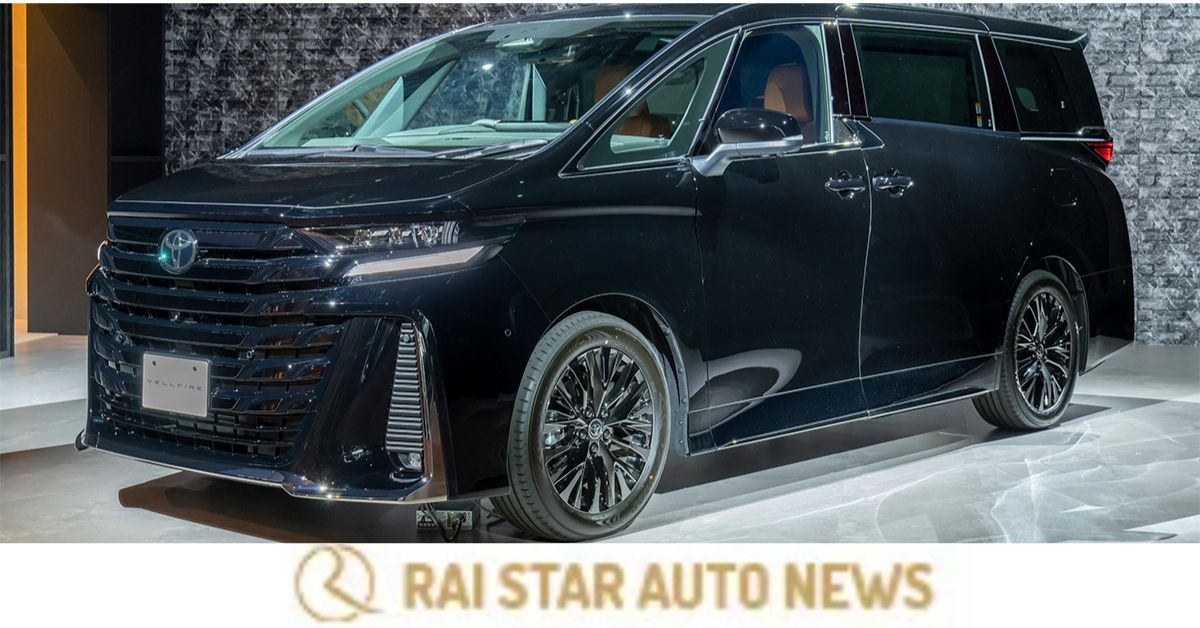
On June 21, 2023, Toyota introduced a full model change for its luxury minivans, the Alphard and Vellfire. These vehicles, which share the same platform, have undergone significant updates to cater to different user preferences and increase overall sales.
In the past, sales of the Vellfire surpassed those of the Alphard after its release in 2015. However, subsequent improvements led to a reversal in sales figures. One key factor contributing to the sales disparity between the two models is their appearance, including the front mask design.
Toyota made a significant change to its domestic sales system in May 2020, enabling all stores to sell all vehicles. Prior to this, the Alphard was exclusively sold at Toyopet stores, while the Vellfire was available only at Netz stores. The change in sales system allowed both Alphard and Vellfire to be purchased at Toyota and Corolla stores, leading to a boost in Alphard sales.
This restructuring of the sales model was driven by Toyota’s desire to reduce costs by handling fewer car models in Japan, including sister models. Despite this goal, Toyota decided to retain the Vellfire due to its previous success and substantial owner base. To facilitate selling both vehicles at the same store, the new Alphard was positioned as a high-end, large-sized minivan, while the new Vellfire embraced a sportier driving experience.
The updated Alphard features a front grill with plated accents, exuding a luxurious appearance. It comes equipped with a 2.5-liter hybrid engine and offers an optional 19-inch tire package for the “Executive Lounge” grade. However, the Alphard does not have stiffer shock absorbers or a front performance brace like the Vellfire, making the latter a better choice for those seeking a balance between driving and ride comfort.
The new Vellfire showcases a distinctive black-toned front mask, conveying a bold and fearless impression. It is powered by a 2.5-liter hybrid engine as standard, while a 2.4-liter turbo engine with enhanced performance is available exclusively for this sports-oriented model. The Vellfire comes with standard 19-inch tires, high damping force shock absorbers, and a front performance brace to ensure precise vehicle movement and enhance sporty driving dynamics.
Toyota recognizes the diverse demands of customers and acknowledges the desire for customization options. To address this, the new Alphard offers a variety of optional features, including larger 19-inch tires. However, Toyota recommends considering the new Vellfire if customers prioritize both appearance and performance.
By maintaining the Alphard and Vellfire as separate models, Toyota allows users to select between a luxury-oriented minivan and a sportier driving experience. This decision provides more design and driving flexibility, including the ability to freely choose the vehicle’s face, which can bring additional satisfaction to the customers.
In conclusion, Toyota’s full model change for the Alphard and Vellfire aims to meet the specific preferences of different user groups. The new Alphard emphasizes luxury and comfort, while the new Vellfire caters to those seeking a more dynamic and sporty driving experience. With these updates, Toyota aims to increase the overall number of registered vehicles and provide customers with a broader range of choices.
Unveiling Toyota’s Second-Generation C-HR: 3 Exciting Powertrain Options!

Toyota has unveiled the highly anticipated second-generation C-HR, marking a significant update to their compact SUV lineup. The original C-HR, known for its innovative design, gained widespread attention when it was introduced in 2016. On June 26, 2023, Toyota Europe took the wraps off the all-new C-HR, becoming the first region to showcase the second-generation model.
The first-generation C-HR, launched in Japan at the end of 2016, paved the way for similar-sized SUVs in Toyota’s lineup, including the “Rise,” “Yari Cross,” and “Corolla Cross.” However, the C-HR stood out with its distinct design and sporty driving characteristics. In the 2019 facelift, Toyota expanded the C-HR’s offerings by introducing a CVT transmission alongside the existing 1.8-liter hybrid and 1.2-liter gasoline turbo options. They also introduced a sports-grade variant called the “GR Sport,” which was developed by TOYOTA GAZOO Racing. The GR Sport boasted a unique appearance with features like a sporty front bumper, large grille opening, under guard, and large fog lamps. Inside, it featured a GR genuine leather-wrapped small-diameter steering wheel, metallic dark silver-coated instrument panel decoration and door inner garnish, and exclusive sports seats. To enhance the driving experience, a tunnel brace was added under the front floor, improving body rigidity and steering response. The C-HR GR Sport also featured exclusive 19-inch tires and suspension tuning for enhanced driving performance.
While the first-generation C-HR included a 6-speed manual transmission and the GR Sport variant, there has been speculation regarding the sporty elements in the second-generation model unveiled in Europe. Unfortunately, the current information does not mention the inclusion of a 6-speed manual transmission for the new C-HR. However, Toyota has been actively developing manual transmission mechanisms for electric vehicles, aiming to offer driving enthusiasts the traditional “enjoyment of driving” even in electric models (BEVs). This development indicates that Toyota is pioneering sporty SUVs and leaves open the possibility of manual transmission being adopted in future C-HR iterations.
Regarding the design of the second-generation C-HR, it retains the coupe-inspired style of its predecessor but introduces sharper elements. The front face, inspired by the “hammerhead” motif used in recent Toyota models, adds a touch of aggression and style. The dynamic and condensed form is emphasized by short overhangs and the option for large wheels, which can go up to 20 inches. Aerodynamic efficiency has also been a focus, with careful attention given to optimizing airflow around and through the vehicle.
The powertrain options for the new C-HR include two hybrid variants (1.8-liter and 2.0-liter) and a 2.0-liter plug-in hybrid model. While there is no specific mention of the transmission type, it is likely that Toyota will opt for an electric continuously variable transmission (CVT), similar to their other electric vehicles. The driving dynamics have been enhanced through the redesign of the suspension, brakes, and steering, ensuring intuitive acceleration performance and control to complement the new powertrain options. Extensive testing on various roads, weather conditions, and even on circuits at Toyota’s European test center was conducted to achieve the ideal balance in driving dynamics.
Toyota has also introduced the GR Sport Premiere Edition for the second-generation C-HR, building upon the success of the first generation. The GR Sport Premiere Edition showcases sportiness with its G mesh pattern grille and newly designed 20-inch aluminum wheels, among other distinctive features.
In summary, the second-generation C-HR brings a fresh design with sharper elements and an updated powertrain lineup, including hybrid and plug-in hybrid options. While the current information does not mention the inclusion of a 6-speed manual transmission, Toyota’s ongoing development of manual transmission mechanisms for electric vehicles suggests the potential for its adoption in future iterations. With its commitment to delivering an enjoyable driving experience, Toyota continues to position itself as a pioneer in the sporty SUV segment.