
Toyota’s new EV “bZ4X” released in Europe … 516km cruising .
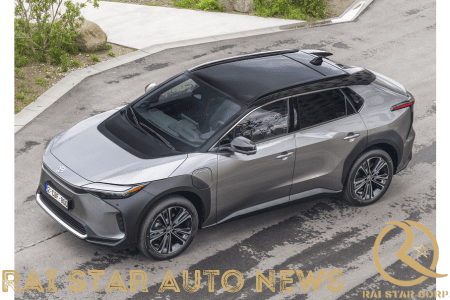
“Toyota’s New EV “”bZ4X”” Launched in Europe…Cruising Range of 516km
Two types of front-wheel drive and AWD available for European specifications
First model in the “”bZ”” series of seven models to be launched
EV-specific platform jointly developed with Subaru
Lease sales only through “”KINTO”” in Europe as well
On June 28, Toyota Motor Corporation’s European division launched the new bZ4X EV in the European market. As in Japan, the model will be sold on a lease basis.
.
The European version of the bZ4X is available in two types: front-wheel drive and AWD. The front-wheel drive version is equipped with a motor (maximum output: 204hp, maximum torque: 27kgm) on the front axle, accelerates from 0 to 100km/h in 7.5 seconds, and reaches a maximum speed of 160km/h. The lithium-ion battery has a storage capacity of 71.4kWh, and the maximum range on a single charge is 516km. The battery is lithium-ion with a storage capacity of 71.4 kWh.
The AWD model is equipped with a motor with a maximum output of 109 hp at the rear axle as well as at the front axle. The entire system draws 218hp of power and 34.4kgm of torque, and accelerates from 0 to 100km/h in 6.9 seconds. The battery is a lithium-ion with a storage capacity of 71.4 kWh and a maximum range of 470 km on a single charge.
For charging, a 6.6kW charger is included; an 11kW charger will be available by the end of 2022. The fast charging system with an output of 150 kW can charge 80% of the battery capacity in approximately 30 minutes.
◆The first model in the “”bZ”” series of seven models to be released
Toyota plans to launch 15 EV models by 2025 as part of its full lineup of electric vehicles. The “”bZ”” series will be a new series of EVs, of which seven models are planned to be released in the bZ series.
The bZ series, a new EV series, is intended to be accepted by many customers in China, the U.S., Europe, and other regions where demand for EVs and electricity supply from renewable energy sources is high. According to Toyota, the company aims to expand the range of customer choices and further reduce CO2 emissions in each region where it sells its vehicles by coordinating with energy policies that promote renewable energy. The “”bZ”” in the car name stands for “”beyond Zero. The name “”bZ”” stands for “”beyond Zero,”” expressing the company’s desire to provide customers with value that goes beyond mere “”Zero Emission.
The bZ4X will feature an open and flexible interior space and an innovative exterior design that are unique to EVs. For the Toyota bZ series, Toyota will also develop EVs in various body sizes and styles to meet customer needs. However, since this would be difficult for Toyota alone, joint development will be carried out with partner companies, each of which has its own areas of expertise. Subaru, Daihatsu, Suzuki, and China’s BYD have been named as partners.
◆ EV-specific platform jointly developed with Subaru
The bZ4X is the first EV in Toyota’s bZ series and is an SUV-type EV jointly developed with its partner Subaru. Joint development between Toyota and Subaru began with the first generation Toyota 86 and the first generation Subaru BRZ. bZ4X uses the “”e-TNGA”” EV-exclusive platform jointly developed by Toyota and Subaru. Toyota, with its expertise in electrification, and Subaru, with its superior AWD technology, have brought together their respective strengths to create an EV that is both comfortable and enjoyable to drive.
The bZ4X has short overhangs and a long wheelbase, which are achieved through the use of an EV-specific platform, to achieve distinctive styling and an interior space comparable to that of a D-segment sedan.
It features a steer-by-wire system that provides a smooth driving feel at will. The low instrument panel and meters positioned above the steering wheel provide a sense of openness and improved visibility, and are said to further enhance driving safety and security.
◆European models are also only sold on a lease basis through KINTO.
The bZ4X for Europe, like the bZ4X in the Japanese market, will only be available for lease through KINTO, which offers a subscription service.
In order to allow European users to drive the bZ4X with peace of mind, the bZ4X will be sold on a lease basis with monthly payments that include maintenance, road service, accessories, charging, and insurance.
Translated with www.DeepL.com/Translator (free version)”
Toyota’s new EV “bZ4X”, Europe also only for lease sales … Through “KINTO” .
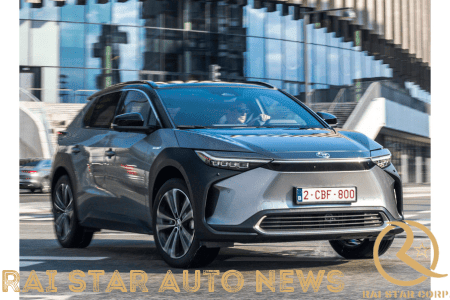
“Toyota’s new EV, bZ4X, is also only available for lease in Europe… through “”KINTO”” on Wednesday, June 29, 2022 at 14:30
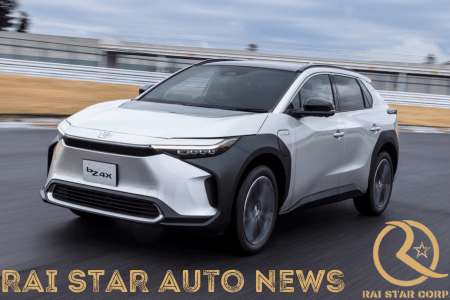
Toyota bZ4X (European specifications)
On June 28, Toyota’s European division announced that the new bZ4X EV for Europe will only be available for lease through KINTO, a subscription service provider.
This announcement by Toyota is the same style of introduction of the bZ4X in the Japanese market. In order to provide European users with a reliable bZ4X, the bZ4X will be sold on a lease basis with monthly payments that include maintenance, road service, accessories, charging, and insurance.
The bZ4X will be sold to the general public in the U.S. market at a base price of $42,000.
“
Toyota bZ4X & Subaru Solterra requests suspension of use … May tires fall off .
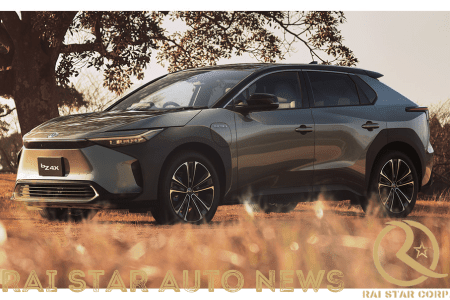
“Toyota bZ4X & Subaru Solterra requested to stop using…tires may fall off2022/6/23/22 17:15
On June 23, Toyota Motor Corporation notified the Ministry of Land, Infrastructure, Transport and Tourism of a recall of its Toyota bZ4X and Subaru Solterra models due to the risk of tires falling off the tires, and asked users to stop using the vehicles for the time being. The affected 204 vehicles were manufactured between March 2 and June 2, 2022.
The defective part is the hub bolt that attaches the tire. The bolt may loosen due to repetitive sudden turns or braking. If the vehicle continues to be driven in this condition, an abnormal noise may be heard, and in the worst case, the tire may fall off.
As a remedial measure, all vehicles will be asked to cease use for the time being, and permanent countermeasures will be implemented as soon as they are determined.
No defects or accidents have been reported. The problem was discovered based on information from overseas markets.”
Toyota “bZ4X”, Sumitomo Riko’s anti-vibration rubber and sound-insulating products adopted
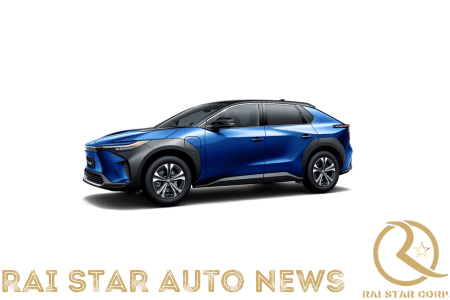
“Toyota “”bZ4X”” Adopts Sumitomo Riko’s Anti-Vibration Rubber and Sound Insulation Products June 14, 2022, 5:45 p.m.
Toyota bZ4X product equipped eAxle mounts. The three points in the front are for the rear and the three points in the back are for the front: stabilizer bushings (upper left), suspension bushings (upper right), coil insulator (lower left), strut mount (lower right)Cooling pipes for the electrical system (water system hose)eAxle cover
Sumitomo Science & Engineering has announced that its EV-compatible products, including anti-vibration rubber, hoses, and sound insulation products, have been adopted by Toyota Motor Corporation’s new SUV-type EV, bZ4X, launched on May 12, 2012.
The bZ4X is a new EV based on a special EV platform jointly developed by Toyota and Subaru, and Sumitomo Riko aims to use its products in the bZ4X, which is scheduled to go on sale sequentially around the world, to expand the use of its products to other models that use the platform.
Three product groups were selected for this project: anti-vibration rubber, hoses, and sound insulation products. The eAxle mount contributes to improved cabin comfort and the highly responsive driving performance unique to EVs. The eAxle mount is designed to protect the high-voltage components in the eAxle in the event of a collision, and aluminum is used extensively for the metal fittings to reduce the weight of the mount.
For the hoses, “”cooling piping for electrical systems”” was adopted, as EVs are expected to extend their cruising range, and thermal management is essential to minimize power consumption, energy loss, and battery degradation. Various devices that generate heat are effectively cooled by fluid (cooling water) in the piping to keep them at the appropriate temperature, thereby increasing the efficiency of the entire system.
In the area of noise control products, the new eAxle-compatible eAxle Cover has been adopted. eAxle Cover is set on the bottom of the rear-side eAxle and is effective in vibration and noise control in a wide range of bands from low to high frequencies. It contributes to improved comfort in the cabin, especially for rear seat passengers.”
[Toyota bZ4X & Subaru Solterra new test drive] Mobility Solterra and comfort bZ4X .
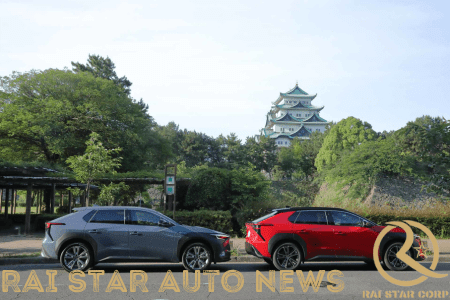
“Toyota bZ4X & Subaru Solterra New Car Test Ride]The Solterra offers mobility and the bZ4X offers comfort…Takahito Nakamura
260 km from Nagoya to Kanazawa in the bZ4X and Soltera
You need to plan your trip as carefully as you would an airplane.
Comfort of 18 inches is exquisite
Subaru Solterra (left) and Toyota bZ4X (right). Behind them is Nagoya Castle.
Subaru Solterra (left) and Toyota bZ4X (right). In the background is Nagoya CastleToyota bZ4XSubaru SolterraSubaru SolterraYou don’t have to go to Shirakawa-go to see old thatched housesToyota bZ4XSubaru Solterra charging quickly in the townscape
The bZ4X and the Solterra on the 260 km drive from Nagoya to Kanazawa.
A joint test drive of the Toyota bZ4X and Subaru Solterra was held on a grand scale. Starting in Tokyo, the course consisted of a total of five courses in a loop.
I was in charge of the 260-km course from Nagoya to Kanazawa, changing trains at Gujo-Hachiman along the way to test the two models. The second half was to reach Kanazawa with at least 50 km remaining. In other words, both courses require recharging the batteries at least once. Well, we could have gone the second half of the course without recharging if we pushed ourselves, but at any rate, we were allotted enough time to recharge at least once at the recharging spots marked on the course to complete the route.
Many people are still unfamiliar with the ins and outs of electric vehicles (EVs) (myself included). This time, the manufacturer’s intention was clear: they wanted us to learn a little about the basics of electric vehicles, including the experience of charging the battery. In other words, the amount of electricity flow differs depending on the charging spot, and it differs from spot to spot. Even for the same 30-minute charge, the more electricity that flows through the spot, the more you can charge.
In the route from Nagoya to Kanazawa, there were many charging spots with a capacity ranging from 20kw to 50kw. It was up to the driver to choose where to go, and some spots were quite far from the route, but the goal was the same for everyone. The goal is the same for everyone: a spot that is not too far off the route and has a large charging capacity. And in most cases, only one car can be recharged at a time. This means that if there is a customer ahead of you, you will have to wait. This is one of the reasons why the infrastructure for electric vehicles is said to be still insufficient. As expected, there were already passengers at the spot we were aiming for, forcing us to rethink our plans.
You need to plan your trip as meticulously as you would an airplane.
Now, vehicles are chosen by lottery. In my case, I first drove the FWD (front-wheel drive) model of the bZ4X, and from Gujo-Hachiman on the way, I was assigned the AWD (all-wheel drive) model of the Solterra. I have test-driven the Solterra on snowy winter roads, but this was the first time for me to drive the bZ4X.
The basic structure of the car is the same from the framework, so there are no major changes, but there are subtle differences in flavor. The bZ4X is more oriented toward comfort and driving performance. Also, both models are available in FWD and AWD, but there are slight differences: while Toyota has a single grade, Subaru has two grades of AWD, and while Toyota has 18-inch tires as standard, Subaru has 20-inch tires as standard on the higher grades. The biggest difference is that the Subaru is sold individually while the Toyota is only available for lease through KINTO.
So we started with a FWD bZ4X. We headed for the Tokai-Hokuriku Expressway from central Nagoya. The car was about 80% fully charged. The manufacturer did not intentionally charge the battery to full capacity. However, when we checked the route, we found that we were supposed to get off the highway at Gujo Hachiman, and there were no spots along the way. The quickest way is to charge the battery at the SA on the highway, but it is too early to do so.
The fate of electric vehicles is that they must decide where to go and check for charging spots along the route. With an internal combustion engine car, you can just go anywhere and if you run out, go to the nearest gas station…but not so with an electric car. But this is not the case with electric vehicles, which require as much detailed travel planning as airplanes. This time, we recharged our batteries at a roadside station called Rustenhorrado. The capacity is 20kw, which is small. While I was charging, two electric car users came to charge their cars, but they gave up when they saw me.
The remaining mileage was about 300 km at the time of departure, so the first half of the journey was an easy one if one ignores the 200 km comment. Once we got off the road, a pleasant winding road continued. There are some ups and downs, but for some reason, the vehicle slows down before each corner. When the road goes downhill, it also slows down at the ups and downs. Later, I was told that the regenerative power is enhanced by sensing the slope and speed of the slope, and in the case of a corner, the camera also recognizes the speed and the corner itself to enhance the regenerative power. In the case of a corner, the camera also recognizes the speed and the corner itself to enhance the regenerative power. Well, this reduces the amount of work the driver has to do, and although it may not be appropriate to use the word, it makes the driver look even more foolish. Is this just another trend of the times?
18-inch comfort is exquisite
By the way, the comfort of 18-inch wheels is exquisite. The Soltera, which I rode later in the day, was equipped with 20-inch wheels, but these were a bit too much. Well, it may have much better traction in corners, but I don’t think I would want to drive an electric car that fast in the first place. I am well aware that it has tremendous acceleration power if you step on it, but its acceleration does not have the elation (mainly the sound and the acceleration you can feel) that is characteristic of internal-combustion cars. It is ridiculously fast, but I feel a sense of sadness like a sparkler.
From Gujo-Hachiman onward, the car is a Soltera. Although it is not as comfortable as the 18-inch bZ4Z, it is equipped with features that make driving enjoyable, such as paddles with variable regenerative power. Come to think of it, this car was equipped with a Harman Kardon audio system, while the first half of the Toyota was equipped with a JBL audio system. The quietness of the car makes it a fun choice for electric cars.
Electric vehicles still have a lot of issues to address, such as the disposal of batteries. Toyota’s approach of using subs and collecting the vehicle is likely to be less troublesome.
■5-star rating
Packaging: ★★★★
Interior/Comfort: ★★★★
Power Source: ★★★★
Footwork: ★★★★
Recommendation: ★★★★
Takahito Nakamura, AJAJ Member
Born in 1952, Takahito Nakamura was a car enthusiast, gracing the pages of Motor Magazine at the age of four. In 1977, he entered the journalism industry and has been working as a freelance journalist for 44 years. He is also currently the president of Shofadept, a company that offers driving lessons to businesses and seniors.”
Run 250km! Is Toyota & Subaru’s latest SUV “bZ4X / Soltera” cool? What is the power of the new EV with “likeness” .
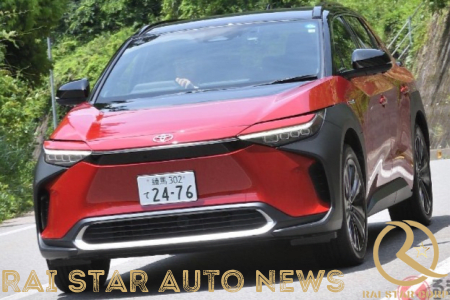
“250km run! Is Toyota & Subaru’s Latest SUV “”bZ4X/Solterra”” Cool? What are the capabilities of the new EVs with “”uniqueness””?
The basics are the same! The key was the respective flavors added at the end!
The new Toyota bZ4X and the new Subaru Solterra are the first global BEVs to be jointly developed by Toyota/Subaru.
Large plastic parts on the fenders emphasize the wildness! View images of the new Toyota-faced “”bZ4X”” and the new Subaru-faced “”Solterra””
The basics are the same! The key was the respective flavors added at the end!
The new Toyota bZ4X and the new Subaru Solterra are the first global BEVs to be jointly developed by Toyota/Subaru.
[Images] Large plastic parts on the fenders emphasize the wildness! View images of the new Toyota-faced “”bZ4X”” and the new Subaru-faced “”Solterra”” (44 images)
This time, we test-drove the numbered mass-produced models in the real world (on public roads). What are the “”similarities”” and “”differences”” between the new bZ4X and the new Solterra that many people are wondering about?
Toyota and Subaru together created the new bZ4X and the new Solterra
The first collaboration between Toyota and Subaru dates back 16 years (2006) to the commissioned production of the Toyota Camry at Subaru’s U.S. plant (SIA) (until May 2016).
Subsequently, although it is not well known, Subaru engineers were transferred to Toyota for the development of the Toyota “”Ractis”” and Subaru “”Tresia”” and carried out car manufacturing together.
This trend led to the joint development of Toyota’s 86/GR86 and Subaru’s BRZ, and now the new bZ4X and new Solterra.
Incidentally, the joint development of the new bZ4X/new Solterra differs from the tag teaming of the new GR86/new BRZ, which will be fully remodeled in 2021.
The development of the new GR86/new BRZ was carried out under the theme of “”Let’s build a good car together,”” with Toyota taking care of product planning and design, and Subaru taking care of development and production.
In the case of the new bZ4X and new Soltera, engineers from Toyota and Subaru were brought together in the new “”ZEV Factory”” on an equal footing, working from scratch.
From the planning stage to packaging, design, engineering, and equipment, the two companies discussed and developed the car together. In other words, it was a “”one-team”” joint development in the true sense of the word.
Although we in the media tend to focus only on differentiation, in fact, the common parts of the two companies also contain strong ideas and thoughts from each company.
Daisuke Ono, the person in charge of the development of the new Solterra, says, “”The ZEV factory was set up within Toyota for resource and production reasons, but there were no barriers in the development process that made us aware of the differences between manufacturers. When the result became a product, there were some differences between the new bZ4X and the new Soltera, but it would be better to say that we created a vehicle that both companies were satisfied with and seasoned it at the last minute to bring out the individuality of each car.
Looking at the two cars with this in mind, the image of the two models seems to have changed a bit.
One example is the exterior design. Some may say that both are “”too ordinary for a BEV,”” but the “”not too advanced, but not too conservative”” design makes sense when you look at them as models that are intended for widespread use.
Incidentally, the only differences between the new bZ4X/new Solterra are the color coordination of the front mask, rear combination lights, and wheels, as well as the different specifications of the cladding (material color for the Solterra and paint color for the bZ4X’s advanced version); the basic form is common.
However, it seems that it was difficult to reconcile the two companies’ particular needs, with Toyota wanting to emphasize design and Subaru not wanting to compromise on visibility performance.
Strangely enough, however, the new bZ4X has an atmosphere of a “”good mix”” of the two companies’ crossovers, skillfully balancing the wildness of Toyota’s RAV4 SUV with the sophistication of the Harrier.
On the other hand, the styling of the new SOLTERRA evokes Subaru’s new design language “”BOLDER,”” which was adopted from the second-generation Levorg, and it is clear that Toyota and Subaru’s respective design aspirations have been incorporated in the common parts.
The visor-less meters, horizontal infotainment, and the integrated structure of the center cluster and center console all seem to lean toward Toyota in terms of design, but the driver’s seat offers a good view (the A-pillar is narrow and the windshield wipers are hard to see), which gives the driver a sense of security and a functional layout. It is interesting to note that the sense of security, functional layout, and other aspects of the car that are not visible are typical of Subaru.
However, I wonder if it was not necessary to follow the many switches, which is one of the issues with Subaru vehicles.
Incidentally, the new bZ4X and the new Solterra have their own exclusive interior coordination, light gray and tan, respectively, and I was reminded that this is not mere differentiation, but an important element that enhances the “”character”” of each model.
The front seat position is more like a sedan with a high eye level than an SUV, but the “”top-mounted meter,”” which is installed for the first time in this model, looks over the steering wheel. This is a seat position that was adopted for the first time in this model. If we wanted, we would be happy if there was an adjustment allowance for this meter as well.
The navigation system is a new generation cloud type, but while the new Solterra is the best Subaru in terms of functionality, the new bZ4X has not only improved in some areas, but has been adversely affected in others, such as the elimination of screen splitting and simplification of functions. I hope that the new bZ4X will be updated to better accommodate users in the future.
The rear seat has more legroom than in other classes, taking advantage of the long wheelbase, but the floor is slightly higher, so the seating posture is a bit like sitting on a gymnast. However, there is plenty of leg room, so this is probably within the acceptable range.
One thing I noticed is that the new Solterra’s rear seats are equipped with heated seats, but the new bZ4X does not have such a feature. I do not think it was necessary to go to the trouble of differentiating between the two here.
250km range! Is Toyota and Subaru’s latest SUV, the bZ4X/Solterra, good-looking? What is the new EV with “”uniqueness””?
What are the differences in driving performance between Toyota and Subaru?
So how about their respective driving performance?
In this case, both the new bZ4X/new Solterra are electric AWD models (80kW + 80kW for a total of 160kW specification) with independent motors in the front and rear, and 20-inch specifications (Bridgestone Transa 235/50R20).
The powertrains are basically the same, but there are two differences between the new bZ4X and the new Solterra.
One is the number of drive modes, with the new bZ4X having two modes (ECO/Normal) and the new Solterra having three modes (ECO/Normal/POWER).
The other is regenerative control. Both have normal and one-pedal acceleration/deceleration modes (new bZ4X: Regeneration Mode / new Solterra: S-Pedal Drive), but the new Solterra is equipped with paddle shifters that can control the amount of regeneration in four stages in addition to the normal mode. The new Solterra is equipped with paddle shifters that can control the amount of regeneration in four levels.
Both of the Normal models have a “”margin”” of performance that slightly exceeds the expected value of “”this much power”” when the driver presses the accelerator pedal, but the new bZ4X gives a more powerful impression when compared to the two models.
We thought it might be an individual difference, but when we talked to the engineer, he said that the Normal of the new bZ4X corresponds to the POWER of the new Solterra, and the Normal of the new Solterra is relatively mild in taste.
Comparing the two vehicles, the POWER of the new Solterra felt more powerful than the Normal of the new bZ4X.
When we asked the engineer about this question, he replied, “”I don’t think that’s wrong; the two cars have different damper settings. Naturally, the car sinks differently when the accelerator pedal is pressed, so I think this slight difference in behavior is what gave the impression of a difference in power.
Paddle shifters are a common feature in engine-powered cars, but in BEVs they are used to adjust the degree of deceleration when the accelerator pedal is off.
There are four levels of deceleration. The default is “”2,”” followed by “”3″” and then “”4,”” which increases the degree of deceleration. On the other hand, “”1″” is equivalent to coasting.
This is a typical Subaru item in the sense that it leaves the control to the driver, but it would have been better if these were mounted on the new bZ4X without differentiating it from the other models.
Looking at the differences in powertrains, the new bZ4X is, at best, “”normal”” but, at worst, it is a bit too rational and lacks interest.
The footwork is exclusive to BEVs. The new bZ4X is called “”e-TNGA”” and the new Solterra is called “”e-SGP,”” but they are the same thing, just different names.
The new bZ4X is characterized by a low center of gravity, reduced moment of inertia due to reduced front and rear overhangs resulting from a more compact power unit, lightweight design, and an excellent rigidity-balanced body structure with a strong lower body and flexible upper body, resulting in excellent basic characteristics.
In addition to these features, the AWD model adopts electric AWD with independent front and rear motors. This is where the advantages of the fusion of Toyota’s electrification technology and Subaru’s AWD technology and joint development are best utilized.
The common features include a steering system with a solid core, a series of cornering performance that transcends the concept of a drive system, stability that seems to forget that the car has a high overall height, and a flavor that is sportier than it looks, but to be honest, the driving performance of the two cars is similar but not the same. However, to be honest, I felt that the two cars are similar but not the same in terms of driving performance.
The two differences in driving are EPS control and damper tuning. However, when you compare the ride, you can realize that the difference in ride quality is more than you can imagine, considering the parts that have been changed, though not as much as the new GR86/new BRZ.
Both are basically sporty in flavor, but the new bZ4X has a “”gentler”” steering feel and car movement, with a pleasant dullness as if a layer or two of skin had been added to the new Soltera, and a “”generosity”” that makes the car feel larger than the body size. It has a “”generosity”” that makes the car feel larger than its body size.
It is thinner than the new Solterra, but I thought it was more pure and faithful in terms of “”anyone can experience high performance without feeling self-conscious,”” which is a characteristic of Toyota’s driving style.
The ride quality of the new bZ4X gives the impression that the legs are moving more than expected, and in the practical range it is the most comfortable Toyota vehicle, but at high speeds, the car seems to move too much and is not under control.
In contrast, the new Sortera is “”agile”” in both steering feel and car movement, giving a direct impression as if a layer or two of skin had been removed from the new bZ4X. It has a movement that makes the car feel smaller than its body size.
In this sense, even without the horizontally opposed engine and direct-coupled AWD, Subaru’s unwavering axis of car manufacturing, “”enjoyment with peace of mind,”” is clearly reproduced, and it is a driving experience that will not betray existing Subaru users even if they switch to the new model.
The ride quality is slightly tighter than the new bZ4X, but it is also the most comfortable Subaru vehicle. It is rather flat at high speeds, but on the other hand, strange resonance is generated at around 70 to 80 km/h, and the lack of stability is a little worrisome.
250km run! Is Toyota & Subaru’s Latest SUV “”bZ4X/Solterra”” Cool? What are the capabilities of the new EVs with “”uniqueness””?
How “”electric”” is the new bZ4X/new Solterra?
The Toyota Safety Sense (Ver. 3.0), the third generation of driving assist technology, is installed. Incidentally, the new Soltera calls it “”Subaru Safety Sense.
In addition to the accuracy/smoothness of control of ACC and steering assistance being at a level comparable to Subaru’s “”EyeSight””, the “”PDA (Proactive Driving Assist)”” risk anticipation support function and “”Advanced Park”” that enables automatic parking are also used, so Subaru fans should feel comfortable using it.
From Toyota’s side, however, the fact that the “”Lane Change Assist”” and “”Advanced Drive”” with traffic jam support functions, which will be used in the new “”Noah/Voxy”” models, have not been adopted may be a bit of a concern.
And the most concerning thing for BEVs is the “”cruising range.
The AWD + 20-inch model has a battery capacity of 71.4 kWh and a cruising range (WLTC mode) of 487 km for both the new bZ4X and new Solterra.
This public road trip was not fully charged, but started at about 80% capacity and traveled about 250 to 300 km, including general roads, winding roads, and highways.
Although the car can reach its destination even if it is driven as it is, Toyota and the company want the driver to experience the “”hardships (!?) of recharging the battery. The first day was spent driving from Shizuoka to Hamamatsu and back.
On the first day, we drove from Shizuoka to Hamamatsu, Hamamatsu to Nagoya, and on the second day from Nagoya to Gujo Hachiman and Gujo Hachiman to Kanazawa, and in all the sections, we found that the electricity consumption was around 6.0 km/kWh (we drove around 250 km each day).
When we spoke with Toyota’s CTO, Masahiko Maeda, he said that he was confident about the electric power consumption, so we had high expectations for the car.
When we talked to the engineer about this, he said, “”The 20-inch tire is more about maneuverability, so we are not ignoring electric cost, but it is also true that there is a part of the tire that has been cut off. If you value electric cost, 18-inch tires are probably the best.
Although the author was not able to ride in the test car due to the availability of a test car, a person who compared the 18-inch and 20-inch tires said, “”The 20-inch tire was around 6.0 km/kWh, but the 18-inch tire increased to 8.8 km/kWh.
We tried quick charging several times on the road, and we got the impression that charging for 30 minutes at 50kW output would increase the cruising range from 100km to 120km.
* * * *
Looking at only the changed parts of the new bZ4X and the new Solterra, it may seem that there are no major differences, but when I actually drove them in the real world, the differences as cars were more than I had imagined.
However, when you sit in the driver’s seat and drive, the parts that you see are the same (the only difference is the emblem in the center of the steering wheel), but in combination with the ride quality, the new bZ4X looks like a Toyota and the new Solterra looks like a Subaru, which is surprising because they properly look like Toyota cars and Subaru cars, respectively.
The reason for this is that the point is rather in the common parts.
We did not add “”character”” to a car developed by either company, but rather developed the car together from scratch, so we were able to incorporate a good balance of both companies’ ideas in the common parts.
The differences between the new bZ4X and the new Solterra are like seasonings hidden in the common parts that bring out the individuality of each company.”
Toyota RAV4 hybrid with TRD tune suspension, “Woodland” … to be released in the US this fall .
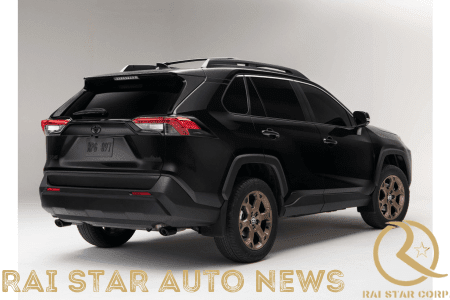
“Toyota RAV4 Hybrid with TRD-tuned suspension, “”Woodland”” to be released in the U.S. this fall
Enhanced suspension with emphasis on off-road driving
219hp power from the entire hybrid system
New “”Toyota Audio Multimedia
Monday, June 6, 2022 6:00 PM
On May 31, Toyota Motor Corporation’s U.S. division announced the 2023 model year of the RAV4 Hybrid (Toyota RAV4 Hybrid). The new “”Woodland Edition”” will go on sale this fall.
◆Strengthened suspension with emphasis on off-road driving
The “”Woodland Edition”” of the Toyota RAV4 Hybrid (US specifications)
Toyota RAV4 Hybrid “”Woodland Edition”” (U.S. specifications)
The Woodland Edition focuses on off-road driving with a TRD-tuned suspension, Falken’s WILDPEAKAT all-terrain tires, bronze-finished aluminum wheels that have been flow-formed for added strength, and springs tuned for off-road driving. Tuning. Twin-tube shocks feature rebound springs and special valving.
Black-finished roof rack crossbars are fitted, and LED projector beam headlights and fog lights are standard. Emblems and mudguards are finished in black. Dual black chrome-tipped exhaust is also featured.
Inside, a 120V inverter is standard. This allows the use of household electrical appliances for camping and other activities. All-weather floor mats and cargo mats have also been added. Three body colors are available: Midnight Black Metallic, Cabaret Blue, and Ice Cap.
◆219hp power throughout the hybrid system
The “”Woodland Edition”” of the Toyota RAV4 Hybrid (U.S. model)
Toyota RAV4 Hybrid “”Woodland Edition”” (U.S. specifications)
The RAV4 Hybrid is powered by a direct injection 2.5-liter inline four-cylinder gasoline Atkinson cycle engine (maximum output: 176hp, maximum torque: 22.5kgm), front motor (maximum output: 118hp, maximum torque: 20.6kgm), rear motor (maximum output: 54hp, maximum torque: 12.3 kgm), the Toyota Hybrid System.
The entire system draws 219hp of power. The synergy between the high combustion efficiency and high output of the 2.5-liter “”Dynamic Force”” engine, which uses compact, lightweight, and low-loss technologies and “”TNGA””, has been pursued to achieve excellent dynamic performance and low fuel consumption.
This hybrid powertrain has improved response and acceleration performance when stepping on the accelerator pedal by increasing the engine’s high torque. The combustion efficiency was increased and the transmission was made more efficient to achieve both dynamic performance and low fuel consumption. The battery (rechargeable battery) uses nickel metal hydride.
◆New “”Toyota Audio Multimedia
The 2023 model will be equipped with the new “”Toyota Audio Multimedia”” system. Wireless Apple “”CarPlay”” and Google “”AndroidAuto”” enable smartphone connectivity via dual Bluetooth. In addition, “”Wi-Fi Connect”” is available for 4G connectivity for up to five devices, turning the car into a hotspot; HDRadio, USB data, and SiriusXM platinum plans are also available with a three-month trial subscription. AppleMusic and AmazonMusic subscriptions can also be linked to the vehicle.
For the 2023 model year, the multimedia display and multi-information display have been upgraded. An 8-inch multimedia display is now standard on all models. A new 10.5-inch multimedia display is standard on higher grades. The top-end model comes with a 12.3-inch multi-information display. 7-inch multi-information display is also standard equipment, especially on the entry grade.”
Will EVs replace gasoline cars? Possibility and issues found in “bZ4X” and “Solterra” long-distance test drive
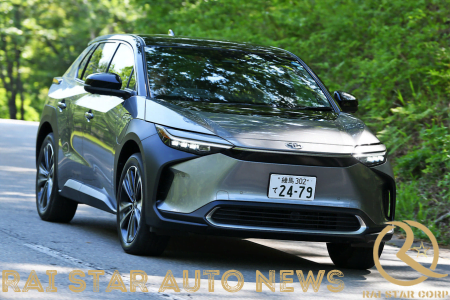
“Will gasoline-powered cars be replaced by EVs? Possibilities and Challenges Discovered in a Long-Distance Test Drive of the bZ4X and Solterra
First, the “”Solterra”” surprised us with its straightforward handling.
Switching to the “”bZ4X””, we realized the difference in character.
BEVs and subs are a perfect match! What are the possibilities of “”GR”” and “”STI””?
About 30,000 fast-charging units to be installed by 2030
Monday, June 6, 2022 12:19 PM
drivingToyota bZ4XDaisuke Ido, Toyota ZEV Factory, chief development officer of Toyota bZ4X
Driving 250km in the bZ4X and Solterra
The shift to electric vehicles (BEVs) has finally begun in earnest. Although automakers are working frantically to develop BEVs in order to realize a shift away from fossil fuels, I suspect that many people are honestly concerned about whether they can actually be used in the same way as vehicles powered by internal combustion engines, which have been used up to now. I myself am one of them. Even though I have been thinking in my heart that electric cars will be next, when I see cars waiting to be recharged at service areas on weekends and holidays, it makes me think to myself, “”This is not realistic.
It was during this time that I had the opportunity to drive the “”bZ4X”” and “”Solterra,”” which were jointly developed by Toyota and Subaru. Personally, I was intrigued by these two cars, and although I cannot deny the impression that Nissan, in addition to Mercedes-Benz, BMW, Audi, Porsche, and other German automakers, has beaten us to the punch, I have high expectations for Toyota because of the remarkable level of perfection it has achieved in recent years. I was looking forward to this test drive to see if I could dispel my concerns and doubts. And the fact that it would be a long drive made me even more eager for this test drive.
The bZ4X and Solterra have a range of just over 500 km per full charge, which is more than enough to meet the needs of the market, and of course they also meet the requirement to reach 80% in 30 minutes for quick recharging using CHAdeMO. However, the truth is that these are only claims to the contrary. We knew that, depending on the usage and environment, the battery would run out of juice in no time.
The course for this test ride was approximately 256 km from the Nagoya Station area to Kanazawa Station, with instructions to arrive at the vehicle transfer point with at least 200 km of driving distance remaining! The route includes some winding roads, so we had to start off on the right foot. There are some winding roads along the way, so I was anxious even before we started. However, if we were to be conservative and give priority to fuel economy, we would not be able to understand the true nature of the vehicle. Driving in a manner similar to the fuel efficiency tests often seen in the automotive media will not give you a good idea of the practical range of the car, so we decided to take the plunge and drive normally.
First, the “”Solterra”” surprised me with its straightforward handling.
The first car we drove was the Subaru Solterra AWD model. The gross vehicle weight is over 2 tons, so I was concerned about the weight right from the start. In fact, I was more concerned about the weight of the huge battery placed under the floor, which is peculiar to electric vehicles, than the actual weight of the car, which exceeds 2 tons, and I felt more resistance to driving with this mass of battery. However, it is true that the acceleration when starting from zero was more than sufficient, taking advantage of the uniqueness of an electric vehicle. My first impression was, “”It’s heavy, but I guess I can get used to it.
The body size, which belongs to the C-segment and is closer to the D-segment, is also very good in terms of visibility and handling, and the packaging is comparable to that of today’s crossover SUVs. I was surprised by the straightforwardness of the handling response. Although the weight under the floor was a concern, the car’s low center of gravity made for a surprisingly enjoyable, if not nimble, driving experience on the winding roads along the way.
The Subaru Solterra’s battery power was rapidly depleting, as one would expect. It is true that the car does not have a sport mode, but thanks to the excellent chassis, it encourages this kind of sporty driving, which I found rather troublesome. This may be something that should be praised, but in the case of BEVs, it was a profound reminder that if the driver enjoys driving, it will have the opposite effect. Hence, by the time we arrived at the transfer point, we were unable to keep our promise, and our remaining driving range was less than 200 km. ……
Oh no, I was going to be scolded! I thought to myself, but when I checked the battery level of the Toyota bZ4X, which I drove next, I found that it was almost the same situation, less than 200km, so it was not the fault of my driving. The fact that the former I had driven so far was also almost the same suggests that the conditions were just barely realistic. The fact that the former driver was also on the edge of the limit of the realistic conditions is a good indication that the conditions were almost the same as those of the former driver.
Switching to the “”bZ4X”” and feeling the difference in character
With this in mind, we drove the bZ4X toward Kanazawa and found it to be more comfortable than the earlier Soltera. We later asked the development team if our impression was different because this is a FWD model, and it turned out that Toyota and Subaru had intentionally changed the settings.
To put it simply, Toyota prioritized ride comfort and other amenities, while Subaru emphasized sportiness. It seems that each brand prioritizes its own characteristics, but in the case of the Toyota bZ4X, perhaps because it is FWD, the impression of “”excellent performance”” precedes the enjoyable driving experience of the Solterra, and it has the effect of making the driver drive in a relatively eco-friendly manner. This may have the effect of encouraging people to drive in a relatively eco-friendly manner.
In terms of electricity costs, the two cars differ slightly, partly due to differences in settings, but if you are serious about purchasing the bZ4X, it is the tire size that you should pay attention to. For example, in the case of the bZ4X, a comparison of the standard 18-inch tires and the optional 20-inch tires shows a difference of 47 km on a full charge in FWD, the most power-efficient mode, and a difference of 13 Wh/km in electricity consumption rate (both in WLTC mode, values published by the manufacturer). (Both in WLTC mode, values announced by the manufacturer).
Considering the essence of the vehicle, the choice between the two is obvious, but it is clear that the AWD model has its own charms that are hard to discard. The breakdown of these modes is “”SNOW/DIRT,”” “”DEEP SNOW/MAD,”” and “”Grip Control. Of course, some people may need AWD in certain areas. Also, the Solterra’s AWD is the only model with paddle shifters that can adjust the effect of regenerative braking, so if you want to enjoy driving more, the Solterra may be your choice.
Unfortunately, we were not able to drive the AWD version of the bZ4X this time, so we do not know the details of the differences between the two, but through this test drive, we could clearly see that both the bZ4X and Solterra have a high level of perfection. Toyota or Subaru, FWD or AWD, the choice is up to you, but on the other hand, there is actually a more important difference between the two companies. That is exactly what I mean by “”how to buy””.
BEVs and subs go hand in hand! The “”GR”” and “”STI”” possibilities are
While the Subaru Solterra catalog lists the vehicle price as usual, the Toyota bZ4X is KINTO or lease only. In other words, the biggest difference is that Toyota recommends subscriptions. In fact, this is the proof of the essence of BEVs. In addition to a maximum term of 10 years, with no mid-term cancellation fee required after the fifth year, the drive battery is guaranteed for 10 years, 200,000 km, and 70% of capacity during the contract period. In addition, vehicle inspections and statutory inspections are included, as well as tires and other consumable parts.
No matter how good a car is, it will eventually reach the end of its service life. In the case of electric vehicles, the disposal of used lithium-ion batteries is also an issue. If this is the case, it goes without saying that the best way to get a BEV is to purchase a SUV that is designed to be collected in advance for reuse or recycling later on. The fact that we are now in an era that suggests that there will never be a car that will be the favorite of the enthusiast who loves to choose “”a car to share his/her life with”” suggests that we must promote sustainable buying in consideration of the earth’s environment. I can say that KINTO and BEV are a perfect match.
If I asserted that, one might think that the era of “”hobbying cars”” is over, but perhaps we should expect this because there is another form of marginality left to be found in the future. After this test drive, I asked the development team if there was a possibility of a “”GR”” or “”STI”” based on the bZ4X or Solterra, and they replied that it was quite conceivable. Of course, this is only on the assumption that the demand can be anticipated, but at the very least, the key to accelerating the transition from internal combustion engine vehicles to electrification is to create attractive products, and since electrification will be promoted in the world of motorsports, a BEV sports grade is a necessity considering the influence of such a vehicle. It is inevitable.
About 30,000 fast-charging units to be installed by 2030
In order to meet that day, we strongly hope that the infrastructure will be expanded as soon as possible. As mentioned at the beginning of this article, the reality is that charging facilities in Japan are still lacking. In urban areas where there are many apartment complexes, even if one wants to purchase a BEV, it is unrealistic to think about it unless the environment is ready for it. In rural areas, the charging environment is so lousy that it seems out of the question. In fact, during this test drive, there were only about a dozen charging stations along the way during the latter half of the approximately 130-km trip. Moreover, all of them were equipped with only one unit, and about half of them had an output of 20 kW.
Automakers are now desperate. The government’s support is also essential to accept them, and they are planning to install 150,000 units by 2030, of which only about 30,000 will be quick-charging units. Will this really be enough to make BEVs penetrate the market? This is the biggest challenge. Or should we expect the realization of wireless charging systems first?
Not only the author, but the wavering feelings toward BEVs are likely to continue. Even though it is claimed to go just over 500km on a full charge, this distance will not be reached without eco-friendly driving. ……
Toyota bZ4X and Subaru Solterra in Kanazawa, Japan
Toyota bZ4X and Subaru Solterra in Kanazawa, Japan
■5 star rating
Packaging: ★★★★
Interior/Comfort: ★★★★★
Power Source: ★★★★★
Footwork: ★★★★
Recommendation: ★★★★★
Masaru Noguchi|Motor Journalist
Born in Tokyo in 1967, Noguchi began his career in 1993 as an editor of a certain import car magazine. He later moved to Sanei Shobo, where he worked in the GENROQ editorial department and became the magazine’s editor-in-chief in 2008. 2018 saw the launch of GENROQ Web. Later, in 2020, he became an independent motor journalist and producer, bringing over 25 years of experience to his work.”
How good is Toyota’s BEV? Ecosystem created with “bZ4X” .
“How serious is Toyota about BEVs? Ecosystem created by “”bZ4X”” [Shinji Fujii’s Focus On] (Japanese only)
bZ4X”” is highly evaluated as a product.
Have governments and capitalists spread BEVs around the world by force? Toyota is
Serious Toyota’s “”Koto”” Start. What is the future development?
Friday, June 3, 2022 11:00 AM
The “”bZ4X”” as a product has been well received
Toyota, which the rest of the world has been saying is behind the curve, has finally launched its first dedicated electric vehicle (BEV). The “”bZ4X”” was jointly developed with Subaru, and its body, which rides on an EV-specific platform, has a beautiful form with a design typical of SUV-type Toyotas.
It is fully loaded with safety equipment and connected functions. The price of 6 million yen, including subsidies, is a reasonable estimate. Efforts are being made to eliminate concerns about the battery, which is the source of power, in terms of driving range, deterioration over time, and lengthy recharging time. The newsletters also show that the development team worked hard on “”seasoning the driving experience”” in consideration of Morizo’s (President Akio Toyoda) comment that “”EVs are fast, but the driving feel is boring.
The BEV has also been well received by automotive journalists as a “”product””.
Did governments and capitalists popularize BEVs around the world by force? Toyota is the first company to offer a
However, Toyota’s seriousness about this car seems to be more in the “”Koto”” part.
The bZ4X is sold on a lease basis, with personal use limited to a subscription system called KINTO. Corporate users are also limited to leasing from the Toyota Rent-A-Lease network of nationwide dealers under the Toyota umbrella (in the Tokyo area, Toyota Mobility Service Tokyo Corporation, which is directly managed by Toyota). In other words, Toyota’s distribution system is designed to keep the ownership of the bZ4X firmly in place. Even users who fall in love with the bZ4X will not be able to own it privately.
Even though new EV sales have increased to approximately 4.6 million units worldwide, the reality is that the entire automobile manufacturing industry and car society as a whole is built and maintained around the engine. The first product to appear in this society, the EV, although in the form of a car, can honestly be said to be unable to fully adapt to this society at the present time. In Japan, where EVs have lagged behind the rest of the world, there are many people who overreact to the inconvenience of EVs, and many pragmatists and sensible people who are taking a wait-and-see attitude, saying that EVs are still a long way off.
Toyota bZ4X’s fast charging port
Quick charging port on the Toyota bZ4X
At the current stage, EVs cannot become a major player in the mobility society unless an ecosystem, including a charging infrastructure, is created. A successful model will not be realized unless a new business model is created with synergies by involving other industries in the surrounding area.
In doing so, it is important to recognize that battery-powered EVs are still high-priced and underdeveloped products, and to consider the problems that may befall buyers, users, and society, such as battery life, the risk of falling used car prices, underdeveloped infrastructure, maintenance, accident response, recycling, etc. Moreover, the EVs will be used only after they are scrapped. These problems are long-term problems that affect buyers, users, and society as a whole. If not, not only business viability, but even words such as “”carbon-free”” and “”resilience”” will become meaningless.
In fact, these points, especially medium- and long-term issues, have not been seriously addressed in the global EV market, but have been spread by force by new-fangled users and capitalists who have been carried away by subsidies from wealthy governments and the power of the media. Is it too much to say that future measures should be taken while popularizing it? (Personally, I love to ride on the bandwagon, and I also love the business model of thinking while driving.)
Serious Toyota’s “”koto”” has begun. What are the future plans?
With the bZ4X, Toyota’s first EV-only vehicle, the company has started “”koto”” in a very serious way, as is typical of Toyota. Toyota has created its own ecosystem to solve a problem.
The main players in this ecosystem are Toyota dealers nationwide, their affiliated Toyota Rental & Lease stores, their own finance company affiliate KINTO, and their own peripheral businesses such as KINTO Factory, which can follow the speed of technological innovation in terms of after-sales service. It is essential that Toyota Motor Corporation will also involve its own related players, such as used car-related companies, recycling companies, logistics, and supply parts, which are not mentioned in the newsletter.
It is believed that a closed system will be adopted to ensure that all vehicles are placed in this eco-system without missing a single vehicle, and that this is the reason for the limited sales through the lease system.”
Experience the driving of Toyota “bZ4X” as soon as possible! “More than I expected …”
“First hands-on experience of Toyota’s “”bZ4X”” driving! More than I expected…”” [Response EV/PHEV Test Ride] June 1, 2022 (Wed.) 12:45 PM
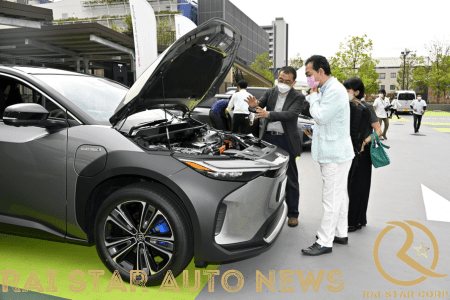
Toyota bZ4X (Response Readers Only EV/PHEV Test Ride Event)
The “”Response Readers Only EV/PHEV Test Ride”” was held at Ariake Garden (Koto-ku, Tokyo) on May 14th. The event, where visitors could experience the latest EVs and PHEVs, including the much-talked-about Toyota bZ4X, drew a large crowd despite the rainy weather forecast for the morning of the event.
Staff members from each manufacturer were on hand to provide test rides and show visitors the appeal of their vehicles. Whether they are actually considering purchasing an EV or are still waiting to see how it goes, visitors had a wide range of reactions. This article reports on the test-drive event.
Toyota’s first EV “”bZ4X”” to be launched in earnest
The Toyota bZ4X, which has just been unveiled as a production model, is one of the most talked-about vehicles at this year’s event. Since the event was held before the dealers’ exhibits and test drives were fully underway, participants who had test driven other vehicles were able to observe the exhibits in detail.
The exhibitor said that 500 orders had been received in the first two days after the announcement, and that the start of dealer test drives would probably spur even more orders. In fact, many people commented that the size of the car was more reasonable than they had expected when they saw it in person, so the response is likely to increase once the car is on store shelves.
Participants who test drove the bZ4X gave it high marks for its acceleration, responsiveness, and quietness, as well as for its ride comfort. The participants, who were skeptical about the performance of Toyota’s first full-fledged EV, were pleasantly surprised to find that they were able to experience the effects of the thoroughly low center-of-gravity design.
Is “”purchasing”” at KINTO still unfamiliar to you?
On the other hand, the brakes were the main area of concern. Some owners of other EVs pointed out the difference in feel, but what was interesting was that a MT vehicle owner pointed out that “”when not in one-pedal mode, there was not enough deceleration with the throttle off. The paddles to adjust the level of regenerative braking, which are equipped on the Subaru Sortera, might improve this situation somewhat.
Another question often asked at the show was about the purchasing method: visitors’ comments indicated that not only KINTO, which applies to the bZ4X, but also the leasing method is still unfamiliar to the general public. It is expected that this understanding will deepen as the number of business negotiations increases in the stores.
In any case, the reaction to being able to see the bZ4X up close just after its debut was generally positive.”