
Unbelievable Toyota Harrier S Grade SUV Wins Hearts with Under 3 Million Yen Price Tag

Toyota’s Harrier, known as the “Popular Luxury SUV,” has caught the attention of the automotive world with its surprisingly affordable “S” grade model. Priced at just over 3 million yen, the Harrier’s most budget-friendly offering has generated a flurry of positive feedback from consumers, highlighting its exceptional value.
br/>
The Harrier, now in its fourth generation, made its debut in 2020, carrying forward the legacy of its predecessors. This model is revered for its high-quality interior and exterior design, a key reason behind its continued popularity. However, it’s the entry-level “S” grade that’s currently stealing the spotlight.
br/>
The latest Harrier comes with a sleek coupe-style design, a blend of simplicity and elegance that enhances its urban appeal. Toyota has employed the TNGA GA-K platform, resulting in a highly rigid body with a low center of gravity. This platform innovation has elevated ride comfort and driving performance, making the Harrier a compelling choice in the luxury SUV market.
br/>
The Harrier’s powertrain options include a 2.5-liter gasoline engine, a 2.5-liter hybrid, and a 2.5-liter plug-in hybrid. Additionally, buyers can opt for front-wheel drive (FF) or the all-wheel drive (4WD) system, known as E-Four. The available powertrain configurations are designed to cater to a wide range of driving preferences.
br/>
Notably, the Harrier offers several grades for each powertrain. At the top of the line, there’s the PHEV “Z” grade, equipped with 4WD (E-Four) and priced at 6.2 million yen. In stark contrast, the entry-level “S” grade, powered by gasoline and featuring 2WD, comes at the impressively affordable price of 3,128,000 yen. This wide price gap between the highest and lowest grades brings about various distinctions, both inside and out.
br/>
In the exterior department, the “S” grade boasts three LED headlamps but lacks the double L-shaped LED daytime running lights found in other models. It also foregoes plating decoration on the front and rear bumpers and keeps it simple with 17-inch aluminum wheels featuring a gray metallic paint finish. The muffler cutter maintains a perfectly circular design.
br/>
Moving to the interior, the “S” grade features a steering wheel adorned with silver, while the satin plating seen in higher grades is absent. Panels such as the open tray, center console, and door switches are crafted from undecorated black panels. The seats, although basic, come in standard fabric and lack power functions.
br/>
However, this simplified equipment doesn’t mean a compromise on safety. The “S” grade comes equipped with the “Toyota Safety Sense” package, inclusive of collision mitigation braking that detects pedestrians (daytime and nighttime) and cyclists (daytime). It even includes essential infotainment features like an 8-inch display audio compatible with ETC2.0, Apple CarPlay, and Android Auto.
br/>
Initially introduced in 2020 for under 3 million yen, the “S” grade has seen a slight price increase, currently priced at 3.128 million yen. This increase hasn’t deterred potential buyers; instead, it has sparked a wave of discussion on social media and forums.
br/>
Reactions to the Harrier’s most affordable model have been overwhelmingly positive. Comments such as “The completeness and luxury feel is amazing for 3 million yen,” “Even if I’m looking for a C-HR or Yaris Cross (of the same Toyota SUV), can I buy a Harrier if I spend a little more?” and “It’s definitely enough” are common.
br/>
For those looking to maximize value, many see the “S” grade as a fantastic bargain, with some users referring to it as “a great deal.”
br/>
Nevertheless, there are contrasting opinions. Some drivers express concerns about the disparity in features between the “S” grade and higher-end models. Comments like “I keep worrying about the higher grade while driving” and “Toyota’s low-priced version is really easy to understand” highlight the discrepancy in the perception of different grades.
br/>
There’s also the aspect of uniqueness. A few users seem to be concerned about the interior design and how the exterior can be quickly recognized as an “S” grade model, especially when compared to higher-end versions.
br/>
Interestingly, some buyers have explored the idea of using the “S” grade for purposes such as car rentals and car sharing. However, this isn’t just a budget choice; it’s also an attractive option for those who want to customize their vehicles. By starting with the most affordable model, users can maintain a lower overall cost and personalize their ride to suit their tastes.
br/>
In conclusion, Toyota’s Harrier “S” grade is proving to be an excellent choice for those who seek an affordable luxury SUV that doesn’t compromise on quality. Its remarkable combination of value, safety features, and customization potential is winning over an ever-increasing number of discerning customers in the competitive world of SUVs.
Unveiling the All-New Toyota Harrier: A Luxurious SUV Redefined for the 21st Century

Toyota’s Harrier luxury SUV has gained immense popularity among SUV enthusiasts, thanks to its stylish design and high-quality interior. As the fourth-generation model, which underwent a complete overhaul in June 2020, the Harrier continues to impress with its captivating features.
One of the standout aspects of the Harrier is its exterior design, setting it apart from other SUVs on the market. The vehicle boasts a sleek and flowing coupe form that combines elegance with toughness, all while maintaining a sense of simplicity. The double L-shaped front daytime running lights and the distinctive single letter tail lamp contribute to the Harrier’s urban and sophisticated appeal.
Step inside the Harrier, and you’ll be greeted by a comfortable and luxurious interior space. The designers aimed to create an ambiance of high quality and comfort. The wide and commanding center console draws inspiration from a horse’s saddle, exuding a sense of generous toughness. When combined with the instrument panel, it creates a visually striking and cohesive look.
The top-of-the-line “Z Leather Package” in the Harrier’s advanced grade offers an exquisite experience with high-quality genuine leather seats reminiscent of a plush sofa. You have the option to choose between two interior colors: black and brown. The brown interior features gray wood-like decorations on the center console and door switch base panel, along with satin brown piping ornaments on the instrument panel and door trim, adding an extra touch of sophistication. The “Z” grade also offers an elegant gray interior option, with ivory accents on the center console and door switch panels, providing a dash of opulence. For the pinnacle of luxury, the Z plug-in hybrid model showcases a dark red piping ornament with a metallic mesh texture running from the instrument panel to the door trim, creating a premium ambiance.
In terms of functionality, the Harrier introduces Toyota’s first “dimmable panoramic roof.” This innovative feature uses a large dimming glass that covers the center of the front seat and the overhead area of the rear seat. It allows for a soft, inviting light to filter through, reminiscent of the gentle glow of a shoji screen when the light is dimmed. The dimming function enables instant switching between dimming and transmission, complemented by the convenience of voice recognition operation. Additionally, the Harrier features an “illuminated entry system” that illuminates the interior lighting, including the engine start switch, open tray, front footwell, and front door handles, upon unlocking the door locks, offering a welcoming experience.
Further enhancing the Harrier’s appeal, some improvements were introduced in October 2022. Certain grades now feature a 12.3-inch TFT color meter and multi-information display. This cutting-edge digital meter, gradually making its way into Toyota’s latest models, provides a large and easily customizable display, allowing drivers to tailor the information to their preferences.
While the Harrier caused a stir with the removal of the Chuuhi emblem, traditionally placed in the center of the front face in previous models, it now proudly displays the iconic Toyota mark in that position. However, the Harrier emblem still finds its place on the door trim, ensuring that the design that symbolizes the Harrier heritage is faithfully carried forward.
With its striking design, luxurious interior, and innovative features, the Toyota Harrier continues to captivate SUV enthusiasts and solidify its position as a sought-after luxury SUV in Toyota’s extensive lineup.
Toyota’s urban SUV Harrier now comes in a striking red color

Toyota’s urban SUV “Harrier” now comes in a striking red color, but some may find the bold style too aggressive. The Harrier, which first debuted in 1997, is known for its refined urban design and luxurious driving experience. However, Toyota has also released limited edition custom versions of the Harrier, such as the “Harrier Zagato” which features a wild and unique design created in collaboration with Italian design firm Zagato. The design concept, named “Italian Rocket,” includes wide and low bodywork, custom aerodynamic parts, over fenders, and a lowered suspension. The Harrier has been a trailblazer in the SUV market, inspiring similar models from other manufacturers. The custom Harrier models are an innovative approach to promoting new car releases and attracting attention to the brand.
Toyota’s urban SUV, the Harrier, has a striking red color for the second-generation limited edition Harrier Zagato. The development concept for the Harrier Zagato was “the shine of soul-stirring design – ART OF DESIRE.” The styling kit, which incorporates a 20mm length and 45mm width expansion, creates a wild image. The second-generation Harrier Zagato’s lineup has expanded, with a wider range of engine and drivetrain options. The body color options include a vivid “Red Mica Metallic” exclusive color, “White Pearl Crystal Shine,” and “Black.” The Harrier Zagato has left a strong impact and continues to do so in the current model, which also features bold design choices.
Toyota’s Harrier was so popular that it took the top spot among SUVs

Toyota’s Harrier was so popular that it took the top spot among SUVs in the May 2023 new car registration ranking. Registrations were up 194.3% year-on-year to 6,193 units. The Harrier is popular because it is a “luxury SUV” with a luxurious interior and exterior design and high cost performance. Until last year, however, the Rise was the top SUV. The number of Harrier registrations from January to May this year is 34,182 units.
The Toyota Harrier continues to sell well due to its luxurious interior and exterior design, as well as its high cost performance as a “luxury SUV”. While there are few drawbacks for most people, some driving enthusiasts may find the vehicle’s driver responsiveness lacking in areas such as power and handling. However, the Harrier remains the top-selling SUV in its category, although the Toyota Yaris Cross has surpassed it in registration numbers due to its affordable price and compact size.
Toyota’s luxury SUV Harrier Zagato was amazing

Toyota’s luxury SUV “Harrier Zagato” was amazing! It had a flashy aero and a unique custom design! It was a collaboration with Italy’s renowned “Zagato” company to create a custom complete car. The Harrier was the precursor to the globally popular “luxury SUV” category, debuting in December 1997. Just six months later in May 1998, the custom complete car “Harrier Zagato” was released in limited quantities, designed in collaboration with Italy’s famous design studio. The Harrier was designed with a lightweight and high-quality ride in mind, as opposed to the heavy-duty off-road vehicles of the 1990s. The Harrier quickly became a hit due to its practicality and spacious interior and cargo space. The Harrier Zagato was a custom version of the Harrier that generated buzz upon its debut, created in collaboration with Toyota Modellista International.
Toyota’s luxury SUV, the Harrier Zagato, is impressive with its flashy aero custom design. It features a combination of overfenders, aero parts, and a lowered suspension to create a wide and low form. The Bridgestone tires are 215/70R16 size with gold exclusive alloy wheels, adding to its unique appearance. The Harrier Zagato’s body size is 4635mm in length, 1900mm in width, and 1640mm in height, with a customized design that sets it apart from the base model. It has a 3-liter V6 DOHC engine and 4-speed AT transmission with only FF configuration. The vehicle was priced at 3,635,000 yen and limited to 200 units. Its body colors include Super Chroma Red, White Pearl Mica, and Black. The Harrier Zagato was produced efficiently at Toyota’s Kyushu factory to keep the price reasonable.
Toyota’s mid-size SUV the Harrier is considered the original luxury SUV

Toyota’s mid-size SUV, the Harrier, is considered the original luxury SUV, having created the category of luxurious urban SUVs. The current fourth-generation model, despite its high price ranging from 3.128 million yen to 6.2 million yen, has maintained its popularity and sold 34,182 units in 2022, ranking 18th in total sales. The Harrier is known for its comfortable and spacious interior, high driving performance, luxurious features, and stylish design. Its first model was released in 1997 when the concept of urban SUVs was just beginning to emerge. The Harrier was developed as an on-road SUV with excellent handling and ride comfort, emphasizing luxury and comfort similar to that of a luxury sedan.
The Toyota Harrier is a popular SUV that has been established as a popular brand in just 20 years. The current model features a stylish exterior with a strong presence and a luxurious interior with high-quality materials. It also offers a variety of engine options, including gasoline, hybrid, and plug-in hybrid, as well as the choice between front-wheel drive and four-wheel drive. The Harrier is known for its versatility and ability to cater to different lifestyles and needs.
Toyota’s luxury SUV the Harrier has been popular among a wide range of people
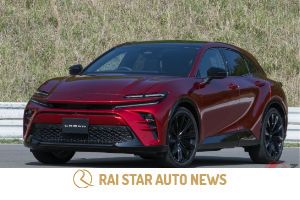
Toyota’s luxury SUV, the Harrier, has been popular among a wide range of people since its first release in 1997. The current fourth generation offers various styles, including gasoline, hybrid, and plug-in hybrid, and was recently updated in September 2022. Despite being larger in appearance than previous models, the Harrier maintains a low height and offers a luxurious ride with high silence. The recent update included improvements to safety features and a new display audio design, with the addition of PHEV being a significant point. The current sales status is unknown, but Toyota sales representatives in the Kanto region may have more information.
Toyota’s new luxury SUV is impressive with its stylish design. The Harrier, which has a rich style, has recently been updated with a PHEV model. The PHEV model has a glossy black mesh grille, black accents on the side mirrors and roof spoiler, and a smoke-plated chrome molding on the rear bumper, giving it a luxurious exterior. The interior features a dark red piping ornament with a metal mesh texture on the dashboard and door trim. However, the PHEV model’s sales are not as strong as the gasoline and hybrid models due to its higher price and the lack of charging infrastructure. Nevertheless, those who try the PHEV model praise its powerful driving performance.
Harrier’s top-of-the-line PHEV is too cool

Toyota “Harrier” Why is the hybrid more fuel-efficient? What is the value of choosing the highest-end PHEV, which costs about 1 million yen more?
Harrier Hybrid” vs “Harrier PHEV
Nowadays, most new models are hybrids, and more and more plug-in hybrids (PHEVs) are also being added to the lineup.
In this context, Toyota will add a PHEV to its Harrier luxury SUV in October 2022. Originally, a hybrid version of the Harrier was available, and one wonders how it will differ from the PHEV. How exactly is it differentiated?
Harrier’s top-of-the-line “PHEV” is too cool! View photos of interior and exterior
Toyota “Harrier PHEV” equipped with an exclusive mesh grille
The powertrains currently available in the Japanese market include a conventional internal combustion engine, a hybrid that uses both an engine and a motor powered by a dedicated battery, and a battery-electric vehicle (BEV) that covers 100% of the driving power. PHEVs are positioned between hybrids and EVs.
Recent hybrids have a full range of features, including an “EV mode” that runs on battery power and the motor, but PHEVs are designed to further enhance this feature by allowing the battery to be charged directly from an external plug. By more actively using motor-driven EV driving, fuel consumption can be further reduced.
Comparing the Harrier’s hybrid and PHEV, they have the same body size and the same type of engine, a 2.5-liter four-cylinder. However, there is a slight difference in specifications: the hybrid’s engine delivers 178 hp/221 Nm, while the PHEV’s delivers 177 hp/219 Nm.
What are the other differences?
First of all, the hybrid has a choice between 2WD and 4WD (E-Four/Electric 4WD). Those who prefer fuel economy over rough road drivability, or those who want to enjoy a lightweight crossover-like ride thanks to the 80kg weight reduction, can choose 2WD, while those who want SUV-like characteristics and peace of mind even in bad weather can choose E-Four.
On the other hand, the PHEV is only available in E-Four, probably because the PHEV is positioned as the highest grade of Harrier and 4WD is more suitable for transferring the 306 horsepower of the entire system to the road surface without difficulty.
Let’s compare the fuel economy performance (WLTC mode) in the catalog. The 2WD Hybrid achieved 22.3km/L and the 4WD Hybrid 21.6km/L, which are quite low fuel consumption.
The PHEV, on the other hand, is slightly less fuel-efficient than the hybrid at 20.5km/L, but it is still above its class. Why is the PHEV less fuel efficient than the hybrid, even though they have the same engine?
The answer lies in the vehicle weight: the hybrid weighs between 1620 and 1690 kg, while the PHEV weighs 1950 kg, a difference of about 300 kg.
The PHEV is also heavier due to the plug-in hybrid system and larger drive battery, which affects fuel economy, but despite the weight difference, the PHEV achieves a fuel economy of 20.5 km/L, which is nothing short of amazing.
In addition, the PHEV is capable of 93 km of EV driving, which seems to make up for the difference in fuel economy.
Toyota “Harrier” Why is the hybrid more fuel-efficient? What is the value of choosing the highest-end PHEV, which costs about 1 million yen more?
What are the differences in interior and exterior design?
The interior and exterior design of the Harrier hybrid and PHEV are somewhat different.
The Hybrid has a horizontal black front grille, while the PHEV has a glossy black painted mesh grille.
The PHEV has blacked-out sides of the dora mirror and rear roof spoiler, and smoked chrome moldings on the rear bumper. In addition, four body colors are available, including “Gray Metallic,” which is exclusive to the PHEV.
Toyota Harrier PHEV Interior
In addition, the interior of the PHEV features dark red piping ornamentation with a metal mesh texture from the instrument panel to the door trim. The seat upholstery is genuine leather like the top grade “Z Leather Package” of the regular Harrier, and is equipped with power seats.
The driver and front passenger seats are heated and ventilated in the same way, but the PHEV also comes with heated rear seats, making it a fully equipped top-of-the-line Harrier.
The PHEV is equipped with heated rear seats and other features that make it a top grade Harrier.
As for the price, the top-of-the-line hybrid model “Z Leather Package (E-Four)” is 5,148,000 yen (consumption tax included, same below), and the plug-in hybrid “Z (E-Four)” is 6,200,000 yen, with a difference of 1,052,000 yen.
Incidentally, the Harrier is also available in gasoline form, with the highest grade “Z Leather Package (E-Four)” priced at 4,538,000 yen.
The hybrid model can be driven with the same sensation as the conventional gasoline engine model, and offers high fuel efficiency and high power, while the PHEV model is about 1 million yen more expensive and weighs about 300 kg more, but has a special interior and exterior, equipment, and can be charged externally, making it more like an EV.
New Harrier EV with near-future design unveiled for the first time
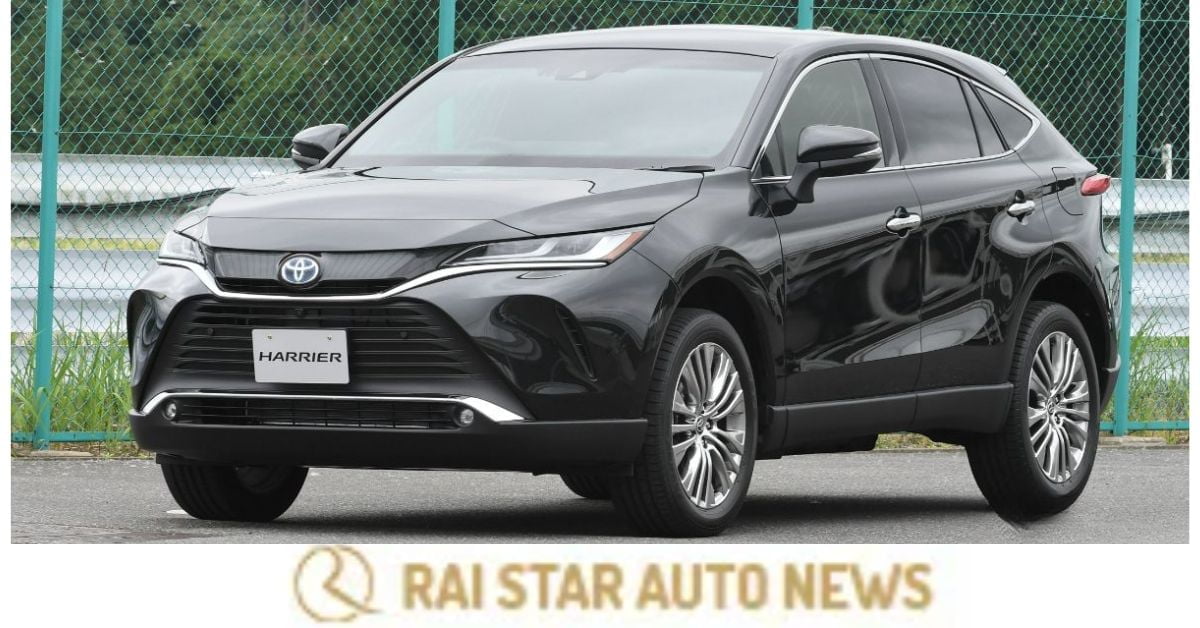
In a dazzling revelation at the Auto Expo 2023, hosted near Delhi, India from January 12 to 18, Tata Motors (Tata), a prominent automotive player in India, has taken the wraps off its latest innovation – the futuristic “Harrier EV”. While the name might draw parallels with Toyota’s Harrier, this electric SUV is a pioneering leap towards the future of sustainable transportation.
Tata’s existing “Harrier” model, a resounding success in the SUV segment, has been charming auto enthusiasts with its appealing design and performance. Developed in collaboration with Land Rover, this five-seater SUV, first introduced in 2018, has carved its own niche in the market. Sizing up at 4598 mm in length, 1894 mm in width, and 1706 mm in height, the Tata Harrier shares an uncanny resemblance in dimensions with Toyota’s Harrier, although the connection stops there.
Unlike its Japanese namesake, Tata’s Harrier embodies its own unique DNA. The exterior boasts a harmonious blend of dynamic curves and rounded contours, exuding an aura of modernity. Inside, the ambiance is one of simplicity and luxury, creating a welcoming space for both driver and passengers.
Powering the conventional Tata Harrier is a 2-liter diesel turbo engine, generating an impressive 170 horsepower. Enthusiasts can choose between a 6-speed automatic transmission or a 6-speed manual, with the sole option of a 4WD drivetrain for ultimate control.
However, the true star of the show is the recently unveiled “Harrier EV”, Tata’s bold step into the world of electric mobility. This electrified iteration proudly carries the mantle of its predecessor, built upon the D8 platform from Land Rover and designed with insights from the Omega architecture, jointly developed in conjunction with Jaguar Land Rover.
Aesthetically, the “Harrier EV” stands apart, donning an elegant and dynamic exterior. The elongated headlights and rear lights stretch gracefully across the entire width of the vehicle, accentuating its modernity and uniqueness. The sleek, coupe-inspired silhouette lends an air of futurism, hinting at the progressive engineering that lies beneath.
Both the front and rear bumpers sport a rugged skid-plate design, echoing the vehicle’s adventurous spirit. To enhance its aerodynamic efficiency, the “Harrier EV” features turbine-blade wheels that don’t just look captivating but also aid in performance.
As for specific details such as pricing, Tata has maintained a level of secrecy, leaving enthusiasts and analysts intrigued. While the exact figures remain under wraps, whispers from overseas sources suggest a potential market entry in 2024. It’s a promising glimpse into Tata’s electrified tomorrow, and as the auto world anticipates this landmark launch, it’s clear that Tata’s “Harrier EV” is set to redefine the landscape of electric SUVs. Stay tuned as more information unfolds, promising to shape the future of sustainable mobility.
New Toyota Harrier PHEV is amazing in terms of acceleration
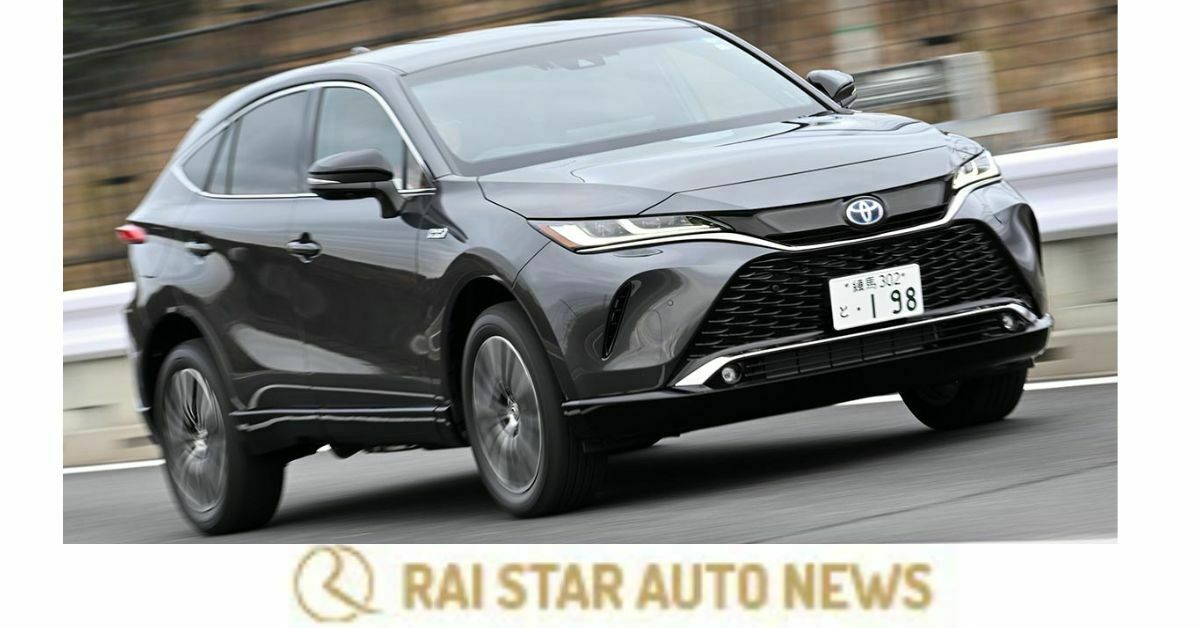
Toyota’s latest addition to its lineup, the “Harrier PHEV,” is generating excitement with its remarkable acceleration and distinct features. This plug-in hybrid model (PHEV) is set to hit the market in October 2022, adding a new dimension to the popular Harrier SUV.
Distinguishing Itself: PHEV-Exclusive Design Elements
One of the standout features of the Harrier PHEV is its unique exterior design. While the regular Harrier models sport a horizontal black grille, the Harrier PHEV boasts a glossy black painted mesh grille that adds an air of sophistication to its front. Not stopping there, the PHEV version further sets itself apart with black accents on the door mirrors and rear roof spoiler. The rear bumper’s chrome molding takes on a smoked chrome hue, contributing to an exterior aesthetic that exudes both quality and presence.
The Harrier PHEV doesn’t just stop at its exterior; it showcases its identity with an exclusive “PLUG-IN HYBRID” badge and a charging port distinct from the traditional gasoline refueling port. Four unique body colors, including the exclusive “Gray Metallic,” are on offer for PHEV enthusiasts.
Step inside the Harrier PHEV, and you’re met with an interior that exudes luxury. The dark red piping ornamentation with metallic mesh textures from the instrument panel to the door trim provides an upscale ambiance. The seats are adorned with genuine leather upholstery, mirroring the top-tier “Z Leather Package” found in the regular Harrier. Moreover, the Harrier PHEV is equipped with power seats, heated and ventilated front seats, and an extra treat – heated rear seats.
Power and Performance: Under the Hood
The Harrier PHEV derives its power from a 2.5-liter engine paired with an 18.1 kWh plug-in hybrid system. This combination empowers the vehicle with an impressive total power output. With the ability to switch to electric vehicle (EV) mode, the Harrier PHEV can cover a range of 93 km in the WLTC mode. The motor contributes to enhanced driving performance, while the low center of gravity ensures outstanding handling stability.
The drive system, dubbed E-Four (four-wheel drive), features drive motors in both the front and rear of the vehicle, delivering optimal traction and control. While the fuel economy of the Harrier PHEV stands at 20.5 km/L, slightly less than the Harrier Hybrid’s 21.6 km/L, the PHEV’s ability to travel 93 km in EV mode shines as a testament to its fuel efficiency.
Embracing the Future: Features and Feedback
The Harrier PHEV takes a forward-looking approach with standard features like an external power supply system of up to 1500W (100V AC), heated rear seats, and a panoramic view monitor with an under-floor transparency display function.
Early impressions of the Harrier PHEV have been overwhelmingly positive. Enthusiasts and test drivers have raved about its light and agile start, the serene interior, and the thrilling acceleration that combines for an exceptional driving experience.
Pricing and Perspective
Positioned as the pinnacle of the Harrier lineup, the Harrier PHEV comes with a premium price tag. At 6,200,000 yen, it stands over 1,000,000 yen higher than the highest-grade Harrier Hybrid at 5,148,000 yen. However, this premium comes with a package of exclusive design elements, advanced features, and a powertrain that seamlessly combines performance and efficiency, making it a choice that many are finding well worth the investment.