
Toyota’s top-of-the-line Harrier PHEV is an amazing ride!

Electricity makes it more attractive! Toyota’s top-of-the-line Harrier PHEV is an amazing ride! What is the evolution in the 25th year?
Harrier’s flagship “”PHEV”” is now available
The fourth generation Toyota Harrier, which was launched in June 2020, is a model that makes full use of the “”TNGA”” weapon to clarify and clarify the “”urban SUV”” concept that has been established by previous models.
It has received high acclaim for its sleek coupe exterior, tailored interior that rivals Lexus’, and unique ride quality, and continues to enjoy high popularity today.
In October 2022, the Harrier underwent its first improvement. The main improvements include driver assistance functions and interior convenience improvements, but the biggest news is the addition of a plug-in hybrid electric vehicle (PHEV).
The mesh grille is so cool! The top-of-the-line “”Harrier PHEV”” is too cool!
New “”PHEV”” model newly added to Toyota’s Harrier lineup
The reason why the PHEV is only available in the top grade “”Z”” is because of the following reasons. This is the reason why the PHEV is only available in the top grade “”Z””.
The exterior of the Harrier PHEV features an exclusively designed front grille (honeycomb shape), front lower bumper, aluminum wheels (black and machined), and exclusive decorations (black paint/dark chrome/body color). Incidentally, the Hikarimono is more restrained than the gasoline/hybrid models, but I have the impression that this is a feature that enhances the “”good-quality”” feel of the vehicle.
The interior is exclusively coordinated with a black base color, with dark red decorations (instrument panel and door trim) and perforations (seats). It may seem a bit tacky, but this is understandable, as the interior is designed to “”create a sense of prestige and sportiness”” (Mr. Yamazaki).
Incidentally, the full LCD meters, large screen display, and air conditioner panel have also been changed in the new model, and I felt that these also contributed greatly to the improved quality of the interior.
The full LCD meters can be selected from four different tastes and three different layouts, just like the Crown, but the “”tough”” design does not match the interior of the Harrier, so I felt that it would have been better to have a different design.
Also, the air conditioner controls are now able to display the temperature in the panel, which improves visibility.
More Attractive with the Power of Electricity! The top-of-the-line Toyota “”Harrier PHEV”” is an amazing ride! What is the evolution in the 25th year?
Top comfort level among current Toyota vehicles
How does the Harrier PHEV drive? The powertrain is based on the Hybrid E-Four, with a higher output front motor (from 88kW to 134kW), a larger capacity battery (from nickel metal hydride to lithium-ion: 18.1kWh), and changes to the PCU and DC/DC converter to generate 306ps system output.
These systems are basically the same as those of the “”RAV4 PHV,”” but when actually driven, the vehicle felt more powerful and smoother. The reason for this is the “”quietness”” of the system, which gives the impression that the engine is operating farther away from the vehicle in EV mode as well as in hybrid mode.
When I conveyed this impression to Mr. Yamazaki, he told me that “”the use of acoustic glass, in which a highly sound-insulating film is inserted between the glass and glass, is effective.
Toyota “”Harrier PHEV
Incidentally, the tires have been changed to all-season tires (Bridgestone ECOPIA), but the road noise is also suppressed to the extent that one might have thought that the premium comfort tires “”Regno”” were being used. Incidentally, the EV driving range is 93 km (WLTC mode), so if you have a charger at home, you can use it almost exclusively as an EV.
How about the footwork? The platform is formally “”GA-K,”” but in order to cope with the 200 kg increase in weight over the hybrid version, it is based on the one for the “”Highlander,”” a 3-row seat SUV sold exclusively in North America, and the suspension setup and EPS control have also been optimized specifically for PHEVs.
The impression is that the Harrier’s “”massive”” and “”shittier”” ride quality is more pronounced. To be more specific, the steer system and footwork are milder than those of the Hybrid.
However, what I don’t want you to misunderstand is that it has not become duller, but rather the time axis of behavior change has become slower while maintaining the same precision in response to operation. It would be a lie to say that the hybrid plus 200 kg does not feel heavy when cornering, but the roll is also suppressed due to the lowered center of gravity and improved front-rear balance resulting from the conversion to a PHEV.
What surprised me even more than the handling was the ride comfort, to the extent that I could have mistaken it for having electronic control dampers. Not only does it softly cancel the gap, but it also converges the shocks not with a “”snap”” but with a “”whirr””, resulting in a more relaxed movement on the springs, which puts it at the top level of comfort among the current Toyota lineup. The ride quality is so gentle that it could be described as a descendant of the “”Royal”” series of previous generation Crowns, if I may say so.
When I conveyed this impression to Mr. Tomoyuki Katayama of the skilled technical training department, who was in charge of evaluating the driving experience, he told me, “”Our goal was the same for both the HEV and PHEV, but we were able to achieve an even higher quality driving experience and an even higher quality ride by optimizing various aspects of the suspension using the advantages of a lower center of gravity. I think we were able to achieve even higher driving quality and even higher ride comfort,”” he told us.
* * * * * * * * * *
The Harrier PHEV not only contributes to Toyota’s carbon-neutral/electrification strategy, but also adds “”driving quality”” to the model. In other words, it is a model that accelerates the appeal of Harrier with the power of electricity. And we felt that its multiple performance characteristics are suitable for the flagship of the Harrier series.
Priced at 6,200,000 yen, it is 1,160,000 yen higher than the Hybrid E-Four, but if you take advantage of the Clean Energy Vehicle (CEV) subsidy program, you will receive 550,000 yen, so the gap is quickly closing.
However, the long delivery time issue has not been cleared up, and the situation is that “”even if you want to buy it, you cannot. However, we have heard talk of a system to increase production of models for the domestic market from December 2022 to March 2023, so we recommend that those who are interested make a decision as soon as possible.
Toyota Harrier waiting 2 years for delivery
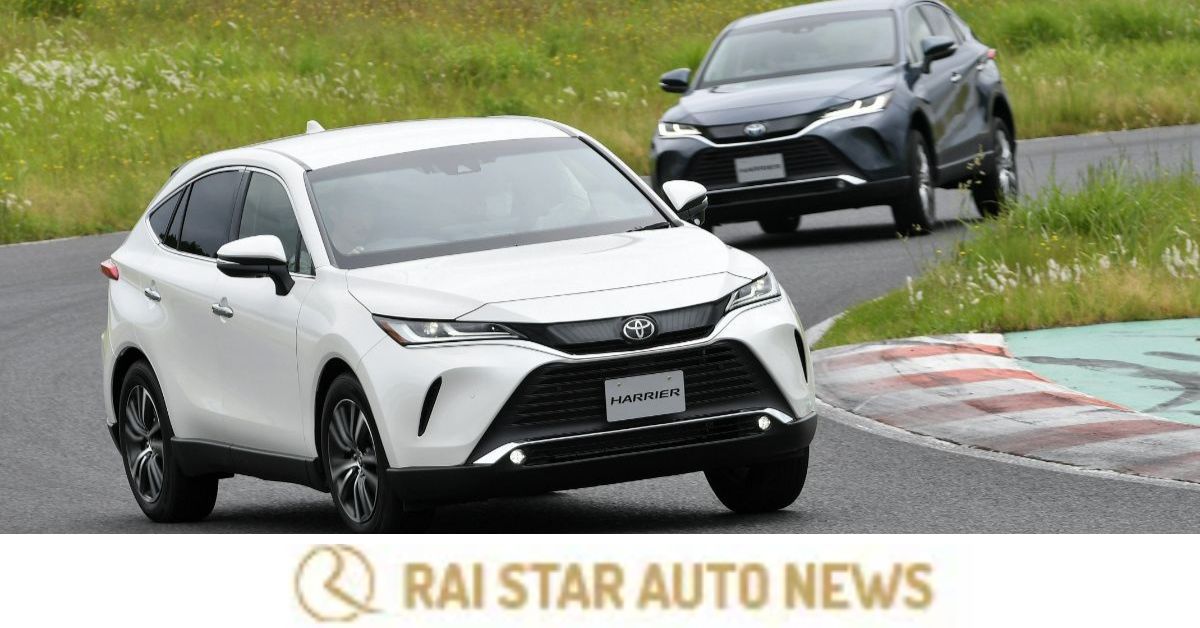
Harrier” waiting 2 years for delivery? Will 2022 end up being the “Year of No New Cars? What are the voices of the sales frontlines of the 9 domestic automakers?Has there been any change in the “new car not coming at all” problem in recent years?In recent years, long delivery times have become a problem in the domestic new car market. One of the reasons for this is the global shortage of semiconductors, which has made it difficult to supply parts.
It seems that most cars take a long time to be delivered, but what is the situation as of December 2022? We asked staff at dealerships about the latest information on delivery times, focusing on new models that debuted this year.A two-year wait for delivery! See images of the popular “Harrier” and “Jimmy Sierra” If you buy one now, will it be two years before it arrives…? Toyota’s popular SUV “Harrier
On December 2, 2022, we contacted stores in the Tokyo metropolitan area that sell nine Japanese brands (Toyota, Lexus, Nissan, Mazda, Honda, Subaru, Suzuki, Daihatsu, and Mitsubishi) and asked about delivery dates for vehicles sold under each brand, especially for new models debuting in 2022. We asked them about the delivery time for vehicles sold under each brand, especially new models debuting in 2022.
A staff member at a Toyota dealership had this to say about the problem of long delivery times for new cars.Toyota dealership staff said of the problem of long delivery times for new cars: “New cars will not be delivered within one or two months of ordering them, as has been the case in the past. I suspect the same is true for other manufacturers.What types of vehicles have particularly long delivery times?
The aforementioned staff answered, “In the case of the Harrier SUV, delivery is scheduled for 2024 in the longest case.” The popular Harrier SUV, which has just undergone partial improvement on October 4, 2022, has some users planning to take delivery in 2024, two years from now.On the other hand, there are cases where delivery dates are relatively short even for new models.For the Cienta, delivery is currently relatively quick, around two months depending on the grade and specifications.
Although it hasn’t been long since the announcement of the full model change of the Cienta compact minivan on August 23, it is likely to be delivered earlier than expected.However, the delivery time will vary greatly depending on whether it is a gasoline or hybrid vehicle, or on the grade of the vehicle,” said a staff member at a Lexus dealership, who added that in some cases, it may take a long time to deliver the vehicle.A Lexus dealership staff member said the following.
Lexus is currently suspending orders for all models nationwide. This means you cannot sign an order form, and you cannot buy a new car itself.”On the official Lexus website, the situation is clearly stated as “”Please contact your dealer for details”” for all models with factory shipment estimates. The situation is considered to be serious, as it is impossible to place an order before the delivery date.What is Nissan’s situation?
A staff member at a Nissan dealership said, “”It will take more than a year for the Aria electric vehicle and the new Extrail SUV, but the orders themselves are possible.The new Extrail will be launched on July 25, 2022, and while it is gaining momentum, with orders for 12,000 units immediately after its launch in the first two weeks, it will not actually arrive in users’ hands until next year.Honda’s dealership staff explains as follows.
The Civic Type R is completely undecided. For some models, such as mini and compact cars, immediate delivery of new cars is possible, but only if the color and options match.What Honda means by “”immediate delivery”” is new cars “”in stock,”” and although a certain number of new cars are available, a wait of several months is unavoidable if rare colors or rare options are selected.
As we approach the end of the year 2022, there seems to be little change in the current situation. Harrier”” waiting 2 years for delivery? Will 2022 end up being the “”Year of No New Cars? What are the voices of the sales frontlines of the 9 domestic automakers?
Is 2022 likely to end up being the “”Year of No New Cars””?So what about these other five brands, Mazda, Mitsubishi, Subaru, Suzuki, and Daihatsu?The Jimny Sierra is still a two-year wait due to the shortage of semiconductors.Mazda dealership staff explained as follows: “”All Mazda models are available.All Mazda vehicles are scheduled for delivery approximately four months after the order is placed. We accept orders for new vehicles of any model, but you will have to wait.
In the case of Mazda, there is less variation among models, but even so, delivery is still scheduled for next spring, which suggests that the current situation is severe from the dealership’s point of view, as it is the beginning of the fiscal year.A Mitsubishi dealership staff member said, “”Currently, all Mitsubishi models can be delivered in two to three months, which is shorter than other manufacturers. For example, the Delica D:5 is scheduled for delivery around February or March,”” he says.
On the other hand, he continues, “”‘Outlander’ is expected to be delivered in six months or more.The Outlander has a delivery time of more than six months, and orders for the eK Cross EV, a light electric vehicle, have been suspended and the delivery date is undecided.While Mitsubishi said that overall delivery times are relatively fast, delivery times for some popular models are still long, indicating that unlike Mazda, delivery times are varied.
A Subaru dealership staff member said, “”Currently, customers generally have to wait two to three months after ordering a new car. Production of the new Crosstrek is scheduled to begin in February or March, so early customers can expect delivery in April.What about Suzuki and Daihatsu? A staff member at a Suzuki dealership had this to say.All models will take three to four months to deliver. For models that require a longer wait, it will be six months for the Hustler, a year and a half for the Jimny, and about two years for the Jimny Sierra.
The “”Jimny”” and “”Jimny Sierra”” small SUVs have been popular since their launch in July 2018 and have had long delivery times even before the semiconductor shortage, but the semiconductor shortage appears to be affecting even longer delivery times.Daihatsu dealership staff said, “”We are currently receiving many orders for the ‘Move Canvas,’ and we expect customers to wait four to five months. It will also take about three months for the Taft.
As we enter December, with less than one month left in 2022, there has been no significant change in the long delivery times for new cars, and we are likely to enter the New Year with no new cars coming in. On the other hand, users who desperately want a new car are still looking for a new car.On the other hand, users who really want a new car may be able to get a new car with a much faster delivery time than waiting several months by purchasing “”in-stock”” or “”display”” cars, although the choices of body colors and options are limited and the number of units is also limited.
The delivery time varies from region to region and from dealership to dealership, and the situation at the dealership we interviewed is changing from moment to moment over the year-end and New Year holidays, so if you are considering purchasing a new car, it is best to check carefully before ordering.
Toyota’s “Harrier,” with its “high-quality interior” and leather sofa.
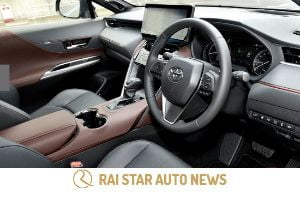
Toyota’s “Harrier,” with its “high-quality interior” and leather sofa, is popular among men and women in their 20s! What is the special “luxury” you want to drive on a Christmas date?
Toyota’s Harrier has a “cabin space” that is too upscale.
Nile Corporation, a car leasing business, conducted a survey on Christmas driving dates. The results of the survey were released on December 6, 2022.
Among the cars surveyed, the Toyota Harrier, a Toyota luxury SUV, took the top spot for the “”car I would like to drive on a Christmas drive date.
What features does the Harrier have that make it the car of choice for a Christmas date? In this article, we will take a look at the interior of the Harrier.
Perfect for a date! See the high-quality interior of the Toyota Harrier, an overly fashionable Toyota luxury SUV, in 17 images.
The “”special luxury”” of the Toyota “”Harrier”” that you want to drive on a Christmas date.
The Harrier, an urban SUV with an emphasis on a coupe silhouette, will be launched in June 2020 with the current model, the fifth generation.
It was recently partially upgraded in September 2022, with upgraded driver-assist functions and a new plug-in hybrid vehicle.
Such a Harrier is popular among a wide range of generations, including young people, as it is supported by both the “”Generation Y”” of 26 to 39 year olds and the “”Generation Z”” of 10 to 25 year olds in the above survey.
One of the most distinctive features of the Harrier is the high quality of the interior.
The interior has a chic and relaxed atmosphere overall, with a voluminous and spacious feel from the instrument panel to the left and right door trims, for example.
The instrument panel is softly padded, which gives it a soft feel where it touches the body, and is a point where the high quality can be felt.
The center console, designed to resemble a horse’s saddle, has a broad and imposing design.
The Z “”Leather Package,”” the highest grade of the Harrier, uses high quality genuine leather sofa-like seats, with a choice of two interior colors, black or brown.
The brown interior is particularly well-designed, with a gray wood finish on the center console and door switch base panels, and satin brown piping ornaments on the instrument panel, door trim, and other areas.
The Panorama Roof with Electric Shade is available as a factory-installed option.
In addition to opening and closing the motorized shade, the dimming function makes it possible to instantly switch between dimming and transmission with the shade open and without time lag.
When the light is dimmed, a sense of quality is also ensured, with soft light shining through as if through a shoji paper sliding door.
In this way, it can be said that the interior space of an adult is finished with a calm and luxurious atmosphere and chic colors.
Other features of the Harrier include its exterior.
With its flowing proportions, the Harrier’s main body has a teardrop shape that resembles a drop of water from front to rear, expressing a simple yet strong sense of movement.
The front headlamps feature two L-shaped luminous lines. The rear taillights and stop lamps, which emit a single red horizontal light, add further individuality to the rear lamps.
The price of the Harrier ranges from 3,128,000 to 4,538,000 yen for the gasoline model, 3,718,000 to 5,148,000 yen for the hybrid model, and 6,200,000 yen for the newly equipped plug-in hybrid model.
In addition to its sleek, urban exterior, the Harrier’s interior is designed with a calm, high quality atmosphere that gives it a special feel, making it a luxury SUV in its own right.
The Harrier is becoming popular as the car of choice for Christmas dates and other special occasions.
Toyota new “Harrier PHEV” VS Toyota new “RAV4 PHEV” thorough comparison .

Toyota’s New Harrier PHEV vs Toyota’s New RAV4 PHEV – In-Depth Comparison
Comparison of competing models
The all-new Toyota Harrier will go on sale in Japan on October 31, 2022, with the addition of the partially redesigned Harrier PHEV. The new Toyota RAV4 PHV, also by Toyota, will go on sale in Japan on December 1, 2021. The following is a competitive comparison based on the specifications.
The new Harrier PHEV is equipped with the newly developed “THS II Plug-in” plug-in hybrid system, which combines an inline 4-cylinder 2.5L direct injection engine D-4S + motor (THS II) with a large-capacity lithium-ion battery (8.8kWh of lithium-ion energy) and a powerful motor. The model is equipped with an additional motor. The system output is 302 HP (225 kW / 306 PS), 83 HP (62 kW / 84 PS) more than the hybrid model. The EV-only driving range is 93 km/L in WLTC mode fuel economy; the hybrid fuel economy WLTC is 20.5 km/L. Acceleration performance is 0-100 km/h in 6.0 seconds. The cruising range is 1,300km.
The 2.5-liter Dynamic Force engine and E-Four, which increases torque distribution to the rear wheels, provide the SUV with overwhelming mobility and drivability. kW and delivers powerful acceleration. Fuel-efficient thanks to the large-capacity lithium-ion battery that delivers a total of 18.1 kWh of electricity. The power stored in the large-capacity battery can be used for purposes other than “driving. In addition to in-vehicle use using the power outlet installed in the vehicle, the included Vehicle Power Connector can be plugged into a regular charging inlet to create a 100 V external power supply outlet. Up to 1500W in total is supported.
About Toyota’s New Harrier Partially Modified 2022 Model Year
The Z and Z “Leather Package” grades come with a panoramic view monitor as standard equipment. A new interior color lineup. Toyota Safety Sense, the latest preventive safety package with advanced features and improved functionality, has been added to the Harrier’s lineup, including “Low-speed acceleration control,” “Detection of oncoming vehicles and pedestrians when turning right at intersections,” and “Emergency steering avoidance assist. A driver error response system, radar cruise control, and a curve speed control function have been added. A PHV model is newly added to the lineup. The higher grade grades have a 12.3-inch TFT display (full LCD digital meter) instead of the 7.0-inch TFT color multi-information display + Optitron meter. The system has been replaced by the “Connected Navi” used in the new Noah Voxy and other models. An HDMI terminal and in-car Wi-Fi are available as options, and the USB port has been changed from Type A to Type C.
The all-new Toyota Harrier will go on sale in Japan on October 31, 2022, with the addition of the partially redesigned Harrier PHEV. The new Toyota RAV4 PHV, also by Toyota, will go on sale in Japan on December 1, 2021. The following is a competitive comparison based on the specifications.
About the new Toyota Harrier PHEV
The new Harrier PHEV is equipped with the newly developed “THS II Plug-in” plug-in hybrid system, which combines an inline 4-cylinder 2.5L direct injection engine D-4S + motor (THS II) with a large-capacity lithium-ion battery (8.8kWh of lithium-ion energy) and a powerful motor. The model is equipped with an additional motor. The system output is 302 HP (225 kW / 306 PS), 83 HP (62 kW / 84 PS) more than the hybrid model. The EV-only driving range is 93 km/L in WLTC mode fuel economy; the hybrid fuel economy WLTC is 20.5 km/L. Acceleration performance is 0-100 km/h in 6.0 seconds. The cruising range is 1,300km.
The 2.5-liter Dynamic Force engine and E-Four, which increases torque distribution to the rear wheels, provide the SUV with overwhelming mobility and drivability. kW and delivers powerful acceleration. Fuel-efficient thanks to the large-capacity lithium-ion battery that delivers a total of 18.1 kWh of electricity. The power stored in the large-capacity battery can be used for purposes other than “driving. In addition to in-vehicle use using the power outlet installed in the vehicle, the included Vehicle Power Connector can be plugged into a regular charging inlet to create a 100 V external power supply outlet. Up to 1500W in total is supported.
About Toyota’s New Harrier Partially Modified 2022 Model Year
The Z and Z “Leather Package” grades come with a panoramic view monitor as standard equipment. A new interior color lineup. Toyota Safety Sense, the latest preventive safety package with advanced features and improved functionality, has been added to the Harrier’s lineup, including “Low-speed acceleration control,” “Detection of oncoming vehicles and pedestrians when turning right at intersections,” and “Emergency steering avoidance assist. A driver error response system, radar cruise control, and a curve speed control function have been added. A PHV model is newly added to the lineup. The higher grade grades have a 12.3-inch TFT display (full LCD digital meter) instead of the 7.0-inch TFT color multi-information display + Optitron meter. The system has been replaced by the “Connected Navi” used in the new Noah Voxy and other models. An HDMI terminal and in-car Wi-Fi are available as options, and the USB port has been changed from Type A to Type C.
About the new Toyota RAV4 PHV
Toyota has added a PHV (Plug-in Hybrid Vehicle) model to the new RAV4 and released it in Japan on June 8, 2020. The new model is equipped with the newly developed “THS II Plug-in” plug-in hybrid system, which combines an inline 4-cylinder 2.5L direct injection engine D-4S + motor (THS II) with a large-capacity lithium-ion battery (lithium-ion energy capacity: 8.8 kWh) and a powerful motor. The model is equipped with an additional motor. The system output is 302 HP (225 kW / 306 PS), which is 83 HP (62 kW / 84 PS) higher than the “RAV4” hybrid model. In addition, the E-Four 4WD model (electric 4WD system), which is not available in the Prius PHV, is adopted, and its EV-only driving range is 95 km/L in WLTC mode, making it the longest PHEV crossover on the market. Additionally, the model achieves an estimated total fuel economy rating of 90 MPGe. Hybrid fuel economy WLTC is achieved at 22.2 km/L.
Acceleration performance is 0-100 km/h in 6.0 seconds. This is faster than the RAV4 hybrid and the second fastest acceleration in Toyota’s lineup. The cruising range of more than 1,300 km was pursued to achieve a “go-anywhere” driving range.
The RAV4 PHV can also use the power stored in its high-capacity battery for other purposes than “driving.” In addition to in-vehicle use via an outlet installed inside the vehicle, the included vehicle power connector can be plugged into a regular charging inlet to provide a 100 V external power supply outlet. Up to a total of 1500W is supported.
On the exterior, the RAV4 features “vertical LED daylight” as standard, which is not available on the regular RAV4, creating a clean and luxurious impression. A new body color, “Emotional Red II,” exclusive to the RAV4 PHV, has been adopted.
The interior features heated rear seats and a color head-up display on the higher grades. A panoramic view monitor (some grades) and a 9-inch display audio system with six speakers are standard equipment. Apple CarPlay and Android Auto are standard.
About Toyota’s new RAV4 PHV partial improvement 2021 model year
The exterior design of the new RAV4 PHV features redesigned headlights (signature LED lights and daytime running lights) and redesigned aluminum wheels. The design of the aluminum wheels has been changed.
Toyota’s New RAV4 PHV Partially Revised to be Launched on December 1, 2021
Toyota will release the all-new RAV4 PHV on December 1, 2021 after making some modifications to the model. Toyota’s new RAV4 PHV will go on sale on December 1, 2021.
Toyota’s New RAV4 PHV Partially-Upgraded 2022 Model Year
The new RAV4 PHV comes with a 7.0-inch TFT color multi-information display and Optitron meters. Higher grade grades will have a 12.3-inch TFT display (full LCD digital meter) instead of 7-inch. In-car Wi-Fi” is available as an option for the display audio system. New body colors are added. The latest preventive safety package “Toyota Safety Sense” with advanced functions and improved features. A digital inner mirror recording function has been added (front/rear direction recording function) and the navigation system has been modified. Connected Navigation System, which is used in the new Noah Voxy and other models.
Partially Upgraded Toyota RAV4 to Evolve into a Significantly More Attractive Model to Go on Sale on October 4, 2022
Toyota’s RAV4 will go on sale in Japan on October 4, 2022, with partial improvements. What kind of evolution has been achieved in the “RAV4,” which has been on sale for three full years, and what are the many differences…
Toyota “Harrier PHEV” vs Toyota “RAV4 PHV” Specs Comparison
Specifications Toyota
Harrier PHEV Toyota
RAV4 PHV
Overall length 4,740mm 4,600mm
Overall width 1,855mm 1,855mm
Overall height 1,660mm 1,690mm~
1,695mm
Wheelbase 2,690mm 2,690mm
Engine 2.5L inline 4-cylinder
Direct Injection Engine D-4S
+Motor (THSⅡ) 2.5L In-line 4-cylinder
Direct Injection D-4S
+Motor (THSⅡ)
Maximum output 130kW (177ps)/6,000rpm
6,000rpm 130kW (177ps) / 6,000rpm
6,000rpm
Maximum torque 219Nm (22.3kgfm)
3,600rpm 219Nm (22.3kgfm) / 3,600rpm
3,600rpm
Motor
Maximum output Front: 134 kW (182 ps)
Rear: 40 kW (54 ps) Front: 134 kW (182 ps)
Rear: 40 kW (54 ps)
Motor
Maximum torque Front: 270 Nm
Rear: 121Nm (12.3kgfm) Front: 270Nm
Rear: 121Nm (12.3kgfm)
System output 225kW (306ps) 225kW (306ps)
Transmission
Transmission Electric
Stepless transmission Electric
Stepless transmission
Drivetrain 4WD
(4WD (E-Four) 4WD
(4WD (E-Four)
Battery Lithium-ion
Battery Lithium-ion
18.1kWh Lithium-ion
Lithium-ion battery
18.1kWh
0-100km/h
Acceleration 6.0sec 6.0sec
Seating capacity 5 persons 5 persons
Minimum turning radius 5.7m 5.5~
5.7m
WLTC mode fuel economy 20.5km/L 22.2km/L
WLTC mode
EV driving range 93km 95km
Price (10%) 6,200,000 yen 4,690,000 yen~
5,390,000 yen
This time, we created a comparison chart between the “HARRIER PHEV” and the “RAV4 PHV,” both of which are “SUVs” and “PHEVs. The “Harrier PHEV” is longer in overall length, but it is almost the same size class. 0-100km/h acceleration is the fastest of the two models. It is faster than Porsche’s normal Cayenne SUV and normal Macan. The RAV4 PHV has a slight edge in WLTC mode fuel economy and EV driving range. Finally, in terms of price, the RAV4 PHV is cheaper by 810,000 to 1,510,000 yen. Although the RAV4 PHV has the advantage in terms of cost performance, the difference between the two premium models may not seem so great considering the difference in interior quality and other factors.
“What a great car!” Professional racers are amazed by the ultra-sporty Toyota’s new SUV “Harrier PHEV”!

“A car that looks great! Pro Racers are amazed by Toyota’s new super sporty SUV, the Harrier PHEV!
The first thing that comes out of my mouth is, “”Cool!
A plug-in hybrid vehicle has been added as the highest grade of Toyota’s luxury SUV, Harrier, and will go on sale on October 31, 2022.
This is so cool! A look at the interior and exterior of the new Harrier PHEV, which is highly acclaimed for its sporty driving performance.
The new Harrier PHEV is differentiated from the gasoline and hybrid models both inside and out, with a mesh-type exclusive front grille and black door mirrors on the exterior and dark red piping ornaments with a metal mesh texture from the instrument panel to the door trim on the interior. The interior also features dark red piping ornamentation with a metal mesh texture from the instrument panel to the door trim, giving the impression of high quality.
The new Harrier PHEV’s mesh grille, which is not too glaring, gives a favorable impression.
The powertrain consists of a 2.5-liter engine and a plug-in hybrid system with a total power output of 18.1 kWh. 93 km of EV driving range is achieved, with the motor enhancing driving performance and the low center of gravity providing excellent handling stability.
The drive system is E-Four (four-wheel drive), with drive motors mounted in the front and rear respectively.
As the highest grade of the Harrier lineup, the new Harrier PHEV is also equipped with a maximum 1500W (100V AC) external power supply system, heated rear seats, and a panoramic view monitor with under-floor transparency display function as standard equipment.
A video of racing driver Kamui Kobayashi test-driving the new Harrier PHEV has been posted on the Toyota YouTube Showroom.
Kamui Kobayashi said he was looking forward to driving the new Harrier PHEV, but when he first saw the exterior design, he said it was “”cool. He also praised the mesh grille, which is not too glaring and is a key design feature, creating an elegant and high-quality front mask.
Kamui also likes the “”gray metallic”” color, which is exclusive to PHEVs. Combined with the elegant wheel design, it creates a high-quality atmosphere.
When he got into the new Harrier PHEV, his first impression was, “”It looks mature and high quality.
Among other things, the dark red stitching on the seats is an elegant finish, and the red piping on the door panels is also a good color, although it is by no means conspicuous.
Sitting in the back seat, he said, “”It’s spacious and roomy. The height of the armrests is just right, and he was also interested in the heated rear seats, which can be activated at the touch of a button.
Finally, Kamui took the wheel of the new Harrier PHEV and said that driving in EV mode was “”incredibly smooth. The acceleration follows the response of the accelerator pedal, and when the accelerator pedal is released, the car decelerates and moves smoothly.
The smoothness of the steering wheel and the lack of vibration give the new Harrier PHEV a high quality feel in the 30 to 40 km/h speed range.
When tested to see how far the car can go in EV mode, it was found that even when accelerating to 80 km/h, the engine does not start and the car can continue in EV mode. We also found that the car is so quiet that wind noise can hardly be felt even when accelerating.
Next, we set the drive mode to “”Sport”” and switched from EV mode to hybrid mode to try a sporty drive.
It was totally different! I was surprised at how much power this car has. I didn’t know it was possible to drive like this,”” said Kamui, who was surprised by the new Harrier PHEV’s maximum system output of 225 kW (306 hp).
He also praised the car’s controlled movement even when cornering, and its smooth movement even when steering sharply, which gives him a sense of security and elegance without head bobbing.
Finally, he experienced the 0km/h-100km/h acceleration in Sport mode and Hybrid mode, and commented on the acceleration of the new Harrier PHEV, which reaches 100km/h in 6.10 seconds (reference value), saying, “”It goes to 100km/h very easily.
Instead of switching from EV start to engine, the driver can feel a sense of power as if the motor and engine are fused together.
He also mentioned the advantages of the E-Four. He commented that even on rainy or snowy days when road conditions are poor, the car does not slide sideways, which is outstanding.
* * *
He said that the car’s movements and controls, such as accelerating and braking, are well built and secure, which makes it fun and comfortable for the driver to drive.
Another feature of the new Harrier PHEV is that it is both elegant and sporty. Kamui also praised the new Harrier PHEV, saying, “”It’s a very nice car.””
Translated with www.DeepL.com/Translator (free version)”
Toyota “new luxury SUV” released! 6.2 million yen top-end specification “Harrier PHEV” can recover the difference between “how many kilometers” and a gasoline car? The charm is also external power supply!
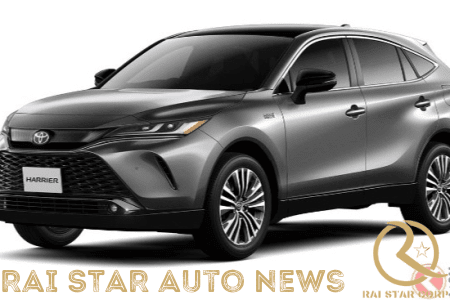
“Toyota’s “”New Luxury SUV”” on Sale! How many kilometers can the 6.2 million yen top-end “”Harrier PHEV”” recover the difference from a gasoline-powered vehicle? And its charm is its external power supply!
Exclusive front grille and interior decorations
Hybrid vehicles (HV) and plug-in hybrid vehicles (PHEV) have become increasingly popular in recent years.
Both are attractive due to their high fuel efficiency, but can they make up the difference in price compared to gasoline-powered vehicles?
What makes Toyota’s luxury SUVs different? A photo comparison of the Harrier & RAV4 PHEVs!
Toyota’s original luxury SUV, the Harrier, has a new PHEV! By the way, how long does it take to recoup the difference in vehicle price compared to gasoline or hybrid vehicles?
In 1997, the Toyota Prius was launched as the world’s first mass-produced hybrid vehicle (HV).
Twenty-five years later, HVs now account for more than 30% of new car sales in Japan, and have become synonymous with eco-cars.
In recent years, plug-in hybrid electric vehicles (PHEVs) that can be recharged are also available, and since European automakers are also actively marketing PHEVs, the choice of imports as well as domestically produced cars is a major attraction.
The advantages of HVs and PHEVs are that they are environmentally and economically friendly, and because they consume less fuel, they are also environmentally and wallet-friendly.
On the other hand, HVs and PHEVs are almost always more expensive than gasoline or diesel vehicles of the same model or the same class of model.
Therefore, many users who consider HVs and PHEVs often calculate whether they can recoup the difference and decide whether or not to purchase them.
So, can HVs and PHEVs actually recoup the difference compared to gasoline-powered vehicles in the same class?
On September 28, 2022, Toyota announced the addition of the Harrier PHEV along with minor changes to the Harrier, which will go on sale on October 31, 2022.
With this addition, the Harrier will now have three powertrains: gasoline, HV, and PHEV.
The Harrier PHEV is only available as a 4WD version of the high-end Z model, so when compared to the 4WD versions of the gasoline and HV Z models, the gasoline, HV, and PHEV models will be priced at 4,238,000 yen, 4,848,000 yen, and 6,200,000 yen, respectively.
A difference of 610,000 yen is seen between the gasoline model and the HV, 1,352,000 yen between the HV and the PHEV, and 1,962,000 yen between the gasoline model and the PHEV.
However, since HVs and PHEVs are exempt from automobile tax environmental performance quotas and automobile weight tax, there is a cost advantage of approximately 150,000 yen compared to gasoline cars.
In addition, PHEVs can obtain a CEV subsidy (so-called “”government subsidy””) of 550,000 yen plus local government subsidies depending on the place of residence, which substantially lowers the actual purchase price. In this case, we will proceed with the simulation assuming that a subsidy of 600,000 yen (Tokyo Metropolitan Government) is obtained.
Taking into account tax incentives and subsidies, the difference between a gasoline-powered vehicle and an HV is approximately 460,000 yen, between an HV and a PHEV is approximately 250,000 yen, and between a gasoline-powered vehicle and a PHEV is approximately 710,000 yen.
Toyota’s “”New Luxury SUV”” on Sale! How many kilometers can “”Harrier PHEV””, the highest specification with 6.2 million yen, recover the difference from gasoline-powered vehicle? And the charm is the external power feed!
How long do I actually have to drive? To recoup the difference with HVs and PHEVs, you need to drive quite a few miles
So how many miles do you need to drive to recoup the difference?
Looking at the WLTC mode fuel efficiency of the Harrier gasoline, HV, and PHEV “”Z (4WD specification)”” models, the gasoline model has 14.7 km/L, the HV 21.6 km/L, and the PHEV 20.5 km/L, respectively.
Assuming a gasoline price of 160 yen/L, the cost to run 10,000 km is approximately 108,844 yen for a gasoline vehicle, 74,074 yen for an HV, and 78,049 yen for a PHEV.
Comparing gasoline cars and HVs, the difference is about 35,000 yen. To recover the difference of about 460,000 yen, a simple calculation requires driving more than 130,000 km.
This is not an impossible figure, but since it would take more than 10 years of driving 1,000 km every month, it may be quite difficult unless the user drives on a daily basis.
Next, let’s look at PHEVs.
In the case of the Harrier PHEV, it is equipped with an 18.1 kWh battery and is capable of 93 km of EV driving. Therefore, it is likely to consume little gasoline for daily shopping, pick-up and drop-off, and commuting.
Assuming that the electricity rate is 27 yen/kWh, the cost to fully charge the Harrier PHEV is approximately 489 yen.
If the ratio of EV driving to HV driving is 1:1, the cost to drive 10,000 km would be approximately 65,314 yen, which is calculated to be approximately 43,000 yen less than a gasoline vehicle and approximately 9,000 yen less than an HV.
In the case of PHEV, it is calculated that approximately 165,000 km of driving is required to recover the difference with a gasoline car, and approximately 270,000 km of driving is required to recover the difference with an HV.
Since the distance is even greater than in the case of the gasoline car and the HV, the difficulty level to recover the difference is even higher.
The more you drive… is a PHEV better? How many tens of thousands of kilometers would I need to drive to recoup the difference?
This simulation is based on purchase price and fuel efficiency, taking into account tax incentives and subsidies, and does not include vehicle weight tax, charger installation costs, maintenance costs, etc., which are paid at each vehicle inspection.
For example, if you use your car mostly for EV driving and mainly charge it late at night when electricity rates are low, it is more likely that you will be able to recover the difference from a gasoline car or HV.
* * * *
At present, it is not easy to recover the difference with a gasoline-powered car by choosing an HV or PHEV.
On the other hand, there are advantages to choosing HVs and PHEVs other than direct costs.
PHEVs are also capable of external power supply (AC100V/1500W) for leisure, outdoor activities, and emergencies such as power outages and disasters, and as for Harrier, two methods exist.
In the “”EV power supply mode,”” electricity can be used on the road, and power is supplied using only the remaining battery capacity without running the engine. In the “”HV power supply mode,”” the remaining battery charge is used first, and when it falls below a predetermined level, the engine is turned on to supply power.
Another benefit is that it reduces the number of trips to the gas station.
In some areas, the hassle of going to a gas station to refuel is a surprisingly heavy burden, but HVs and PHEVs can reduce the number of such trips.
Especially in the case of PHEVs, it is not unusual for drivers to refuel at gas stations only a few times a year when most of their daily driving is done with EVs.
In this sense, people who are pressed for time, such as busy businessmen, may easily feel the benefits of HVs and PHEVs.”
Toyota luxury SUV new “Harrier” debuts! Exceeding 8 million yen, a vivid red grade exclusive color also announced in Malaysia .

“New Toyota Harrier luxury SUV is here! Over 8 million yen, exclusive color for the grade of intense red, also unveiled in Malaysia
Toyota Safety Sense also evolves
Toyota’s Malaysian subsidiary has announced that it has upgraded the Harrier, which will go on sale there on October 11, 2022.
What is the new, improved Harrier model? View in Pictures .
Toyota “”Harrier”” to be sold in Malaysia
The current Harrier will be launched in the Malaysian market in February 2021.
The new version includes advanced preventive safety features and Toyota Safety Sense, which includes advanced features such as panoramic view monitor, lane departure alert, and dynamic radar cruise control, which is said to enable safer driving.
Also, a new grade, the Luxury SE, has been introduced. An exclusive red metallic body color is available.
The Harrier, which will be produced at the Takaoka Plant in Aichi Prefecture and exported to Malaysia, will be priced between 274,000 ringgit and 277,000 ringgit (approximately 8.67 million yen to 8.76 million yen).
Translated with www.DeepL.com/Translator (free version)”
“Harrier” and “Alphard” for taxis!

“Harrier”” and “”Alphard”” in Taxis? Why are sedans decreasing and “”odd cabs”” becoming OK?
Just a few years ago, the “”sedan”” type was the norm when it came to cabs
In the past, the classic 3-box “”sedan”” type car was the norm when it came to cabs that travel throughout Japan.
Recently, however, taller new cab cars, SUVs, minivans, and high wagons are also being used in cabs.
Why are so many different types of vehicles being used in cabs?
From the Harrier to the Delica D:5, these are just a few of the “”odd cabs”” seen in and around Tokyo
In some cases, Mitsubishi’s crossover minivan “”Delica D:5″” is used as a private cab in Tokyo [image courtesy of Nomura Taxi (Adachi, Tokyo)].
Cabs have a long history in Japan, dating back to 1912. Imported vehicles (and their knockdown counterparts) were the mainstay of cabs until the 1950s, when purely domestic vehicles were introduced.
Even with the arrival of the personal car era in the 1960s and the increase in the number of car body variations, the basic cab model was still a sedan.
Manufacturers continued to develop taxi-specific models for corporate customers, especially the Toyota “”Crown”” and Nissan “”Cedric””.
By the 1990s, cab vehicles based on the Toyota Corona and Nissan Bluebird, as well as the Mitsubishi Galant, Mazda Luce, and Capella, also existed.
The 1990s saw the debut of a number of vehicles that marked a turning point in cab history.
First, in 1993, Nissan launched the “”Crew,”” a small taxi-only vehicle. This was followed in 1995 by Toyota’s “”Comfort”” and “”Crown Comfort,”” which were developed exclusively for cabs, and the “”Crown Sedan,”” which was almost exclusively for cabs.
In addition, Nissan continued production of the Cedric (Y31 model, the “”Cedric Sales Car”” for cabs). For a while, this member was the main model of cabs in Japan.
However, production of the Crew ended in 2009, the Cedric in 2014, and the Comfort/Crown Comfort in 2018.
As of October 2022, you can no longer buy a new sedan-type taxi-only car.
Harrier”” and “”Alphard”” for cabs! Why are sedan cars decreasing and “”odd cabs”” becoming OK?
We spoke to a private cab driver who uses a “”minivan”” as his business vehicle!
Around 2015, however, there was a major change in vehicles for cabs.
In addition to hatchback minivans such as the Toyota Prius, Aqua, Toyota Noah, and Alphard, EVs such as the Nissan Leaf are now being used as corporate cabs.
In October 2017, the Toyota “”JPN TAXI””, a tall sliding-door type cab car, was also introduced, and is rapidly becoming popular, especially among corporate cabs.
The Mitsubishi “”Delica D:5″” used by Mr. Nomura, a private cab operator based in the Adachi area of Tokyo [image courtesy of Nomura Taxi (Adachi, Tokyo)].
On the other hand, even before the relaxation of the standards, private cabs often used luxury sedans as a means of differentiation in addition to taxi-dedicated vehicles, but since the relaxation of the standards, the freedom to choose the type of vehicle has further accelerated.
In central Tokyo, a wide range of vehicle types can be seen, including SUVs such as the Toyota Harrier and RAV4, Nissan Extrail, Honda Vezel, and BMW X5, and minivans such as the Toyota Vellfire, Nissan Serena, Honda Odyssey, and Mitsubishi Delica D:5.
Mr. Nomura, who operates a private Delica D:5 cab service operating in the Minato Ward area of Tokyo and other 23 wards of the city, said, “”We have a lot of customers with the Corona disaster.
With the Corona disaster, the number of customers was decreasing, and many times the sedans I had been using were being passed over.
The new Delica D:5 is a diesel-turbocharged vehicle that offers excellent fuel economy, part-time 4WD for stability in rain and snow, and a “”win-win”” factor compared to riding in a JPN Taxi. And since no one seems to use the new Delica D:5 as a taxi, we thought it would stand out and be chosen when waiting for customers in downtown areas,”” he says.
Mr. Nomura is also an outdoorsman who tows a camping trailer in his private life, and the Delica D:5, which is also good at towing, has been a big hit in both his private and public life.
Mr. Nomura says he is glad he chose the minivan, “”We introduced it in May 2020 at the height of the Corona disaster, and now sales have recovered to more than the original level.
Harrier”” and “”Alphard”” for cabs! Why are sedan cars decreasing and “”odd cabs”” becoming OK?
Deregulation”” was the catalyst for the spread of “”minivan”” and “”SUV”” cabs.
What made this diverse selection of vehicle types possible was the “”Relaxation of Standards for Taxi Vehicles (abolition of the following standards for passenger motor vehicle transport business vehicles with a seating capacity of 10 passengers or less, including cabs)”” promulgated and enforced by the Ministry of Land, Infrastructure, Transport and Tourism on June 12, 2015.
For a long time, cabs were mainly of the “”3-box”” sedan type [Photo: Nissan “”Cedric Sedan (Cedric sales car)””].
This is because, until then, the following standards were given to vehicles used for cabs
—–
1. standards regarding the dimensions of the seats
2. standards regarding the width and height of aisles
3. Standards regarding the size and structure of the entrance and exit
4. standards for cushioning devices, vibration caused by the seat to the passenger, gap between the seat and the seat in front, etc.
—–
These detailed standards have previously limited the range of cab vehicles available due to bottlenecks in interior space, rear door size, and other factors.
With the relaxation of the standards, not only the aforementioned models, but also compact minivans such as the Toyota Sienta and Honda Freed, and small high wagons such as the Toyota Roomy, are now available as corporate cabs.
Minivans, in particular, had to have some kind of second-row passageway to escape from the third-row seats in the event of an emergency, which made it difficult for them to be fitted out as cabs.
Since the relaxation of the standards, however, the use of commercially available second-row seats has become possible. As a result, the use of minivans with the convenience of power sliding doors and spacious interiors in cabs has increased significantly.
The advantage of tough, long-lasting “”taxi-only”” vehicles has been lost!
Then why were the standards abolished?
According to an announcement by the Ministry of Land, Infrastructure, Transport and Tourism, “”In recent years, vehicle safety improvements and operational safety measures have progressed, and there are no vehicle safety issues in private for-hire transportation of passengers using private vehicles, many of which are regulations that are internationally unique to Japan.
Private cab using Toyota’s luxury SUV “”Harrier”” (previous generation model) in Tokyo
We asked Takashi Matsuda of Futaba System Corporation, which sells and installs cab meters, drive recorders, and LED indicators, about specific examples of this content.
First of all, the overall performance of cars has improved.
In the past, when overall vehicle performance was low and equipment was scarce, cab cars were uniquely designed and built to carry passengers and provide a high level of safety.
For example, in the 1970s, many cars did not have rear-seat headrests, but cabs did.
Nowadays, all vehicles have sufficient safety features, so there is no longer any need to differentiate them from regular vehicles, and there is no longer any need to create a separate vehicle specifically for cab use.
Other factors include the fact that, with the exception of Toyota, the merits of developing taxi-specific vehicles have diminished for all manufacturers, production of taxi-specific sedans has been discontinued, and the number of models available is decreasing, even for those who want to choose a sedan.
Mr. Matsuda also asked a simple question, “”Minivan cabs offer excellent ease of getting in and out of the car, but is there any advantage to SUVs with high ground clearance? I also asked Mr. Matsuda a simple question: “”Minivan taxis are excellent for getting in and out, but are there any advantages to SUVs with high ground clearance?
To be honest, getting in and out of a cab is not that easy. “”To be honest, getting in and out of a taxi is not that easy, because you have to lift your legs up to get in and out of the car.
However, SUVs have the advantage of a spacious interior, high load capacity, and good maneuverability.
Private cab owners who use SUVs often choose them because of their preference for practicality and driving pleasure.
Cabs add color to the cityscape. There may be many more oddball vehicles to come in the future.
Translated with www.DeepL.com/Translator (free version)”
What has changed with the partial improvement of Toyota’s new luxury SUV “Harrier”? The biggest change is the “price increase” of up to 130,000 yen or more!

“What has changed in the Toyota’s new luxury SUV “”Harrier”” partial improvement? The biggest change is a “”price increase”” of up to 130,000 yen or more!
Almost no changes to the interior and exterior, which have been well received since its debut
On October 4, 2022, Toyota released partially redesigned gasoline and hybrid versions of its luxury SUV, the Harrier.
A new lineup, the Harrier PHEV plug-in hybrid vehicle (PHEV), will also be added to the lineup and go on sale on October 31.
The new Harrier has not changed much in terms of appearance since its debut in June 2020, but what has changed with the partial improvement?
PHEV has an exclusive interior and exterior! What has changed? Toyota’s new Harrier in 33 photos
No change in appearance! Toyota’s new “”Harrier”” partially redesigned model released on October 4, 2022 (Photo: “”G”” Hybrid/FWD model)
The current 4th generation Harrier was fully remodeled in June 2020, and this is the first time it has been partially remodeled.
Since its debut, the Harrier has sold extremely well, with a waiting list of six months or more for delivery of some grades and specifications.
Because of its popularity, no exterior changes have been announced for the first partial model change in almost two years.
Only the newly added Harrier PHEV model with a new powertrain has been given exclusive features such as an exclusive body color, an exclusive front grille, black exterior decorations, and a dark red interior piping ornament with a metallic mesh texture, in order to differentiate the interior and exterior.
For the base gasoline and hybrid models, the main changes are updates to equipment and functions.
Specifically, Toyota’s advanced driving support system, Toyota Safety Sense, has been updated to include a collision damage reduction braking function that detects oncoming vehicles when turning right at intersections and pedestrians crossing from the opposite direction when turning right or left.
In addition, a display audio system compatible with the Connected Navi has been adopted, and a large 12.3-inch display with a new layout has been set. Ease of use has been improved, including changes to the air conditioning panel.
The display audio system is now equipped with an in-car navigation system for the higher grades, and “”in-car Wi-Fi”” has also been adopted.
In addition, the meter panel of the higher grades features a 12.3-inch TFT color meter with full LCD and a multi-information display for improved visibility.
The new Harrier’s price including consumption tax ranges from 3,128,000 yen for the gasoline model “”S”” [2WD] to 4,538,000 yen for the “”Z”” Leather Package [4WD]. The hybrid model ranges from 3,718,000 yen for the “”S”” [2WD] to 5,148,000 yen for the “”Z “”Leather Package”” [E-Four].
The new Harrier PHEV, which has been added to the lineup, is available only in one grade, the “”Z”” [E-Four], and is priced at 6,200,000 yen.
Compared to the price when it is introduced in 2020, the gasoline model “”S”” [2WD] 2.99 million yen to “”Z “”Leather Package”” [4WD] 4.43 million yen, and the hybrid model “”S”” [2WD] 3.58 million yen to “”Z “”Leather Package”” [E-Four] 5.04 million yen. A comparison shows that prices have been raised by 108,000 yen to a maximum of 138,000 yen.
The most significant change in this partial improvement may be said to be the “”increase in selling price.
* * *
The lineup has also been quietly reorganized at the timing of the partial improvement.
Among the Harrier’s basic grade lineup of S, G, and Z, the “”Leather Package”” with genuine leather interior had been available for the intermediate G and the high-end Z, respectively, but with these partial improvements, the “”Leather Package”” is now available for both the gasoline and hybrid models. However, the G “”Leather Package”” has been discontinued for both gasoline and hybrid models, leaving only the Z grade.
Translated with www.DeepL.com/Translator (free version)”
From “Corolla” to “Harrier”, “Changed!”
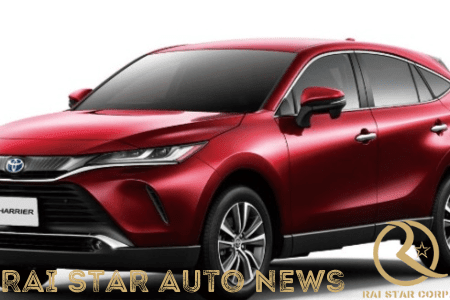
“From “”Corolla”” to “”Harrier””, “”Change? What is the “”Full Color Liquid Crystal Display”” that Toyota’s latest cars are adopting all at once?
Full-face LCD color meters are now available in four different tastes and three different layouts
Toyota has successively upgraded its major models: the Harrier on September 26, 2022, the Corolla on October 3, 2022, and the RAV4 on October 4, 2022. One of the new features common to all models is the “”meter.
This section introduces the “”color LCD panel”” that has replaced the “”analog meter”” that used needles in the past.
Image: Design changes can be made “”at will! Photos of the “”color meters”” used in the new Harrier and other models (42 photos)
Two examples of the “”12.3-inch TFT Color Meter + Multi-information Display”” newly adopted in Toyota’s new Harrier and other models
The current Harrier, a popular luxury SUV, will be in its fourth generation when it is introduced in 2020.
The major news from the first partial improvement in two years is the addition of the Harrier PHEV, a new lineup equipped with a plug-in hybrid system, in addition to improved safety features.
The Corolla, Toyota’s leading mass-market car brand, was fully remodeled in June 2018, with the hatchback preceding it. The sedan and station wagon (Corolla Touring) are next, with the new model coming in September 2019.
This is the first major facelift in the three to four years since its debut, including changes to the powertrain lineup and the introduction of a new 1.5-liter engine.
The RAV4 underwent a full model change in April 2019, and the timing of the partial upgrade comes three and a half years after its full model change.
The RAV4 PHV plug-in hybrid vehicle, which had been an independent model, has been integrated to become a part of the RAV4 lineup, and the special edition Adventure “”OFFROAD package II The “”Adventure “”OFFROAD package II”””” is a special edition model with a greatly enhanced off-road image on the exterior.
A common improvement among the three models is the new 12.3-inch TFT color meter and multi-information display.
This upgrade from the conventional analog meter that uses the rotating needle as an indicator has resulted in a color LCD display over the entire surface of the meter, giving the impression of a more advanced image.
The panel design has four tastes: Casual, Smart, Tough, and Sporty, and three layouts are available, allowing the user to change the display to suit his or her preference.
The multi-information display, which consolidates information in the center of the meter, has been modified to display three types of information: left, center, and right, so that multiple information can be displayed at the same time.
According to Toyota’s official website, the basic layout is the same for all three models, but only the high-end Harrier model has a “”satin-plated meter ring”” around the meter that displays speed and other information to enhance the design.
It will be interesting to see if the 12.3-inch TFT color meter will be expanded to other models in the future.
* * * *
In addition to the 12.3-inch TFT color meters, another improvement common to the three popular models is the improvement of the display audio system compatible with the connected navigation system.
The display audio system incorporates a large screen display and functions that are linked to smartphones and connected functions, and a navigation system can be added as an option.
Toyota first offered this feature when the current Corolla was introduced, and it has since been rolled out to various models.
The new Harrier has the same large 12.3-inch display as before some improvements, but with improved specifications.
In addition to the 8-inch display audio, the new Corolla has a new 10.5-inch Display Audio Plus (with in-car navigation function). This is larger than the previous maximum 9-inch display.
And the new RAV4 has likewise been expanded from the conventional maximum 9-inch display audio (additionally available at the time of partial improvement in 2020) to a larger 10.5-inch display.
“