|

Honda New CR-V Full Model Change US Spec Price $32,355 (approximately 4.62 million yen) Released on September 22, 2022

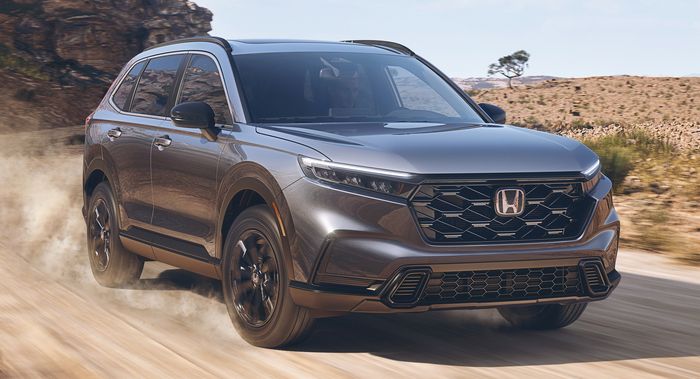
Honda New CR-V

Honda new CR-V full model change US specification Price $ 32,355 (about 4.62 million yen) Released on September 22, 2022
Honda New CR-V


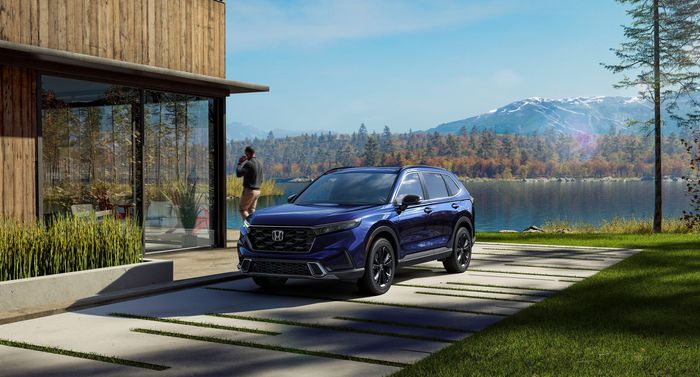
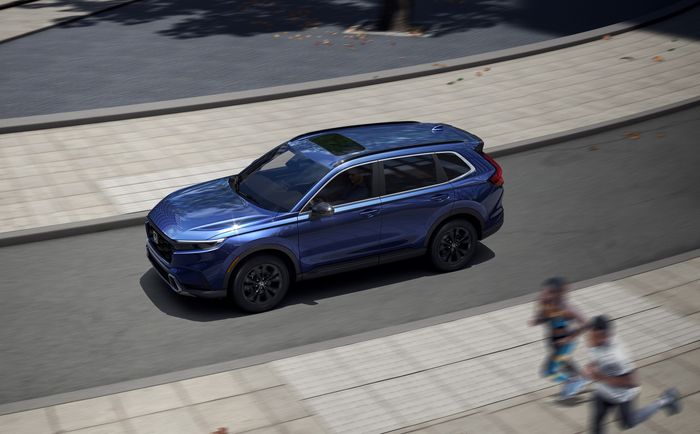
Honda in the United States announced on September 13, 2022 that it will start selling the new CR-V model with a turbocharger on September 22, 2022, and will start selling a hybrid model in October 2022. The price ranged from $32,355 (about 4.62 million yen) to $39,845 (about 5.7 million yen).
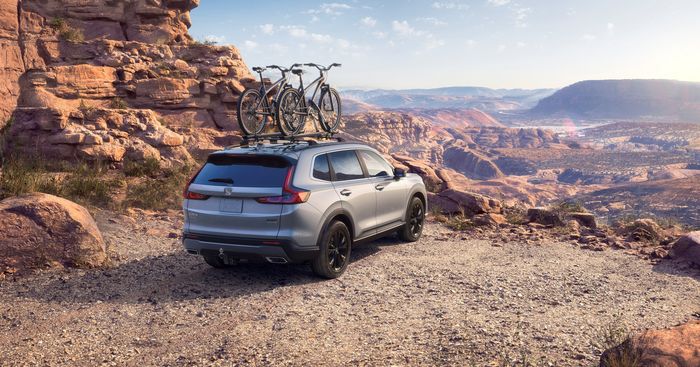
About Honda New CR-V Full Model Change 2023

Building on Honda’s enhanced global architecture, the CR-V’s wheelbase has been extended for a smoother ride and greater stability. The significantly wider track also improves stability. A 15% torsionally stiff body further supports improved ride, handling and overall refinement.

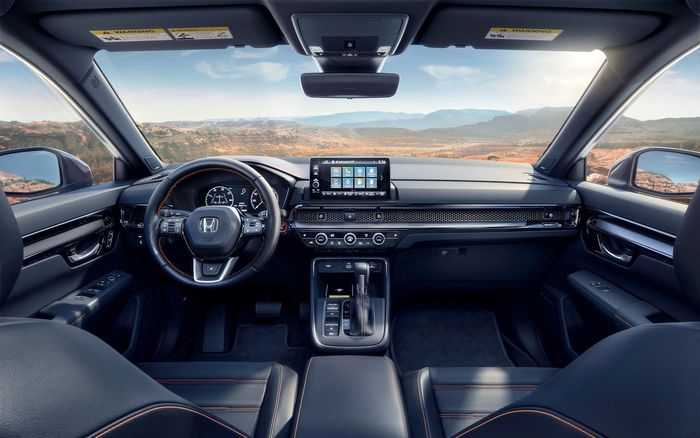
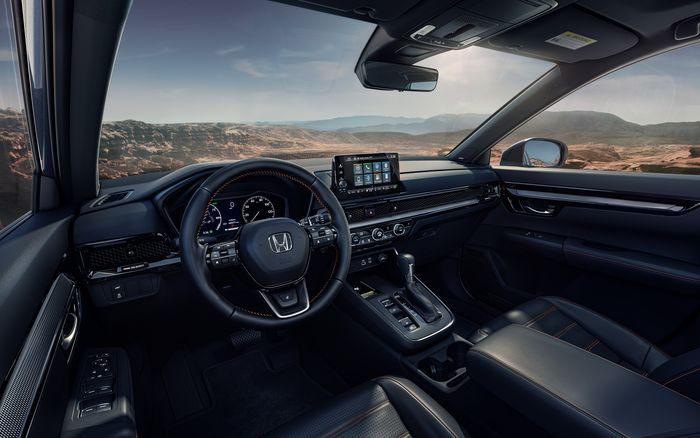
New CR-V full model change 2023 interior

The interior panel is designed with horizontal and straight lines to reduce line of sight movement based on the concept of HMI (Human Machine Interface), arrange controls along the flow line, and improve visibility. Adopted “Sleek & Long Cabin”. The meter adopts the ” 7.0 inch instrument cluster ” used in the new ” Accord “, ” Insight “, ” Vezel “, etc.
New CR-V full model change 2023 engine

Equipped with a new 4th generation 2-motor hybrid system that combines a 2.0L Atkinson cycle 4-cylinder + electric motor. Total power output is 204hp and 247lb-ft (335 Nm) of torque at 0-2,000rpm. “1.5L 4-cylinder turbo engine VTEC Turbo” with a maximum output of 190hp/6,000rpm will be available.

New CR-V full model change 2023 About safety technology

The next-generation Honda SENSING is standard on all models. A front wide-view camera with a wide horizontal angle of view and eight front and rear sonar sensors are installed for the first time in a Honda vehicle. Collision Mitigation Braking System (CMBS) assists pedestrians and cyclists during the day and night to avoid collisions. In addition, it has an ACC with a traffic jam tracking function, and is equipped with a “rear start prevention function” and “auto high beam”. Added “Close Collision Mitigation Brake”. Collision Mitigation Braking System (CMBS), Road Departure Prevention Function, Traffic Sign Recognition Function, and Lane Keeping Assist System (LKAS) have been further improved over the previous model.

system equipment Old model CR-V New CR-V
CMBS
(Pedestrians during the day and night)

(daytime/nighttime pedestrian
bicycle)
Accidental start prevention function
Pedestrian accident mitigation steering
Off-road deviation control function
ACC ◯ 
(With traffic jam following function)

(With traffic jam following function)
LKAS
Preceding vehicle departure notification function
identity recognition function
Reverse erroneous start suppression function
automatic high beam
blind spot
information
multi view camera system

Honda new CR-V full model change 2023 price grade

grade drive train Drive system usa price Japanese yen price
EX 1.5L 4-cylinder turbo engine 2WD $32,355 About 4.62 million yen
EX 1.5L 4-cylinder turbo engine AWD $33,855 About 4.84 million yen
sports 2.0L 4 cylinder + electric motor 2WD $33,695 About 4.81 million yen
sports 2.0L 4 cylinder + electric motor AWD $35,195 About 5.03 million yen
EX-L 1.5L 4-cylinder turbo engine 2WD $35,005 About 5 million yen
EX-L 1.5L 4-cylinder turbo engine AWD $36,505 About 5.22 million yen
sports touring 2.0L 4 cylinder + electric motor AWD $39,845 About 5.69 million yen

Do you have a Japanese model?

Currently, there is no announcement of a Japanese model, but in fact, the current model “CR-V” will be launched in China, Southeast Asia, South America and Russia from October 2016, starting with sales in the North American market. Since the production of the “CR-V” had stopped in Japan, it was launched on August 31, 2018, about two years behind schedule, which is now four years. In terms of the cycle, the new CR-V will probably be announced one to two years late in the Japanese market, but the CR-V is so good this time around that I’d like to see a full model change as soon as possible.

Similar Posts

  • |

    Mazda new “CX-60 PHEV” VS Toyota new “Harrier PHV” thorough comparison .

    In-Depth Comparison of Mazda’s New CX-60 PHEV vs Toyota’s New Harrier PHEV
    Comparison of competing models

    Mazda will unveil the new CX-60 crossover SUV, the first model in its new-generation large product lineup, in Japan on April 7, 2022, and will go on sale on September 15, 2022. The new Toyota Harrier, which is a plug-in hybrid SUV and a competitor, will be launched in Japan on October 31, 2022, with the addition of the partially redesigned Harrier PHEV. We compared the competition based on the specifications.

    Table of Contents
    About the new CX-60 PHEV
    Exterior
    Body Size Comparison
    Interior
    About the new Toyota Harrier PHEV
    Toyota New Harrier Partially Revised 2022 Model
    Mazda’s new CX-60 PHEV vs Toyota’s Harrier PHV specs comparison

    About the new CX-60 PHEV
    Exterior
    Based on Mazda’s “Kodo-Soul of Motion” design philosophy, the new CX-60 PHEV features a deeply sculpted front fascia with an aggressive rear end. Eye-catching are the vertically stacked headlight lamps and L-shaped daytime running lights Unlike the FWD-based CX-5, the CX-60 has a front-engine, RWD-based platform with a longer hood for sexier proportions The CX -60 is rear-wheel drive and has a minimum turning radius of 5.4 meters, -0.1 mm less than the CX-5. Other details include sporty window lines, LED lights with vertical intakes in the front bumper, side gills, and a more prominent rear overhang. The design is inspired by the Japanese aesthetic principle of the “horse,” a concept called “the serene and dignified beauty of empty space.” For the profile, the designers drew inspiration from Japanese calligraphy, and the new reflective white hue emphasizes the lines of the sculpted body.

    Body Size Comparison
    Wider and lower than the CX-5, with overall length +200mm, overall width +50mm, overall height -15mm, and wheelbase +170mm; compared to the CX-8, with overall length -155mm, overall width +50mm, overall height -55mm, and wheelbase -60mm, just in between as all but the overall width are a touch smaller The CX-60 is rear-wheel drive and has a minimum turning radius of -0.1m less than the CX-5.

    Specifications Mazda CX-5 Mazda CX-60 Mazda CX-8
    Overall length 4,545mm 4,745mm 4,900mm
    Overall width 1,840mm 1,890mm 1,840mm
    Overall height 1,690mm 1,675mm 1,730mm
    Wheelbase 2,700mm 2,870mm 2,930mm
    Seating capacity 5 persons 5 persons 6 to 8 persons
    Minimum turning radius 5.5m 5.4m 5.8m

    Interior
    The interior features a full TFT-LCD digital instrument cluster, a 12.3-inch infotainment display, and a heads-up display three times larger than the CX-30.

    It features an interesting driver personalization system that uses a camera to detect the driver’s eye position and incorporates an automatic driver position guide that automatically adjusts the seats, steering wheel, head-up display, and door mirrors based on the driver’s eye height input.

    The interior of the CX-60, however, has interesting details on fabric embellishments that convey Japanese craftsmanship, with maple wood, nappa leather, woven Japanese fabrics, chrome details, and other high quality materials that distinguish it from its rivals. Mazda has also adopted MUSUBU, a technology for binding textiles that inspired the stitching around the instrument panel.

    On the exterior, the “headlights (signature LED lights + daytime running lights)” have been redesigned. The design of the aluminum wheels has been changed.

    Also Read

    Mazda New CX-60, the First of the New Generation Large Product Lineup, Japanese Model to be Launched on September 15, 2022
    On April 7, 2022, Mazda announced the Japanese model of the new CX-60 crossover SUV, the first model in its new-generation large product lineup. The model equipped with the e-SKYACTIV D will go on sale on September 15, 2022. In addition…

    About Toyota’s New Harrier PHEV
    Toyota’s new Harrier PHEV, like the new RAV4 PHV (plug-in hybrid model), is equipped with the newly developed “THSⅡ Plug-in” plug-in hybrid system, which combines an inline 4-cylinder 2.5L direct injection engine D-4S + motor (THSⅡ) with a large-capacity The model is equipped with a large-capacity lithium-ion battery (lithium-ion energy capacity: 8.8 kWh) and a powerful motor. The system output is 302 HP (225 kW / 306 PS), 83 HP (62 kW / 84 PS) more than the hybrid model. The EV-only driving range is 93 km/L in WLTC mode fuel economy; the hybrid fuel economy WLTC is 20.5 km/L. Acceleration performance is 0-100 km/h in 6.0 seconds. The cruising range is 1,300km.

    The 2.5-liter Dynamic Force engine and E-Four, which increases torque distribution to the rear wheels, give the SUV unparalleled driving performance and drivability. kW and delivers powerful acceleration. Fuel-efficient thanks to the large-capacity lithium-ion battery that delivers a total of 18.1 kWh of electricity. The RAV4 PHV can use the power stored in its high-capacity battery for purposes other than “driving.” In addition to in-vehicle use using the power outlet installed inside the vehicle, the included vehicle power connector can be plugged into a regular charging inlet to provide a 100 V external power supply outlet. Up to 1500W in total is supported.

    About Toyota’s New Harrier Partially Modified 2022 Model Year
    The Z and Z “Leather Package” grades come with a panoramic view monitor as standard equipment. A new interior color lineup. Toyota Safety Sense, the latest preventive safety package with advanced features and improved functionality, has been added to the Harrier’s lineup, including “Low-speed acceleration control,” “Detection of oncoming vehicles and pedestrians when turning right at intersections,” and “Emergency steering avoidance assist. A driver error response system, radar cruise control, and a curve speed control function have been added. A PHV model is newly added to the lineup. The higher grade grades have a 12.3-inch TFT display (full LCD digital meter) instead of the 7.0-inch TFT color multi-information display + Optitron meter. The system has been replaced by the “Connected Navi” used in the new Noah Voxy and other models. An HDMI port and in-car Wi-Fi are available as options, and the USB port has been changed from Type A to Type C.

    Mazda CX-60 PHEV vs Toyota Harrier PHV specification comparison
    Specifications Toyota
    Harrier PHV Mazda
    CX-60 PHEV
    Overall length 4,740mm 4,745mm
    Overall width 1,855mm 1,890mm
    Overall height 1,666mm 1,675mm
    Wheelbase 2,690mm 2,870mm
    Engine 2.5L inline 4-cylinder
    Direct injection engine D-4S
    + Motor (THSⅡ) 2.5 L Skyactiv-G
    In-line 4-cylinder engine
    + Motor (THSⅡ)
    Maximum output 130kW (177ps)
    6,000rpm 138kW (188ps)
    6,600rpm
    Maximum torque 219Nm/3,600rpm 250Nm/4,000rpm
    Motor
    Maximum output Front: 134kW (182ps)
    Rear: 40kW (54ps) 175ps/5,500rpm
    Motor
    Maximum torque Front: 270 Nm
    Rear: 121Nm (12.3kgfm) 270Nm/400rpm
    System output 225kW (306ps) 241kW (327ps)
    500Nm
    Transmission
    Transmission Electric
    Stepless transmission 8-speed automatic
    Drivetrain 4WD
    (2WD (E-Four)
    (2WD (RWD)
    Battery Lithium-ion
    Lithium-ion battery Lithium-ion
    Power 17.8kWh
    0-100km/h
    Acceleration 6.0 sec. 5.8 sec.
    Seating capacity 5 persons 5 persons
    Minimum turning radius 5.7m 5.4m
    WLTC mode fuel economy 20.5km/L 14.6km/L
    WLTC mode
    EV driving range 93km 75km
    Price (10%) 6,200,000 yen 5,390,000 yen~
    6,264,500 yen
    We have created a comparison chart with the Harrier PHV, which uses “SUV” and “PHEV” technologies. The “CX-60 PHEV” is longer in overall length, width, and wheelbase, but it is almost in the same class size. However, the “CX-60” has a minimum turning radius of 5.4 m, -0.1 mm more than the other models due to its rear-wheel drive. both companies have different stances, and the “CX-60 PHEV” is considered to be fast and pleasant to drive, and its 0-100 km/h acceleration is the fastest of the two models. It is faster than Porsche’s normal SUV Cayenne and normal Macan. And lastly, the price is from 700,000 to 870,000 yen lower than the Cayenne. Although the Cayenne has the advantage in terms of cost performance, considering the difference in interior quality, the difference as a premium model may not be felt as much as the difference in price.

  • | |

    Hondas Electrifying 2024 Roadmap Unveiling 3 Zero-Emission Marvels to Supercharge Sales

    On January 18, 2024, Honda’s American subsidiary made a significant announcement about the company’s four-wheel vehicle business in the United States for the fiscal year. Among the revelations was the upcoming release of the “super amazing CR-V FCEV,” a novel fuel-powered sporty SUV set to hit the US market later in 2024.

    Mamadou Diallo, Senior Vice President of Sales for Honda in the United States, shared insights into the company’s performance, stating, “In 2023, sales for both the Honda and Acura brands rebounded, concluding the year with a remarkable 30% increase. Looking ahead to 2024, we are focusing on capital investment in hybrid vehicles and other products, including the launch of our first mass-produced battery electric vehicle (BEV).

    As part of Honda’s strategic approach, the company aims to boost sales of zero-emission vehicles, such as battery electric vehicles (BEVs) and fuel cell vehicles (FCEVs). Diallo emphasized their commitment to this goal and revealed plans to introduce the CR-V FCEV, a new addition to the Honda lineup. The CR-V, a popular midsize crossover SUV, has been a global success since its inception in 1995, and the latest 6th generation model, introduced in 2022, has further expanded its appeal.

    The CR-V FCEV, based on the current 6th generation model, stands out as the first mass-produced vehicle in North America to seamlessly integrate plug-in functionality and FCEV technology. Honda aims to capitalize on the success of its hybrid models, including the “e:HEV” variant, which became the best-selling hybrid vehicle in the United States with annual sales reaching 197,317 units by 2023.

    In addition to the CR-V FCEV, Honda’s US subsidiary plans to launch Acura’s electric SUV, the “ZDX,” in early 2024. Furthermore, the company is gearing up for the release of the new BEV, “Prologue,” within the next few months, signaling Honda’s commitment to a diverse and innovative electric vehicle lineup.

    Mamadou Diallo outlined the company’s vision for zero-emission vehicles, stating, “In 2024, we will begin selling three zero-emission vehicles, contributing to our goal of achieving 100% zero-emission vehicle sales by 2040 and ultimately realizing carbon neutrality by 2050. These initiatives mark our dedication to sustainable and environmentally friendly transportation solutions.” Honda’s upcoming releases showcase their commitment to innovation and align with global efforts to address climate change through the adoption of electric and fuel cell technologies.

  • | |

    Exciting Revival Honda CR-V e FCEV Makes a Strong Comeback in 2024

    Honda has unveiled its latest innovation in the form of the CR-V e:FCEV, a hydrogen-powered SUV set to hit the Japanese market in the summer of 2024. This groundbreaking vehicle marks a revival of the CR-V series, which began back in 1995 and has evolved through five generations until its hiatus in 2022. The new CR-V boasts a unique feature – it is an electric vehicle equipped with a hydrogen fuel cell, setting it apart from traditional gasoline and hybrid models.

    The CR-V e:FCEV showcases impressive specifications, with a body size measuring
    4805mm in length
    1865mm in width
    1690mm in height
    along with a wheelbase of 2700mm.

    Its design combines strength and luxury, featuring a vertically placed front grille and a spacious interior akin to North American gasoline vehicles. The vehicle’s electric motor delivers a maximum output of 174 horsepower and 229 lb.-ft of torque, with enhanced durability and reduced production costs thanks to a joint development effort with General Motors.

    One of the standout features of the CR-V e:FCEV is its versatility in charging and power supply functions. In addition to running on hydrogen, it can also function like a regular EV, offering charging capabilities through a standard SAE J1772 plug. This dual functionality ensures operational flexibility, especially in areas with limited hydrogen infrastructure.

    The reception of the CR-V e:FCEV has been positive on social media, with users expressing enthusiasm for its plug-in charging function and potential market success as an SUV model. However, concerns have been raised about the availability of hydrogen stations in Japan and the need for further infrastructure development to support widespread adoption of fuel cell vehicles.

    As Honda prepares for the official release of the CR-V e:FCEV, anticipation is high to see how this innovative SUV will resonate with consumers and shape the future of eco-friendly transportation in Japan.

  • | |

    Explosive Unveiling: 6th Gen Honda CR-V Seizes Mexico with Powerful Design

    Honda’s “tough-looking” new CR-V, the size of Toyota’s Harrier, is unveiled! The “6th generation” with a “powerful design” is launched in the ink market! What about Japan?While the 5th generation is still being sold in Japan, the 6th generation debuts in Mexico On December 1, 2022, Honda’s Mexican subsidiary unveiled the new 2023 CR-V.

    Coming to Japan! Interior and exterior of Honda’s handsome new CR-V SUV in 44 images.The new CR-V, the sixth-generation model, will make its world premiere in the U.S. on July 12, 2022. It was launched in the U.S. market on September 22 of the same year, and has since been sold in China as well. In Japan, inventory sales of the 5th generation, which ended production at the end of August 2022, are still ongoing.

    Honda’s new CR-V also launched in the Mexican marketThe CR-V is a crossover SUV that was first introduced in 1995, and the current model is the 6th generation model, which made its world premiere in the U.S. on July 12, 2022.The sixth-generation model is also the model that has been announced for introduction to Mexico.

     Its exterior features sophisticated and powerful styling. The new horizontal lines emphasize the larger body, and the slightly longer wheelbase improves stability and gives the car an imposing presence.The A-pillars are positioned approximately 15 cm forward to achieve wider proportions and better visibility, and door-mounted side mirrors are newly adopted.At the front, a larger new grille and longer hood emphasize the refreshed styling, and LED lights are standard. It also features a slim, body-colored roof spoiler and 18- or 19-inch alloy wheels (depending on specifications).

     The interior features piano-like finishes on various elements of the cabin, including the dashboard and steering wheel, as well as leather seats and steering wheel for a luxurious feel. The interior has a modern and sporty impression in line with Honda’s new design concept.The instrument panel is designed with minimal lines to minimize reflections on the windshield. The metal honeycomb mesh along the dashboard, ventilation and climate control air intakes enhance both appearance and functionality, functionally keeping the cabin cool and elegant.

     The new front seats stabilize the body and provide a sporty, comfortable driving position that is less tiring on long journeys. Between the front seats is a center console with 9 liters of storage capacity, the largest in its class.In addition, the rear seats can be reclined in eight positions, providing more comfort and space.The powertrain will be powered by a DOHC 1.5-liter turbocharged inline 4-cylinder engine with a maximum output of 188 hp and maximum torque of 177 lb/ft. This engine features an improved VTEC system for improved performance and reduced emissions. This is combined with a continuously variable transmission (CVT) that has been improved to reduce noise and vibration.

     Body size is 4626 mm (overall length) x 1855 mm (overall width) x 1679 mm (overall height), equivalent to that of the Toyota Harrier. The wheelbase is 2660 mm.Three grades will be available in Mexico: the base grade “”Turbo,”” the “”Turbo Plus,”” which offers slightly more features and a choice of colors, and the “”Touring,”” which is the highest grade and fully equipped with Honda Sensing and other safety features.

     Prices start at 714,900 pesos (approximately 4,950,000 yen) for the Turbo, 769,900 pesos (approximately 5,330,000 yen) for the Turbo Plus, and 819,900 pesos (approximately 5,670,000 yen) for the Touring.As mentioned above, the new CR-V has been announced and released in the North American and Chinese markets in addition to Mexico, but no official announcement has been made regarding its introduction to the Japanese market.A representative of a Honda-affiliated sales company spoke about the matter as follows: “”Overseas, the new CR-V has been launched in the U.S. and China as well as Mexico.

    The new CR-V has been announced overseas. Some customers have asked us, ‘When will the next CR-V go on sale?’ Some customers have asked us, ‘When will the next CR-V go on sale?At the moment, the possibility of the new ZR-V entering the Japanese market is low, given the pending introduction of the new ZR-V in Japan and the CR-V’s sales performance to date.
    However, since the 5th generation, which was discontinued, was introduced two years after the overseas market, we cannot deny the possibility that it will be released in Japan a few years down the road.We can only hope that the new CR-V, with its refreshed design and much improved features, will be introduced in Japan.

  • | |

    800-Horsepower Honda CR-V Hybrid Racer Unleashes Exhilarating Performance

    Honda’s U.S. subsidiary made waves on June 27, 2023, with the launch of their highly anticipated racing concept car, the “CR-V Hybrid Racer.” This groundbreaking vehicle was officially unveiled to the world on February 28, 2023, and is the result of a collaborative effort between Honda Performance Development (HPD), engineers from the Auto Development Center (ADC) of Honda’s U.S. development division, and designers from the North American Auto Design Division.

    The CR-V Hybrid Racer aims to redefine the boundaries of high-performance automobiles, positioning itself as the “ultimate high-performance Beast.” Drawing inspiration from iconic racing machines of the 1980s and 1990s, as well as rally cars from the Group B category, the car was meticulously designed at a mass production car studio in Los Angeles, California. While certain elements of the sixth-generation “CR-V” can still be seen in its exterior, the CR-V Hybrid Racer is an entirely different beast altogether.

    Distinguishing features of this concept car include a chromoly tube frame for its body structure, a significantly wider rear wing compared to the body’s width, full carbon front and rear over fenders, and a front splitter. The front doors have been transformed into “butterfly half-cut doors” that open upwards, while the sides feature a canard spoiler to enhance aerodynamics and large air ducts for improved performance. Inside the cabin, the CR-V Hybrid Racer boasts a Spartan setup with full bucket seats and a racing steering wheel, departing from the standard CR-V’s design.

    Powering this beastly machine is a hybrid drivetrain situated at the rear, featuring a 2-liter V-type 6-cylinder twin-turbo engine and a motor. This hybrid configuration, akin to the engines used in IndyCar series machines, delivers an astonishing 800 horsepower and is paired with a paddle-shift XTRAC 6-speed transmission. The CR-V Hybrid Racer also incorporates the front suspension and front brakes from the Acura “NSX GT-3 Evo22,” developed by HPD, as well as the rear suspension and rear brakes from the Dallara “IR-18 IndyCar.” It rides on fat Firestone super high-performance summer tires (285/35 at the front, 305/35 at the rear) mounted on 20-inch alloy wheels.

    In an exclusive video showcasing the CR-V Hybrid Racer’s development and production process, viewers are treated to scenes of the car’s body being mounted onto the tube frame, intricate decorative touches being added, and the assembly of its engine and powertrain. Additionally, the video features rare footage of the car before its body decoration was applied, providing a unique behind-the-scenes glimpse. David Salters, President and Technical Director of HPD, expressed his enthusiasm for the CR-V Hybrid Racer, stating, “The CR-V Hybrid Racer is a passionate project for all Honda employees involved in design, engineering, and manufacturing. It embodies the tradition of racing.”

    Excitement surrounding the CR-V Hybrid Racer continues to mount as it prepares for an exhilarating showcase on May 10, where it will be driven by the esteemed Red Bull Racing F1 driver and two-time F1 world champion, Max Verstappen. The event will be accompanied by a captivating video capturing Verstappen’s mastery behind the wheel.

    The Honda CR-V, a beloved medium-sized SUV, made its debut in 1995. Although production of the fifth-generation model ceased in August 2022 in Japan, the sixth-generation model is still available in overseas markets such as North America. For fans of the CR-V, there is an additional treat—a video featuring Max Verstappen driving this remarkable vehicle is also accessible, allowing enthusiasts to witness the fusion of Honda’s expertise in both SUVs and high-performance racing.

  • | |

    Revolutionary Comeback Honda CR-V e:FCEV Set to Dominate the SUV Market in 2024

    Honda’s Amazing SUV is set to make a comeback in the summer of 2024 after about 2 years since its last sale in Japan. The new model, the CR-V e:FCEV, will be reintroduced as a Fuel Cell Electric Vehicle (FCEV) variant. This revival brings anticipation for potential additions like gasoline engine variants to the lineup

    The CR-V e:FCEV is designed with a fuel cell unit powered by hydrogen, a technology that Honda has successfully commercialized with the Clarity FUEL CELL. This new model offers an extended range with a single hydrogen fill and the flexibility to run on the motor using a charged battery, making it an attractive option as a next-generation vehicle.

    Honda announced the production start of the new CR-V e:FCEV at the Performance Manufacturing Center (PMC) in Ohio, USA, on June 6, 2024. This facility, known for its expertise in producing specialty vehicles like the second-generation NSX, ensures high-quality production for global markets.

    While the CR-V e:FCEV is scheduled for release in the Japanese market in 2024, details about other power unit variants remain undisclosed. Honda’s efforts to enhance its SUV lineup with models like ZR-V,Vezel, and WR-V demonstrate a commitment to diversifying its offerings.

    The CR-V, known for its debut in 1995 as Honda’s midsize SUV, has garnered popularity not only in Japan but also in markets like North America, Europe, China, and other Asian countries. Despite its global success, the CR-V has seen changes over generations, gradually moving away from the size preferences of the Japanese market.

    In Japan, the introduction of the new ZR-V model has effectively replaced the CR-V in the lineup. The ZR-V, based on the Civic’s chassis, represents a return to the original concept of the first-generation CR-V. This strategic move aligns with Honda’s goal of catering to evolving market demands.

    The upcoming CR-V e:FCEV launch signifies a significant milestone for Honda in Japan, marking its second revival in two years. The model’s production at the PMC in Ohio highlights Honda’s dedication to innovation and sustainability in its vehicle manufacturing processes.

    As Honda continues to expand its SUV offerings globally, there is speculation about the potential introduction of right-hand drive models for the Japanese market. The anticipation for models like the CR-V e:HEV RS, with its sporty design and advanced features, adds excitement to the future of Honda’s SUV lineup.

    With a focus on safety and cutting-edge technology like Honda SENSING, the new CR-V models aim to deliver a premium driving experience. The inclusion of features like a multi-view camera system and a touch panel infotainment system reflects Honda’s commitment to providing advanced functionalities across its lineup.

    In conclusion, the resurgence of the CR-V in Japan signifies Honda’s dedication to meeting diverse market needs and staying ahead in the competitive SUV segment. With a blend of innovation, sustainability, and performance, the new CR-V models are poised to make a significant impact in the automotive industry.

Leave a Reply