


Similar Posts
Introducing the new Civic SUV! Will the new “ZR-V” become Honda’s mainstay instead of the “CR-V” withdrawn from Japan?
“A New “”Civic SUV”” is on the Way! Will the new ZR-V replace the CR-V, which has been withdrawn from the Japanese market, to become Honda’s mainstay?
Both the CR-V and ZR-V were based on the “”Civic!””
Honda’s new ZR-V crossover SUV, which has been available for pre-order since September 8, 2022, was originally scheduled to go on sale in the fall of 2022, but due to a shortage of conductors, overseas conditions, and other factors, the launch has been postponed until spring 2023. Those who have already placed orders are probably eagerly awaiting delivery of their vehicles.Is this really a Honda car? The new ZR-V is equipped with a novel grille that looks like an imported car! The new “”ZR-V”” is stylish!
The new Honda “”ZR-V”” with its powerful vertical grille
And while the new ZR-V is making its debut, the CR-V is quietly disappearing.
Production of the vehicle has already been completed, and when the remaining inventory is sold out, it will put an end to its history.
The new CR-V will be introduced overseas, but there are currently “”no plans”” to introduce this new model to Japan.
The first-generation CR-V was a passenger car-based crossover SUV that surpassed even the Toyota RAV4 in popularity. It can be said to be one of the vehicles that laid the foundation for the popularity of crossover SUVs in Japan.
The first-generation CR-V and ZR-V had something in common. The base model was the Civic.
The first-generation CR-V, introduced in 1995, was based on the chassis of the sixth-generation Civic (EK model), and was equipped with a 2-liter engine and a suspension that secured minimum ground clearance.
The 4WD system was the same dual-pump standby 4WD used in the Civic Ferio, and while it was not suitable for serious off-road driving, it was not inadequate for everyday use, which was one of the reasons for its popularity.
The first generation CR-V, which became a big hit, was fully remodeled into the second generation model in 2001. The second-generation model continued to be based on the Civic, and the design and other aspects of the design were based on a kept-concept that left a strong impression of the first-generation model.
However, by this time, rivals from other manufacturers had appeared in the domestic market, and the second-generation CR-V did not gain the same popularity as the first-generation model.
On the other hand, the CR-V became explosively popular in the North American market, and from then on, the CR-V’s main focus was on the North American market.
As a result, the third generation CR-V broke away from the Civic base and expanded its body size. The CR-V was reborn as a completely higher class vehicle with only a 2.4-liter engine.
While the Civic continued to be popular in the North American market, its popularity in Japan declined, and sales of the Japanese version were terminated in the middle of the fourth generation.
In 2016, the fifth generation model was reintroduced to the Japanese market, but it was hidden from the market by strong rivals, and although the car itself was well received, it failed miserably in terms of sales.
The new ZR-V, to be launched this year, will have a body size in between that of the Vezel and the CR-V, and will share the same powertrains as the current Civic, a 1.5-liter gasoline turbo and a hybrid.
It is not too big to be driven in Japan, and its urban and sophisticated interior and exterior design are sure to appeal to Japanese customers.
In the North American market, as the successor to the former Vezel, the new “”HR-V”” has been on sale since June 2022, and orders have been strong there.
The new ZR-V, which has a different worldview from the CR-V, may become the company’s new signature crossover SUV in Japan, as Honda has planned.
“
2024 new Toyota 4Runner Unleash Your Off-Road Power with 270 Horses
ByPawaniToyota enthusiasts, get ready to embrace the latest and greatest in off-road adventure with the upcoming release of the 2024 Toyota 4Runner. On October 3, 2023, Toyota North America officially unveiled the 2024 model, and it promises to be a game-changer in the world of mid-size SUVs.
The 4Runner, a vehicle with a rich heritage dating back to its introduction in 1984, has been a beloved choice for those seeking rugged capability and dependable performance. In Japan, this iconic SUV was known as the “Hilux Surf” up to the fourth generation. The 2024 4Runner represents the fifth generation and is packed with exciting updates.
Design and Features:
The 4Runner’s design has always been associated with toughness, and this latest iteration doesn’t disappoint. The 4Runner boasts a sturdy frame structure and a 4-link coil rear suspension with lateral rods and stabilizer bar, delivering excellent off-road capability.For the 2024 model year, Toyota has introduced new colors and enhanced safety equipment. The 4Runner now comes in a variety of stylish color options to suit different tastes, making it not only a capable off-roader but a head-turner on the streets as well.
Performance:
Under the hood, you’ll find a powerful 4.0-liter V-6 engine, churning out an impressive 270 horsepower and 278 lb-ft of torque. This engine is mated to a 5-speed automatic transmission, offering smooth and responsive power delivery. The drive system is versatile, offering part-time 4WD, rear-wheel drive (FR), and full-time 4WD on certain grades, ensuring you can tackle various terrains with ease.The 4Runner features advanced technologies like the Kinetic Dynamic Suspension System (KDSS), Crawl Control (CRAWL), and Active Traction Control (A-TRAC). These systems enhance both on-road and off-road performance, ensuring that the 4Runner is ready for any adventure you throw at it.
Safety:
Safety is a top priority for Toyota, and the 2024 4Runner is no exception. All trim levels come standard with Toyota Safety Sense P, which includes essential features like emergency braking with pedestrian detection, lane departure warning with sway warning, rear cross-traffic alert, blind spot warning, and a monitor. These features provide peace of mind and protection for both the driver and passengers.Special TRD Pro Model:
For those who crave the ultimate off-road experience, the 4Runner offers a “TRD Pro” grade. This special model comes with a unique exterior design and a special suspension tuned for rough terrain. The “TRD Pro” grade also introduces a striking new dark orange color called “Terra,” which is exclusive to Toyota’s off-road lineup in North America. Additionally, the “Underground” color option is available for other trim levels.Pricing:
While the official pricing for the 2024 4Runner has yet to be announced as of October 4, 2023, it’s worth noting that the 2023 models range from $40,155 to $54,620. With the new features and updates introduced in the 2024 model, it’s expected to offer exceptional value for the adventurous at heart.The 2024 Toyota 4Runner is set to continue its legacy of adventure, durability, and style. Stay tuned for further updates on pricing and availability as the official release date approaches. If you’re in the market for a versatile and rugged SUV, the 4Runner should be at the top of your list.
- kuruma | autonews | Toyota Noah | Toyota Rav4
Is “Hybrid Vehicle Profitable” a Fairy Tale of Reiwa? What is the truth compared to Toyota “Noavok / RAV4” gasoline specification .
“Is the “”benefit of a hybrid car”” a fairy tale of 2022? The Truth about Toyota’s “”Noavok/RAV4″” Compared to Gasoline-Fueled Models
Comparison by “”new car price,”” “”gasoline price,”” and “”price at the time of sale
There are “”gasoline-powered”” and “”hybrid”” cars available in the same model, and there is a price difference between the two powertrains, but which is the “”better buy””?
Let’s compare them with the popular Toyota minivan “”Noah/Voxy”” and SUV “”RAV4″”.How are the differences in appearance? View 42 photos of Toyota’s Noah/Voxy and RAV4.
Toyota’s popular RAV4 SUV model, which underwent a partial makeover on October 4, 2022 (Photo: RAV4 Adventure hybrid model)
It has already been 25 years since the first generation Toyota Prius, the world’s first mass-produced hybrid car, was introduced in 1997.
Hybrid cars have become so commonplace in Japan that “”hybrid-only”” vehicles such as the Prius, Toyota Aqua, Nissan Note, and the new Extrail are not uncommon.
Therefore, the question that arises when buying a car nowadays is whether to choose a hybrid car or not.
If it is a hybrid-only car, it is still a hybrid car, but many cars sold today have both an engine and a hybrid version.
In this case, it is difficult to decide which one to choose.
For example, if you have a “”clear intention”” such as “”I want to drive a hybrid car next time for sure,”” or “”I want to drive a hybrid car now because I will not be able to drive an engine car in the future,”” you will not have to worry about it.
The answer was surprisingly simple.
All you have to do is compare the “”difference in new car price,”” “”gasoline price,”” and “”price at the time of sale”” between engine cars and hybrid cars.
Specifically, the difference at the time of purchase, including tax benefits, the cost of gasoline saved by switching to a hybrid, and whether the resale value of the car will pay for itself when you dispose of it.
Here, “”feeling,”” including preference, should also be taken into account to make an overall decision.
Regarding popular cars that are set to be engine-powered and hybrid vehicles, we would like to consider which one to buy, focusing on the long-term expense of 5 years and 50,000 km driving.
The calculation methods and comparison criteria will be as follows
—–
1. Difference in new car prices
Prices include consumption tax. Grades are assumed to be the same for both cars as much as possible, and if there are differences in equipment, these are also taken into account.
In many cases, hybrid cars receive preferential treatment in terms of “”weight tax”” and “”environmental performance discount,”” so the actual price at the time of purchase is also taken into account.
2. Gasoline cost (fuel cost required for 5 years and 50,000km driving)
Fuel economy is assumed to be 80% of the catalog fuel economy (WLTC mode fuel economy) for both engine and hybrid cars, and the unit price of gasoline is calculated at 169 yen for regular and 179 yen for high-octane.
3. price at time of sale (resale value at 5 years and 50,000km on the road)
Refer to the final payment of the “”residual value set loan”” (5-year plan) announced by each manufacturer on their official Web sites.
—–
In this article, we will compare the Toyota Noah/Voxy, a middle-class minivan, and the Toyota RAV4, a middle-class SUV, to see whether you should buy the gasoline or hybrid version of each.
Is the “”hybrid car is good for you”” a fairy tale in 2022? What is the truth revealed when comparing Toyota’s “”Noah Voku/RAV4″” with gasoline-powered models?
Noah/Voxy is a “”hybrid car to buy””.
Since its full model change in January 2022, the Toyota Noah/Voxy middle minivan has become so popular that there is a long waiting list for delivery.Let’s compare and contrast whether you should buy the gasoline or hybrid version of the popular minivan.
(The photo shows the Toyota “”Noah”” hybrid model.
1. Difference in new car prices: Hybrid models are approximately 350,000 yen (about 180,000 yen higher in real terms).
Noah S-Z gasoline model (2WD): 3,320,000 yen
Noah S-Z hybrid (FWD): 3,670,000 yen
The price difference is approximately 350,000 yen, but the Hybrid S-Z comes standard with a 100V 1500W power outlet worth 40,000 yen and a tax benefit of approximately 130,000 yen, so the actual price difference at the time of purchase is reduced to “”approximately 180,000 yen.
2. Gasoline cost (fuel cost required for 5 years and 50,000km driving): Hybrid car is 245,000 yen cheaper.
S-Z gasoline model (2WD): Catalog fuel economy: 15.0km/L (WLTC mode fuel economy) → Practical fuel economy: 12.0km/L
S-Z hybrid model (2WD): Catalog fuel economy: 23.0km/L (WLTC mode fuel economy) → Practical fuel economy: 18.4km/L
The gasoline cost for 5 years and 50,000km is 704,000 yen for the gasoline vehicle and 459,000 yen for the hybrid.
Gasoline costs 245,000 yen less for the hybrid.
3. price at the time of sale (resale value at 5 years and 50,000km mileage): Hybrid vehicle sells for 147,000 yen more
Gasoline-powered car: 1,394,000 yen
Hybrid car: 1,541,000 yen
Hybrid cars can be disposed of at a price 147,000 yen higher.
* * *
When closing the balance sheet, it seems that Noah/Voxy can pay off the price difference at the time of purchase even if the mileage is low, as the real price difference at the time of purchase is small.
Unless there is a circumstance where you really dislike hybrids, we conclude that you should choose a hybrid for Noah/Voxy.
Is the “”benefit of a hybrid car”” a fairy tale of 2022? What is the truth revealed when comparing Toyota’s “”Noah/Voxy/RAV4″” with gasoline-powered models?
RAV4 was “”Hybrid Vehicle is More Expensive
The RAV4, Toyota’s medium-class SUV that just underwent a minor change on October 4, 2022, has been available in 2-liter gasoline and 2.5-liter hybrid versions since its introduction.From 2020, the 2.5-liter hybrid will have its drive battery increased by about 10 times, and a plug-in hybrid, which can also be used as an electric vehicle if it has a recharging environment, will be available as the flagship model.
The photo shows the special edition RAV4 Adventure “”OFFROAD package II”” that was added to the RAV4 when it underwent a partial makeover on October 4, 2022.
1. New model price difference: The hybrid model is 619,000 yen (492,000 yen more expensive in real terms).
RAV4 Adventure gasoline model: 3,684,000 yen
RAV4 Adventure”” hybrid model: 4,303,000 yen
The price difference is 619,000 yen, but the hybrid has a tax benefit of 127,000 yen, which reduces the price difference to 492,000 yen in real terms at the time of purchase.
2. Gasoline cost (fuel cost required for 5 years and 50,000km driving): Hybrid vehicle is 171,000 yen cheaper.
RAV4 Adventure gasoline model: WLTC mode fuel economy: 15.2km/L → practical fuel economy: 12.2km/L
RAV4 Adventure hybrid: WLTC mode fuel economy: 20.3km/L → practical fuel economy: 16.2km/L
The gasoline cost required to run 50,000km in 5 years is 693,000 yen for the gasoline vehicle and 522,000 yen for the hybrid, resulting in a gasoline cost of 171,000 yen less for the hybrid.
3. price at the time of sale (resale value at 5 years and 50,000km mileage): Hybrid vehicles sell for 229,000 yen more
Gasoline-powered car: 1,363,000 yen
Hybrid car: 1,592,000 yen
Hybrid cars can be disposed of at 229,000 yen higher.
* * *
Now let’s close the accounts for RAV4.
The hybrid car will cost 92,000 yen more than the RAV4, and in the case of the RAV4, the difference between the gasoline car and the hybrid will not pay off.
However, considering that the RAV4 hybrid vehicle has a 2.5-liter engine, and its dynamic performance is much higher than that of the 2-liter gasoline vehicle, we can consider that “”considering the difference in dynamic performance, the difference of 92,000 yen in the balance sheet is cheap.
Also, if you sometimes drive on rough roads such as off-road courses, the 4WD RAV4 gasoline vehicle has the advantage of “”downhill assist control,”” which maintains a slow, constant speed like a person walking on steep downhill slopes.
Therefore, in the case of the RAV4, it is advisable to consider a hybrid as a basic model and a gasoline vehicle depending on how the vehicle is used.
* * *
Considering the above estimation, when you are torn between an engine car and a hybrid car for the same car, you can often get your money’s worth in the long run.
In addition to this, gasoline prices have recently become stable at high levels.
If you are going to use your car for practical purposes, the basic conclusion is that you should use a hybrid car (……).
At the same time, we applaud the efforts of automobile manufacturers who have lowered the price of hybrid cars so much that the difference can be repaid in the long run.
However, if you are a person who seeks taste in cars, engine cars are also attractive. This point should also be kept in mind.
In fact, according to social networking sites, there are many people who say, “”Hybrid cars pay for themselves in terms of cost, but engine cars feel better.
On the other hand, there are those who say that hybrids are smoother and quieter.
When choosing a car, it is necessary to consider these overall points.
“ 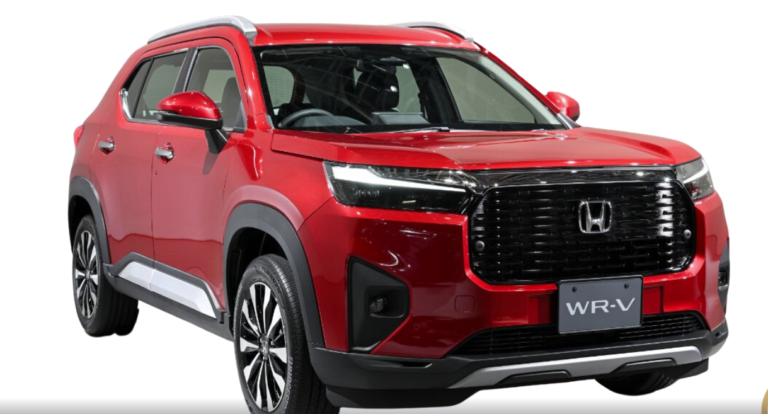 kuruma | autonews | Honda WR-V
Honda WR-V Cargo Space: 458 Liters of Powerful Value in a Stunning Compact SUV
ByPawaniHonda WR-V cargo space 2023.11.22( Honda WR-V) by RAI STAR Honda WR-V Cargo Space: 458 Liters of Compact SUV Practicality Honda WR-V cargo space is one of the biggest reasons this new compact SUV is attracting attention. With a class-leading 458-liter luggage area, the upcoming Honda WR-V promises the kind of everyday practicality many…
- kuruma | autonews | Honda CR-V
7 Incredible Features of the Honda CR-V e FCEV That Will Blow You Away
ByPawaniHonda is gearing up to release its highly anticipated crossover SUV the CR-V in the summer of 2024. First introduced in 1995 the CR-V has long been a favorite among SUV enthusiasts. However sales of the fifth generation model in Japan wrapped up in December 2022. Now the sixth generation model is making its debut marking its return after a year and a half hiatus.
The reintroduced CR-V will feature a groundbreaking fuel cell vehicle (FCEV) variant named “CR-V e:FCEV.” This model is unique as it is the first FCEV from a Japanese automaker to include a plug in function allowing for charging from external sources. Developed collaboratively by Honda and GM the fuel cell system boasts a compact and lightweight design significantly reducing costs by minimizing the use of platinum and the number of cells.
Key features of the CR-V e:FCEV include an impressive driving range of over 600 km per hydrogen charge and the ability to travel more than 60 km on electric power alone. This dual capability allows for convenient daily driving on electricity while hydrogen fuel supports longer journeys.
In terms of performance the new CR-V e:FCEV promises a smooth ride akin to that of a sedan with improved handling and reduced body roll. The exterior design reflects a blend of intelligence and strength featuring specially designed elements like a sleek front grille and wide headlights for a striking appearance.
Inside the CR-V e:FCEV maintains the quality and spaciousness of its predecessor utilizing eco friendly materials such as bio synthetic leather for the seats. The innovative luggage space design accommodates the hydrogen tank which is positioned under the rear seat creating a unique storage solution.
Additionally the Japanese spec CR-V e:FCEV is equipped with a CHAdeMO DC power supply connector enabling it to serve as a power source during emergencies or outdoor activities when paired with Honda’s portable power supply devices.
Advance reservations for the CR-V e:FCEV began in February 2024 with pricing details set to be announced closer to the launch. While the expansion of hydrogen refueling infrastructure remains a challenge for FCEVs the integration of electric vehicle functions in the CR-V e:FCEV positions it as a practical solution for modern drivers.
Australian Subsidiary Unveils Thrilling Toyota Hilux GR Sport Announcement Set for 2023
ByPawaniIn a thrilling announcement on July 28, 2023, Toyota’s Australian subsidiary has pulled the covers off a remarkable addition to their lineup, the “Hilux GR Sport.” While this name may ring a bell for some Japanese enthusiasts, the Australian version of the Hilux GR Sport boasts entirely unique specifications and a character all its own.
A Pickup with a Rich Heritage
The Hilux, renowned for its long history, traces its roots back to 1968. Over the decades, it has evolved into a global icon, sold in approximately 180 countries and regions. The current iteration, the 8th generation model, returned to the Japanese market in September 2017 after a hiatus of approximately 13 years. Measuring in at 5,340 mm in length, 1,855 mm in width, and 1,800 mm in height, the Hilux carries a substantial presence. This places it in the same league as Toyota’s North American offerings, the Tundra and Tacoma.
On the flip side, the “GR Sport” moniker is synonymous with TOYOTA GAZOO Racing’s sports-oriented models. Alongside the Hilux GR Sport, the GR series includes the thrilling “GR Yaris” and offers GR parts for standard-grade vehicles.
Aussie Exclusive: The Highest Specification Hilux
Toyota’s Australian arm has positioned the forthcoming Hilux GR Sport as the “highest specification Hilux” yet. A bold claim indeed, backed by an array of enhancements that set it apart from its counterparts in Japan. Compared to the standard Hilux, it packs the most potent diesel engine ever found in a Hilux, an upgraded suspension, and an all-new design.
With dimensions measuring 5,320 mm in length, 2,020 mm in width, 1,880 mm in height, and a 3,085 mm wheelbase, this Hilux GR Sport significantly expands its overall footprint. It rides on a “wide tread” platform, elevating the stance by 15 mm and widening the track width by 135 mm at the front and 155 mm at the rear compared to the regular Hilux series. The satin black overfenders blend seamlessly into the bumpers, lending the exterior a muscular appearance. The front bumper receives an approach angle boost, further enhancing its off-road capabilities.
Inside, the cabin boasts a leather steering wheel featuring paddle shifters, adorned with a striking red center stripe and the GR logo. The front sports seats combine leather and suede, accentuated by red seat belts, aluminum pedals, a novel “technical mesh” dashboard, and a GR Sport shift lever, exuding a sporty aura.
Under the hood, the powertrain boasts an impressive maximum output of approximately 224 horsepower and a peak torque of 550 Nm, thanks to its 8-liter turbo diesel engine. The transmission is a 6-speed automatic. To further augment its performance, Toyota engineers have fine-tuned the front coils and rear leaf springs, incorporated KYB monotube shock absorbers with a larger piston diameter, and removed the rear sway bar to bolster grip on uneven terrain. Not to be overlooked, the upgraded braking system now features a 338 mm x 28 mm 4-piston fixed caliper at the front and a 312 mm x 18 mm single-piston floating caliper at the rear, delivering exceptional stopping power.
For those who relish choices, the Hilux GR Sport offers five body colors: Glacier White, Frosted White, Stunning Silver, Eclipse Black, and Feverish Red. Among these, Glacier White, Frosted White, and Feverish Red can be paired with a black roof.
The Hilux GR Sport comes with a price tag of 73,990 Australian dollars, approximately equivalent to 7,030,000 yen. Sean Hanley, Vice President of Sales, Marketing, and Franchise Operations at Toyota Australia, expressed his excitement about the new Hilux GR Sport, saying, “The all-new Hilux GR Sport takes the performance of the Hilux series to a new level. With input from Australian engineers and designers, we have made comprehensive enhancements to both design and interior, making the popular Australian Hilux even more attractive. Australians love powerful, high-performance pickups, and the Hilux GR Sport meets that need.”
In Conclusion
The introduction of the Hilux GR Sport marks an exciting chapter for Toyota enthusiasts in Australia, offering a unique blend of power, style, and performance that is bound to resonate with pickup truck enthusiasts Down Under. With its distinctive design and impressive specifications, the Hilux GR Sport is poised to make waves in the Australian automotive market, continuing the legacy of the iconic Hilux name.