








Similar Posts
The Prius is known for being the world’s first mass-produced hybrid car
Car parts company, M’s Speed, has released a computer-generated image of their anticipated aerodynamic design for the new Toyota Prius. The Prius is known for being the world’s first mass-produced hybrid car, with the current model being the 5th generation. The new model boasts a sleek and sporty design, with a low center of gravity and 19-inch wheels. The interior is also advanced and sporty. The new Prius will come with three powertrain options, including a 2.0-liter engine with a hybrid system that can produce 193 horsepower and a plug-in hybrid system that can achieve 223 horsepower and accelerate from 0-100km/h in 6.7 seconds.
First look at the 5-seat Toyota RAV4 Truck
In the realm of automotive innovation, the Toyota RAV4 has long been a global favorite. With annual sales touching an impressive 400,000 units, its popularity, especially in the North American market, remains unwavering.
Bridging the Past and the Future
Amidst this iconic lineage, a new chapter has emerged – a page that’s off-spec and exhilaratingly different. The Toyota Tokyo Automobile College, famed for its technical prowess, seized the spotlight in January 2023 with the unveiling of their ambitious creation: the “RAV-road Pickup.”
Gone is the roof that defined its predecessors. This new rendition defies convention with a roofless design that dares you to traverse the uncharted paths. As the curtains lifted, the RAV-road stood as a testament to audacity, with rugged features that underscore its off-road pedigree.
A Journey Back in Time
Cast your mind back to 1994 when the first-generation RAV4 shook the automotive landscape. An era dominated by 4WDs with frames for the off-road enthusiast was suddenly shaken by the RAV4, which introduced the world to a new breed of vehicles – the crossover SUVs. It was the dawn of a revolution that reshaped the way we perceive SUVs.
Fast forward to today, where the fifth-generation RAV4 continues the legacy. Born in 2019, it boasts an SUV design that seamlessly blends performance on both paved roads and treacherous trails. Initially available in gasoline and hybrid variants, the addition of a plug-in hybrid model in 2020 further expanded its allure.
A Unique Creation
Enter the RAV-road, the dazzling offspring of the Toyota Tokyo Automobile College’s ingenuity. This exhibition starlet, showcased at the Tokyo Auto Salon 2023, took the concept of off-road to a whole new level.
This isn’t just a pickup; it’s a statement. The RAV-road retains the heart of the RAV4 but has been meticulously crafted into a pickup configuration, a blend of the familiar and the daring. Its hybrid 4WD system guarantees torque-laden performance, and with a raised ground clearance, it’s primed for off-road escapades.
Gaze upon its powerful presence, accentuated by sizable bumper guards that lend an air of untamed spirit. A subtle yet significant shift – the muffler’s new home beside the right rear tire – adds to the symphony of innovation.
Inside Out: A Whole New Perspective
In an era of conventional pickups, the RAV-road rewrote the script. While most pickups partition the cabin and cargo area, the RAV-road shatters expectations. The front seats remain ensconced within the cabin, but the rear seats, open and unsheltered, provide an exhilarating connection to the elements.
A Left-Hand Drive Enigma
An enigmatic detail surfaced at the exhibition – a left-hand drive orientation. The RAV-road stands out not only for its audacious design but for its distinctive driving configuration. A chance occurrence, as shared by the Toyota Tokyo Automobile College, yet a defining feature of this creation.
Challenges Overcome: From Vision to Reality
Behind the scenes, the journey from concept to reality was no easy feat. The transformation from a RAV4 base to the awe-inspiring RAV-road posed challenges. With meticulous care, the body was reshaped, reconnected, and reimagined. The vehicle’s exterior was a canvas, painted with Kansai Paint’s water-based gold hue, a labor-intensive task that bore fruit in the form of a resplendent finish.
A Symphony of Dedication
The efforts of about 40 students over three months culminated in the birth of the RAV-road. From September 2022, their unwavering dedication resulted in a work of art, a vehicle that harmonizes lifting prowess and aesthetic finesse.
A Glimpse into Tomorrow
Though forbidden on public roads, the RAV-road’s wheels have graced the campus of Toyota Tokyo Automobile College, affirming its capability beyond the exhibition stage. Beyond the RAV-road, the college’s repertoire extends to the “J-Jet 90,” a drifting car inspired by the Toyota “Mark II,” and the restored 1978 Toyota “Chaser” named “Beautiful Wild.”
As we gaze upon these automotive creations, conceived by the brilliance of tomorrow’s minds, it’s evident that they will ignite the passions of car enthusiasts for years to come. The RAV-road is more than a truck; it’s a glimpse into a future where audacity drives innovation.
BLOW Unleashes the Funny Rider A Retro Marvel with 7 Customization Wonders
ByPawaniIn a surprising turn of events at this year’s Tokyo Auto Salon 2024, automotive enthusiasts were treated to the unveiling of an unexpected gem—the “Funny Rider” by BLOW (Chuo-ku, Sagamihara City). Renowned for its diverse range of body kits, BLOW took customization to a whole new level with a unique creation that seamlessly blends the charm of a bygone era with the practicality of a modern Kei truck.
The “Funny Rider” draws inspiration from the iconic Ford Econoline full-size van of the late 1960s, as evidenced by its distinctive front mask. What makes this customization truly remarkable is that it is built upon the foundation of Daihatsu’s “Hijet Truck,” showcasing an ingenious fusion of retro aesthetics and contemporary functionality.
To achieve the desired look, a shell kit was skillfully integrated into the rear of the vehicle, transforming the cargo bed into a double-opening rear gate reminiscent of the Econoline. The shell kit not only covers the sides of the body but also incorporates a trapezoidal rear fender arch, staying true to the design cues of its vintage inspiration.
Contrary to initial impressions, the customization involves minimal structural modifications, with the original truck bed retained and a steel frame assembled with an FRP shell. This meticulous craftsmanship ensures that the “Funny Rider” remains roadworthy and eligible for standard vehicle inspections.
What sets the “Funny Rider” apart is its high level of customization options. The vehicle on display at the Tokyo Auto Salon featured both the distinctive front mask and shell kit. However, customers have the flexibility to mix and match, retaining the original cargo bed or front mask, allowing for a myriad of personalized configurations.
BLOW offers additional enhancements as options, including a round light fixture known as “potomado” for the rear, double door windows, and a pop-up roof installation. For those seeking a more radical transformation, a “backless” process allows connecting the luggage compartment to the driver’s seat, creating a unique one-box van.
The pricing details for the “Funny Rider” customization are as follows: the face kit comes in at 319,000 yen (including consumption tax), while the shell kit, without options, is priced at 1,628,000 yen. BLOW also provides a comprehensive service, from sourcing used cars as a base to manufacturing based on new models.
For those intrigued by the fusion of vintage flair and contemporary customization, BLOW’s official website is the go-to destination for more information. The “Funny Rider” stands as a testament to the limitless possibilities of Kei car customization, offering enthusiasts a chance to own a truly unique and head-turning vehicle.
Toyota “new luxury SUV” released! 6.2 million yen top-end specification “Harrier PHEV” can recover the difference between “how many kilometers” and a gasoline car? The charm is also external power supply!
“Toyota’s “”New Luxury SUV”” on Sale! How many kilometers can the 6.2 million yen top-end “”Harrier PHEV”” recover the difference from a gasoline-powered vehicle? And its charm is its external power supply!
Exclusive front grille and interior decorations
Hybrid vehicles (HV) and plug-in hybrid vehicles (PHEV) have become increasingly popular in recent years.
Both are attractive due to their high fuel efficiency, but can they make up the difference in price compared to gasoline-powered vehicles?What makes Toyota’s luxury SUVs different? A photo comparison of the Harrier & RAV4 PHEVs!
Toyota’s original luxury SUV, the Harrier, has a new PHEV! By the way, how long does it take to recoup the difference in vehicle price compared to gasoline or hybrid vehicles?
In 1997, the Toyota Prius was launched as the world’s first mass-produced hybrid vehicle (HV).
Twenty-five years later, HVs now account for more than 30% of new car sales in Japan, and have become synonymous with eco-cars.
In recent years, plug-in hybrid electric vehicles (PHEVs) that can be recharged are also available, and since European automakers are also actively marketing PHEVs, the choice of imports as well as domestically produced cars is a major attraction.
The advantages of HVs and PHEVs are that they are environmentally and economically friendly, and because they consume less fuel, they are also environmentally and wallet-friendly.
On the other hand, HVs and PHEVs are almost always more expensive than gasoline or diesel vehicles of the same model or the same class of model.
Therefore, many users who consider HVs and PHEVs often calculate whether they can recoup the difference and decide whether or not to purchase them.
So, can HVs and PHEVs actually recoup the difference compared to gasoline-powered vehicles in the same class?
On September 28, 2022, Toyota announced the addition of the Harrier PHEV along with minor changes to the Harrier, which will go on sale on October 31, 2022.
With this addition, the Harrier will now have three powertrains: gasoline, HV, and PHEV.
The Harrier PHEV is only available as a 4WD version of the high-end Z model, so when compared to the 4WD versions of the gasoline and HV Z models, the gasoline, HV, and PHEV models will be priced at 4,238,000 yen, 4,848,000 yen, and 6,200,000 yen, respectively.
A difference of 610,000 yen is seen between the gasoline model and the HV, 1,352,000 yen between the HV and the PHEV, and 1,962,000 yen between the gasoline model and the PHEV.
However, since HVs and PHEVs are exempt from automobile tax environmental performance quotas and automobile weight tax, there is a cost advantage of approximately 150,000 yen compared to gasoline cars.
In addition, PHEVs can obtain a CEV subsidy (so-called “”government subsidy””) of 550,000 yen plus local government subsidies depending on the place of residence, which substantially lowers the actual purchase price. In this case, we will proceed with the simulation assuming that a subsidy of 600,000 yen (Tokyo Metropolitan Government) is obtained.
Taking into account tax incentives and subsidies, the difference between a gasoline-powered vehicle and an HV is approximately 460,000 yen, between an HV and a PHEV is approximately 250,000 yen, and between a gasoline-powered vehicle and a PHEV is approximately 710,000 yen.
Toyota’s “”New Luxury SUV”” on Sale! How many kilometers can “”Harrier PHEV””, the highest specification with 6.2 million yen, recover the difference from gasoline-powered vehicle? And the charm is the external power feed!
How long do I actually have to drive? To recoup the difference with HVs and PHEVs, you need to drive quite a few miles
So how many miles do you need to drive to recoup the difference?Looking at the WLTC mode fuel efficiency of the Harrier gasoline, HV, and PHEV “”Z (4WD specification)”” models, the gasoline model has 14.7 km/L, the HV 21.6 km/L, and the PHEV 20.5 km/L, respectively.
Assuming a gasoline price of 160 yen/L, the cost to run 10,000 km is approximately 108,844 yen for a gasoline vehicle, 74,074 yen for an HV, and 78,049 yen for a PHEV.
Comparing gasoline cars and HVs, the difference is about 35,000 yen. To recover the difference of about 460,000 yen, a simple calculation requires driving more than 130,000 km.
This is not an impossible figure, but since it would take more than 10 years of driving 1,000 km every month, it may be quite difficult unless the user drives on a daily basis.
Next, let’s look at PHEVs.
In the case of the Harrier PHEV, it is equipped with an 18.1 kWh battery and is capable of 93 km of EV driving. Therefore, it is likely to consume little gasoline for daily shopping, pick-up and drop-off, and commuting.
Assuming that the electricity rate is 27 yen/kWh, the cost to fully charge the Harrier PHEV is approximately 489 yen.
If the ratio of EV driving to HV driving is 1:1, the cost to drive 10,000 km would be approximately 65,314 yen, which is calculated to be approximately 43,000 yen less than a gasoline vehicle and approximately 9,000 yen less than an HV.
In the case of PHEV, it is calculated that approximately 165,000 km of driving is required to recover the difference with a gasoline car, and approximately 270,000 km of driving is required to recover the difference with an HV.
Since the distance is even greater than in the case of the gasoline car and the HV, the difficulty level to recover the difference is even higher.
The more you drive… is a PHEV better? How many tens of thousands of kilometers would I need to drive to recoup the difference?
This simulation is based on purchase price and fuel efficiency, taking into account tax incentives and subsidies, and does not include vehicle weight tax, charger installation costs, maintenance costs, etc., which are paid at each vehicle inspection.
For example, if you use your car mostly for EV driving and mainly charge it late at night when electricity rates are low, it is more likely that you will be able to recover the difference from a gasoline car or HV.
* * * *
At present, it is not easy to recover the difference with a gasoline-powered car by choosing an HV or PHEV.
On the other hand, there are advantages to choosing HVs and PHEVs other than direct costs.
PHEVs are also capable of external power supply (AC100V/1500W) for leisure, outdoor activities, and emergencies such as power outages and disasters, and as for Harrier, two methods exist.
In the “”EV power supply mode,”” electricity can be used on the road, and power is supplied using only the remaining battery capacity without running the engine. In the “”HV power supply mode,”” the remaining battery charge is used first, and when it falls below a predetermined level, the engine is turned on to supply power.
Another benefit is that it reduces the number of trips to the gas station.
In some areas, the hassle of going to a gas station to refuel is a surprisingly heavy burden, but HVs and PHEVs can reduce the number of such trips.
Especially in the case of PHEVs, it is not unusual for drivers to refuel at gas stations only a few times a year when most of their daily driving is done with EVs.
In this sense, people who are pressed for time, such as busy businessmen, may easily feel the benefits of HVs and PHEVs.”
Too cool Suzuki “Swift training car” is amazing ! “Sports” is also cool! What is Buddha’s cool training car?
“Suzuki “”Swift Driving School Car”” is too cool! It can also be used for “”sports””! What is the coolest French learner’s car?
Swift Sports”” based learner’s car is ready for production!
For many people, their “”first car to drive”” is a learner’s car. In Japan, there are “”Toyota learner’s cars”” (based on the “”Corolla Axio””) and “”Mazda learner’s cars”” (based on the “”Mazda2 sedan”” for overseas markets), and some driving schools have introduced luxury imported cars as their learner’s cars.Fun to drive! Suzuki’s “”Swift Driving School Car”” is Cool! View in 15 images
In this context, Suzuki’s French subsidiary is said to have a lineup of “”Swift”” based learner’s cars (hereinafter referred to as “”Swift learner’s cars””), but what are their features?
Swift-based instructional vehicles sold in France
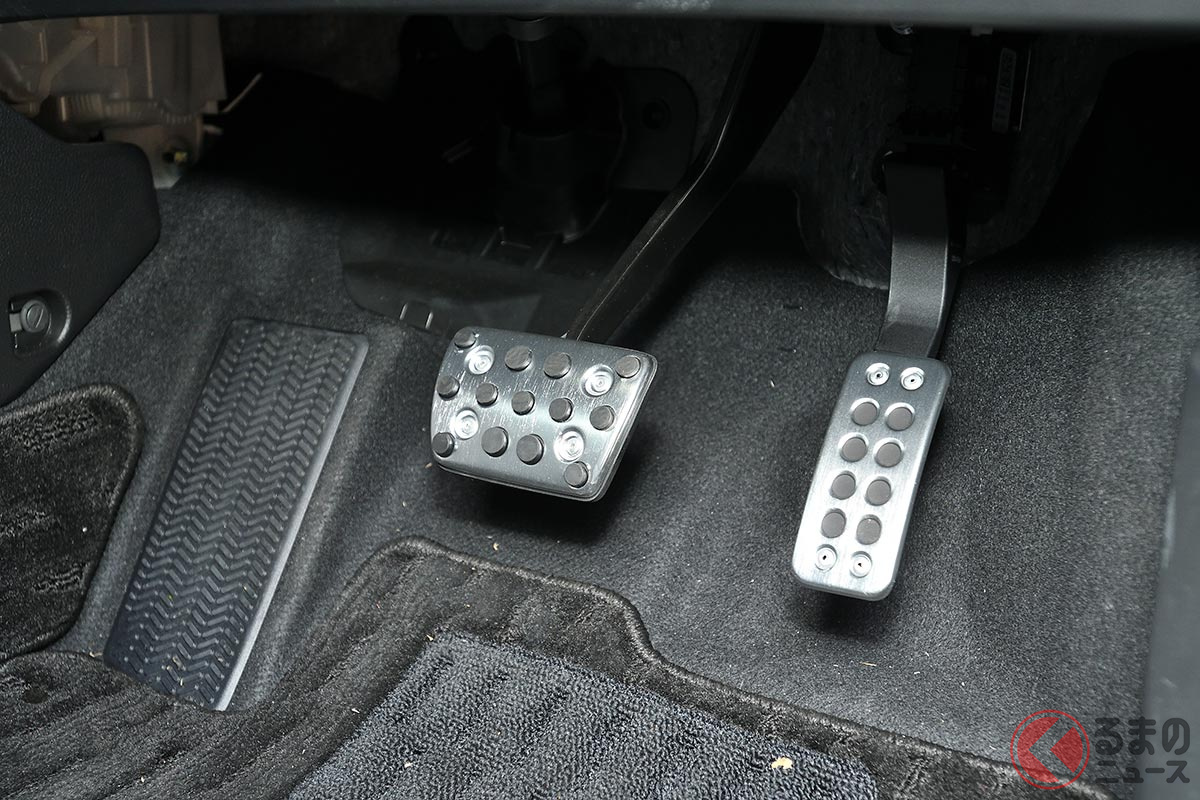
The Swift learner’s car lineup in France is based on the Swift series for the local market (all models are hybrids), with special equipment such as a pedal unit on the passenger side added.
The Swift can be selected based on the Swift Sport as well as the standard Swift, and is available in both AT and MT versions.
The pedal unit on the passenger side can be easily attached and removed without tools, and by choosing from a variety of colorful body colors, the vehicle can be made to match the image of the driving school.
* * * * * * * * *
If your first car is a Swift/Swift Sport with a sporty design, you may have a memorable experience in your future car life.
Translated with www.DeepL.com/Translator (free version)”
The ZR-V has garnered significant attention since its initial announcement
Honda will release a new SUV model called ZR-V on April 21, 2023, which has already started accepting reservations since September 2022. It is a mid-size SUV with a practical and eye-catching design, and it shares the platform with the Civic, making it the first SUV to have the “Sports e:HEV” hybrid model with a 2-liter direct-injection engine and two electric motors. The exterior design is distinct from other Honda models, featuring a vertical grille and sharp headlights. The ZR-V has garnered significant attention since its initial announcement.
Honda has finally released its new SUV, the ZR-V, which has a handsome face with a vertical grille. However, there are concerns about delivery times, with even the earliest orders expected to take around a year and a half to be fulfilled. The Vezel, a similar model, has also experienced long delivery times, with customers waiting up to a year. Despite this, many customers are willing to wait for their new cars. The ZR-V has a high-quality interior and is a global model, which means that delivery times may be longer due to competition for production slots in different markets.