











Similar Posts
Toyotas Land Cruiser 250 Series Revolutionizes Off-Roading with First-Ever Hybrid A Bold Leap into the Future
ByPawaniOn August 2nd, Toyota marked a historic moment with the global premiere of the new Land Cruiser 250 series. Celebrating the iconic model’s 72nd anniversary, the unveiling showcased a renewed commitment to the brand’s original values of simplicity and sturdiness. Scheduled to hit the Japanese market in the first half of 2024, including the exclusive “First Edition,” the Land Cruiser 250 series aims to redefine off-road experiences.
Developed on the GA-F platform, shared with the 300 series, the new Land Cruiser prioritizes enhanced performance on rough terrains. Noteworthy improvements in frame rigidity, suspension performance, and the adoption of electric power steering (EPS) and a multi-terrain monitor contribute to superior maneuverability and on-road comfort.
In a groundbreaking move, the Land Cruiser 250 series introduces the brand’s first-ever hybrid powertrain, set to make its debut in North America and China. Meanwhile, the Japanese market will welcome diesel options, featuring a 2.8L turbo and a 2.7L gasoline variant, providing diverse choices to cater to different preferences.
The exterior design of the 250 series boasts a horizontal layout, encapsulating the quintessential Land Cruiser essence. The interior, a departure from opulence, emphasizes functionality, staying true to the rugged nature of an authentic off-roader. This harmonious blend of tradition and modernity showcases Toyota’s commitment to evolving with the times while maintaining the Land Cruiser’s core values.
As an added surprise, Toyota announced the reintroduction of the Land Cruiser “70” series in Japan later this winter. With this, all three series will be concurrently available, offering a range of choices to cater to diverse consumer preferences.
The Land Cruiser 250 series not only represents a milestone in the model’s illustrious history but also reinforces Toyota’s dedication to providing vehicles that resonate with customers on a daily basis. As anticipation builds, the Land Cruiser 250 series stands ready to leave an indelible mark on the automotive landscape, continuing the legacy of one of the most revered SUVs in the world.
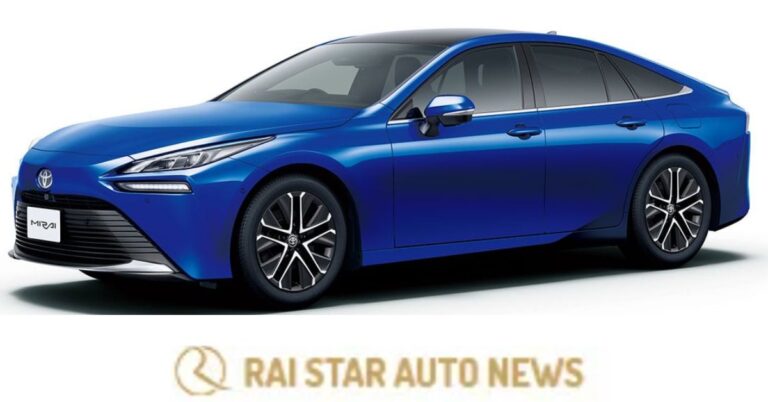
2026 Toyota Mirai Combines Sporty Design with Eco-Friendly Performance
ByPawani2026 Toyota Mirai Toyota Mirai 2026-01-26 by RAI STAR Toyota has once again raised the bar in sustainable luxury with the official unveiling of the 2026 Toyota Mirai Fuel Cell Electric Vehicle (FCEV) on December 3, 2025. This next-generation hydrogen-powered sedan seamlessly blends cutting-edge technology, sophisticated design, and sporty performance to deliver an eco-friendly driving…
- kuruma | autonews | Nissan other | Skyline
Nissan’s Shocking Move 4 Beloved Car Names Disappear, Leaving Fans Dismayed
The Disappearance of Nissan’s Iconic Car Names: A Reflection on the Brand’s Strategy In the 1950s and 1960s, Nissan introduced car names like “Sunny” and “Bluebird,” which became household names and played a significant role in the company’s success. However, over time, these iconic names vanished from the automotive scene, leaving many wondering why Nissan chose to abandon such widely recognized and beloved brands.
The emergence of privately-owned cars in Japan was a significant milestone, with the Subaru 360 paving the way in 1954 at the All Japan Automobile Show (now known as the Tokyo Motor Show). Nissan, in collaboration with Austin, had already acquired passenger car manufacturing technology in 1952, and by 1955, they began selling Datsun passenger cars, including the popular Datsun 110/210 models. The release of the Bluebird (Model 310) in 1959 marked a turning point for Nissan, as its modernized design, improved maneuverability, and ride comfort made it a resounding success both in Japan and the United States. The Bluebird continued to captivate customers for ten generations until 2001, becoming a beloved family car and a key player in Nissan’s success.
However, in 2000, the direct successor to the Bluebird was introduced as the “Bluebird Sylphy,” a name that deviated from the original and positioned the car in the lower Sunny class. Subsequently, in 2012, the “Bluebird” name was dropped altogether, marking the end of its 53-year legacy. Similar fates awaited other Nissan car names, including “Sunny,” “Cedric,” and “Gloria.” The Sunny, born in 1966 with a 1000cc engine, competed with Toyota’s “Corolla” in terms of sales volume and gained recognition as Nissan’s primary compact car. However, in 2006, it was replaced by the “Tida Latio,” and the Sunny name disappeared. Today, the name has been revived in some overseas markets based on the “Latio” and “Sentra” models.
Around the same time the first Sunny was introduced, Nissan also debuted its luxury car brand. While Nissan’s high-end models in the 1950s were based on knockdown production of the “Austin A50 Cambridge,” the smaller body size compared to its competitor, the Crown, posed a disadvantage. In 1966, Nissan merged with Prince Motor Co., Ltd., resulting in the simultaneous sales of the “Gloria” and “Cedric” high-end models. However, in 1971, the Gloria became a separate model with the same body as the Cedric, leading to the use of the name “Cedgro” by dealerships. The Cedric/Gloria duo gained popularity as Nissan’s luxury cars but were eventually integrated into the successor model, “Fuga,” excluding commercial variants. With this integration, the names Cedric and Gloria disappeared.
The root cause behind the disappearance of these renowned car names lies in Nissan’s financial slump during the late 1990s. Despite having a reputation for advanced technology, Nissan struggled with sluggish sales for each model. In 1999, Nissan entered into a partnership with Renault, embarking on a process of revitalization. Newly appointed CEO Carlos Ghosn implemented bold measures to achieve a V-shaped recovery, including factory consolidation, reducing domestic production capacity, and significant workforce reductions. Model consolidation was also part of the strategy, resulting in the discontinuation of the “Laurel,” “Pulsar,” and “Silvia.” Although the main models like Sunny, Bluebird, Cedric, and Gloria had successors, it seemed unnecessary to abandon these well-established brand names that had been cultivated over many years.
During that period, the user base for each car was aging, and Nissan aimed to develop new users and markets by introducing new names for the revived models. It’s not only Nissan that faced the challenge of an aging brand image. Toyota also renamed its “Corona” to “Corona Premio” and gave the Corolla subnames like “Axio” for a period. However, Toyota successfully rejuvenated the Corolla by shedding its perception as a “car for the elderly” through a comprehensive redesign carried out from 2018 to 2019. While the Crown underwent a significant transformation in appearance, the company actively promoted its brand power as a “traditional domestic luxury car,” emphasizing the importance of maintaining the brand name amidst changing times.
Considering these factors, it can be argued that Nissan’s strategy of changing even the main models’ names was excessive. Had Nissan retained names like Corolla and Crown, the outcome might have been different. Despite the decline in the sedan market, none of the renamed successor models proved to be remarkably successful. Models like “Tidalatio,” “Sylphy,” and “Fuga” have all disappeared from the market.
Amidst this disappearance of iconic names, one Nissan model managed to survive the test of time—the legendary “Skyline.” Debuting in 1957 from Prince Motor Industry, the Skyline continued to garner a strong following even after the merger with Nissan. It remains a sports sedan, with the current model (13th generation) introduced in 2013. However, enthusiasts eagerly anticipate a new model announcement, especially considering that over ten years have passed since its introduction.
While the Crown, sharing a similar history with the Skyline, sparked debates by venturing into SUVs and expanding into overseas markets, it made proactive efforts to differentiate itself into four distinct vehicle systems. This approach, based on the historical Crown name, showcases a spirit of creating new trends different from Toyota and Lexus. Preserving the Skyline’s legacy is of great importance, as its brand power is deeply rooted. Erasing such a renowned name seems excessive, and many fans hope Nissan will continue to cultivate and evolve the Skyline brand.
In June 2021, Nissan’s Vice President, Asako Hoshino, made a statement at a press conference declaring that “Nissan will never give up on the Skyline,” following reports suggesting its discontinuation. This declaration created a buzz among car enthusiasts, but two years have since passed without any new announcements. For the loyal fans eagerly awaiting news, the hope remains that Nissan will soon unveil their next declaration and bring forth the next chapter for the Skyline.
The new Toyota Prius is blowing up with its cool looks .
Toyota’s fifth-generation “Prius,” unveiled to the world on November 16, 2022, is sparking excitement with its sleek design, although there are mixed opinions about its interior space. The latest iteration of the hybrid car takes on a sportier and more expansive appearance compared to its predecessor.
The “Hybrid Reborn” concept underpins the fully remodeled Prius, preserving its 25-year hybrid legacy while injecting fresh elements of “eye-catching design” and “captivating driving.” The exterior design, in particular, stands out as a focal point of the new Prius.
Notably, the exterior design builds upon the classic mono-form silhouette that has defined the Prius. The vehicle’s character lines have been refined to create a clean and streamlined profile, emphasizing a more minimalist approach.
Compared to the previous generation, the new Prius boasts a lowered height by 40 mm and a length increase of 25 mm. Additionally, the width has grown by 20 mm, contributing to a visually striking, low-slung, sports car-inspired appearance.
Toyota aptly describes the styling of the new Prius as an “expression of emotion and universal beauty that resonates with the senses.” The vehicle received instant praise on social media platforms upon its debut, with admirers celebrating its “emo” and “cool” attributes.
However, some concerns were raised regarding the perceived spaciousness of the interior. Comments circulated suggesting that the lower roofline might have affected the cabin’s roominess, and a few potential buyers questioned the ease of access and comfort even before the vehicle’s release.
The new Prius is set to hit the Japanese market in winter (spring 2023 for the PHEV model). While many enthusiasts are relying on photos and preliminary information for their opinions, true judgments should await firsthand experiences with the vehicle.
As part of the press preview on November 16, a member of the editorial team had the opportunity to assess the vehicle’s interior comfort. With a height of approximately 170 cm, the staff member noted that despite the initial surprise from the lower seat height, the interior felt wider than expected.
Particularly noteworthy was the ample legroom and overall comfort once seated. Toyota has meticulously redesigned the interior layout to align with the sleek and low-slung form. Adjustments include a lowered hip point for both front and rear seats, providing increased headroom, and an 8mm extension of the distance between front and rear seats.
The front window angle was acknowledged, but the instrument panel’s design contributed to a more comfortable and less confined ambiance, enhanced by the lower seating position. While definitive conclusions on interior space remain subject to individual passenger characteristics, it’s clear that visual impressions alone can’t fully encapsulate the driving experience.
Enthusiasts and potential buyers are eagerly awaiting the official debut of the new Prius this upcoming winter to truly gauge its interior comfort and space firsthand.
- kuruma | autonews | Honda Vezel | Honda WR-V
Honda WR-V vs Vezel: 3 Smart Revealing Differences in Comfort, Space, and Car Sleeping
ByPawaniHonda WR-V vs Vezel 2023.12.14(Honda WR-V) by RAI STAR Honda WR-V vs Vezel: 3 Key Differences in Space, Comfort, and Car Sleeping Honda WR-V vs Vezel is becoming a popular comparison among compact SUV buyers, especially after Honda revealed early details about the upcoming WR-V. Since both models sit in a similar size class,…
The ZR-V has garnered significant attention since its initial announcement
Honda will release a new SUV model called ZR-V on April 21, 2023, which has already started accepting reservations since September 2022. It is a mid-size SUV with a practical and eye-catching design, and it shares the platform with the Civic, making it the first SUV to have the “Sports e:HEV” hybrid model with a 2-liter direct-injection engine and two electric motors. The exterior design is distinct from other Honda models, featuring a vertical grille and sharp headlights. The ZR-V has garnered significant attention since its initial announcement.
Honda has finally released its new SUV, the ZR-V, which has a handsome face with a vertical grille. However, there are concerns about delivery times, with even the earliest orders expected to take around a year and a half to be fulfilled. The Vezel, a similar model, has also experienced long delivery times, with customers waiting up to a year. Despite this, many customers are willing to wait for their new cars. The ZR-V has a high-quality interior and is a global model, which means that delivery times may be longer due to competition for production slots in different markets.