

Similar Posts
Revolutionary Toyota bZ3 Sedan Impresses with 616 km Range – A Game-Changer
Toyota, the renowned Japanese automotive manufacturer, has introduced its latest addition to the battery electric vehicle (BEV) series, the “bZ3” sedan. This model marks the second installment in the “bZ” series, following the “bZ4X” released in Japan. However, the bZ3 carries a unique distinction as it was exclusively developed for the Chinese market. Let’s delve into the exciting features that make this collaboration between Toyota and BYD a noteworthy venture.
The bZ3 is the fruit of an extraordinary collaboration between Toyota and BYD, a major electric vehicle manufacturer in China. Notably, the joint venture between the two companies, known as BYD TOYOTA EV TECHNOLOGY (BTET), takes the lead in the creation of this sedan-type BEV. The model’s battery, a lithium-ion iron phosphate battery, is produced by Fudi Battery, a part of the BYD Group. However, it is crucial to clarify that BYD is solely responsible for the battery peripherals, while Toyota handles the essential aspects of basic body design and driving performance. Moreover, the manufacturing is carried out by FAW Toyota, a joint venture between Toyota and FAW, further cementing the collaborative effort behind this innovative BEV.
The bZ3 boasts a body size of 4725mm in length, 1835mm in width, and 1475mm in height, with a wheelbase measuring 2880mm. This puts the model’s dimensions between the popular Toyota models “Prius” and “Camry.” The vehicle is available in two battery capacities: a 49.92 kWh version with a range of 517 km (CLTC method) and a larger 65.28 kWh variant offering a cruising range of 616 km. The front-wheel-drive system powers the bZ3, with two motor options depending on the grade – 181 horsepower for the former and 241 horsepower for the latter.
Toyota has embraced a trendy coupe-style design for the bZ3, with aerodynamic elements infused throughout its exterior, contributing to an impressive Cd value of 0.218. Moving inside, the interior exudes a sense of specialness rarely seen in Japanese cars. Centered around an 8-inch vertical display, the interior design surrounds the selector and storage tray. The dashboard is elegantly simple, adorned with rose gold accents, emanating an aura of sophistication. The bZ3’s operation layout may differ from traditional vehicles, with a button-based turn signal on the handle and paddle shifts serving functions other than regeneration adjustments, yet it remains intuitive and easy to use after a brief acclimation period.
In the Chinese market, the bZ3 is available in three grades, with the entry-level 49.92 kWh model priced at 169,800 yuan (approximately 3,282,000 yen), the intermediate 65.28 kWh model at 189,800 yuan (approximately 3,668,000 yen), and the higher-grade 65.28 kWh model at 199,800 yuan (approximately 3,862,000 yen). Notably, considering the content, the pricing is highly competitive, and Toyota’s presence in China’s burgeoning electric vehicle market is evident as the bZ3 secured a respectable 12th position in new car sales rankings in June 2023, encompassing both gasoline and electric vehicles.
With the success of the bZ3, Toyota is committed to further expanding its BEV lineup exclusively tailored for the Chinese market. The company unveiled exciting concept cars at the Shanghai Motor Show in April 2023, such as the “bZ Sport Crossover Concept” and “bZ FlexSpace Concept,” with the former developed in collaboration with BYD. With China at the forefront of electrification, Toyota’s active development of various types of electric vehicles, including hybrids, plug-in hybrids, and fuel cell electric vehicles, is poised to solidify the company’s presence and impact in this dynamic market.
In conclusion, Toyota’s “bZ3” sedan marks a remarkable achievement as a product of collaboration with BYD, showcasing a blend of cutting-edge technology, sleek design, and futuristic features. As Toyota continues to expand its BEV lineup in China, the company’s contribution to the advancement of electric mobility in the region is set to grow even further.
Nissan revives the Sunny or the first time in almost 40 years
Nissan revives the “Sunny” for the first time in almost 40 years! What are the features of the “”near-future LEAF”” with sports specs & presence with Silvia engine?
What is the Sunny with presence LEAF and Sylvia engine?
Nissan operates five automotive vocational schools across Japan.
Among them, Nissan Kyoto Automobile College (Kyoto School) has unveiled in the past the “”LEAF”” with a futuristic design and the “”SUNNY”” with a retro design.This is amazing! The birth of the Silvia-powered “”Sunny””! See the real car at an impressive level!
This is amazing! Nissan Kyoto School’s “”Sunny”” with Silvia engine unveiled at Osaka Auto Messe 2018
Nissan Automotive University Schools are located in Tochigi, Yokohama, Aichi, Kyoto, and Ehime.
The Nissan Automotive College’s educational policy is to “”develop human resources who can contribute to society based on education that enhances communication skills.
The school has sent many graduates to Nissan, Nissan sales companies nationwide, and other automobile-related companies.
Among them, Kyoto School is a school where those who aim to become highly-skilled automotive engineers can enjoy learning the latest and most practical technology and knowledge.
In April 2017, the Kyoto School also opened the Customization Department, where students are encouraged to create their own vehicles by realizing body designs based on their own free ideas.
In addition to students’ imagination, they create custom cars by making full use of “”maintenance knowledge and skills”” and “”sheet metal painting techniques”” they have learned up to now, as well as “”wrapping techniques”” and “”FRP processing techniques”” they learned in the new course.
In this context, LEAF and SUNNY customized cars were unveiled at Osaka Auto Messe 2018.
The LEAF, named “”RL-R,”” is a futuristic sports car based on an environmentally friendly electric vehicle with the concept of “”an overwhelming sense of presence that sets it apart from others.
The new model has a sleeker shape than the previous LEAF, and the rear fenders have an original pavilion design.
In addition, Nancan “”NS-II (285/30R18)”” tires and Work Emotion “”T7R (18-inch)”” wheels were installed on the feet.
The other Sunny was based on a 1970s KB10 model with the concept of “”making an old car new,”” and was equipped with the power unit and powertrain of the “”Silvia (S15). The “”Silvia (S14)”” suspension was more transplanted to this model, making it a compact car with high power output.
In appearance, it has a blue body color with a front bumper and over fenders that have a strong presence.
For the suspension, Yokohama “”Advan Neova AD08 (215/45R16)”” tires and Work “”Meister (16-inch)”” wheels were used, and the vehicle was lowered by installing a coilover suspension.
The person in charge at the time had the following to say about these two vehicles.
The seven students in the first year of the customization course started building the Leaf and Sunny with the goal of exhibiting at the Osaka Auto Messe, armed with the maintenance skills they acquired in their first and second years, and the sheet metal painting skills they acquired in their third year.
Despite the time passing by, the students never gave up and gave up their Saturdays and Sundays to work on the two vehicles, completing them and making them look stunning.
The Sunny won 10th place in the dress-up and tuning car contest held at the Osaka Auto Messe 2018, and was also introduced in an American magazine.
The Kyoto School also made a big splash at the Tokyo Auto Salon 2023 with the unveiling of the “”FAIRLADY X,”” a crossover model with a “”FAIRLADY Z”” face.
Nissan Leaf refreshes interior and exterior … 2023 model released in the United States .
“Nissan Leaf Refreshed Inside and Out…2023 Model Released in the U.S.
Newly designed front grille and aluminum wheelsMaximum cruising range of 341km per charge
Fast charging takes 40-45 minutes to charge 80% of battery capacity
Latest “”Pro Pilot
2023 Nissan Leaf model year (US specs)
On June 21, Nissan’s U.S. division launched the 2023 model year Nissan Leaf. The local base price is announced to be $27,800 (about 3,770,000 yen).◆Newly designed front grille and aluminum wheels
The 2023 model has a renewed exterior. The front has a newly designed grille and bumper molding, and the headlights have black inner finishers. The emblems reflect Nissan’s new design language and are now luminescent.In addition, the rear under-diffuser, rear spoiler, and tire deflectors have been reshaped to enhance aerodynamic performance. 2023 model year Leaf is now available in two versions: Leaf S and Leaf SV Plus. The higher grade Leaf SV Plus comes standard with newly designed 5-spoke 17-inch alloy wheels.
The interior of the 2023 model will have a new Nissan emblem on the steering wheel. The display in the center of the instrument panel features a new start-up screen. Black moquette seats are standard on both grades. The Leaf S has a gray finisher, while the Leaf SV Plus has a gloss black finisher.
◆Up to 341km range on a single charge
The Leaf S is equipped with a lithium-ion battery with a storage capacity of 40kWh and an electric motor with a maximum output of 147hp and maximum torque of 32.6kgm.The higher grade LEAF SV Plus is equipped with a large-capacity 60 kWh lithium-ion battery. As a result, the cruising range per charge is expected to increase up to 341km. The LEAF SV Plus will be equipped with an electric motor with a maximum output of 214hp. It is 45% more powerful than the Leaf S. The maximum torque draws 34.6 kgm.
The 2023 model of LEAF is equipped with the “”e-Pedal”” as standard equipment. It enables one-pedal driving, which allows the driver to accelerate and decelerate using only the accelerator pedal.
◆Fast charging charges 80% of battery capacity in 40-45 minutes
The 2023 model LEAF can charge 80% of its battery capacity in 40 to 45 minutes using the fast charging port. In addition, a portable charging cable that can be plugged into 120-volt and 240-volt outlets is also available, eliminating the need to install a Level 2 charger at home.The 2023 model year LEAF comes with a lithium-ion battery warranty that covers the battery pack for eight years from new car registration or 160,000km driven.
The 2023 model year LEAF pursues a high-quality, spacious, and functional interior. The cabin is said to comfortably accommodate five passengers, with 60:40 split-folding rear seats. The rear trunk is designed to have ample luggage space and has a capacity of 850 liters with the second row seats folded down.
◆The latest “”ProPilot
Apple’s CarPlay and Google’s AndroidAuto are equipped as standard. NissanConnect”” and “”Nissan Door to Door Navigation”” are available as options. In addition, “”NissanConnect EV”” and telematics services allow the driver to remotely start charging the vehicle and monitor the charging status. This enables the driver to recharge the battery and activate the heater and air conditioner before getting in the car.Standard equipment on the Leaf SV Plus is the latest “”ProPilot Assist”” advanced driver assistance system (ADAS). This comes with a hands-on driver assistance system that combines Nissan’s intelligent cruise control and steering assist technology with a stop-and-hold function that can bring the vehicle to a complete stop. In highway traffic jams, for example, the system can follow the vehicle in front of it, stop, and start driving as the vehicle in front starts up again, according to the company.”
25th anniversary of the birth of the world’s first mass-produced hybrid vehicle! What is the feat of Toyota’s first “Prius” in time for the 21st century?
“25th anniversary of the world’s first mass-produced hybrid vehicle! What a great achievement of Toyota’s first generation “”Prius”” in time for the 21st century!
25 Years Since Its Birth! A Look Back at Toyota’s First “”Prius
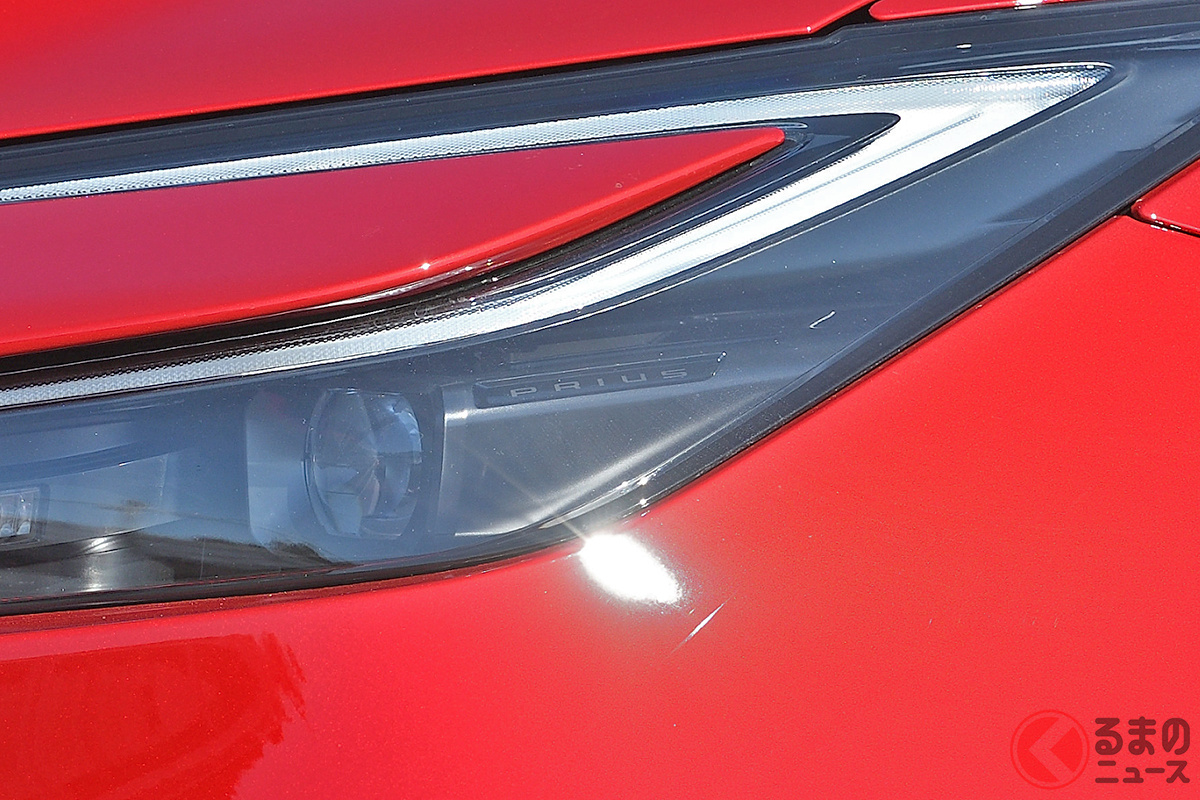
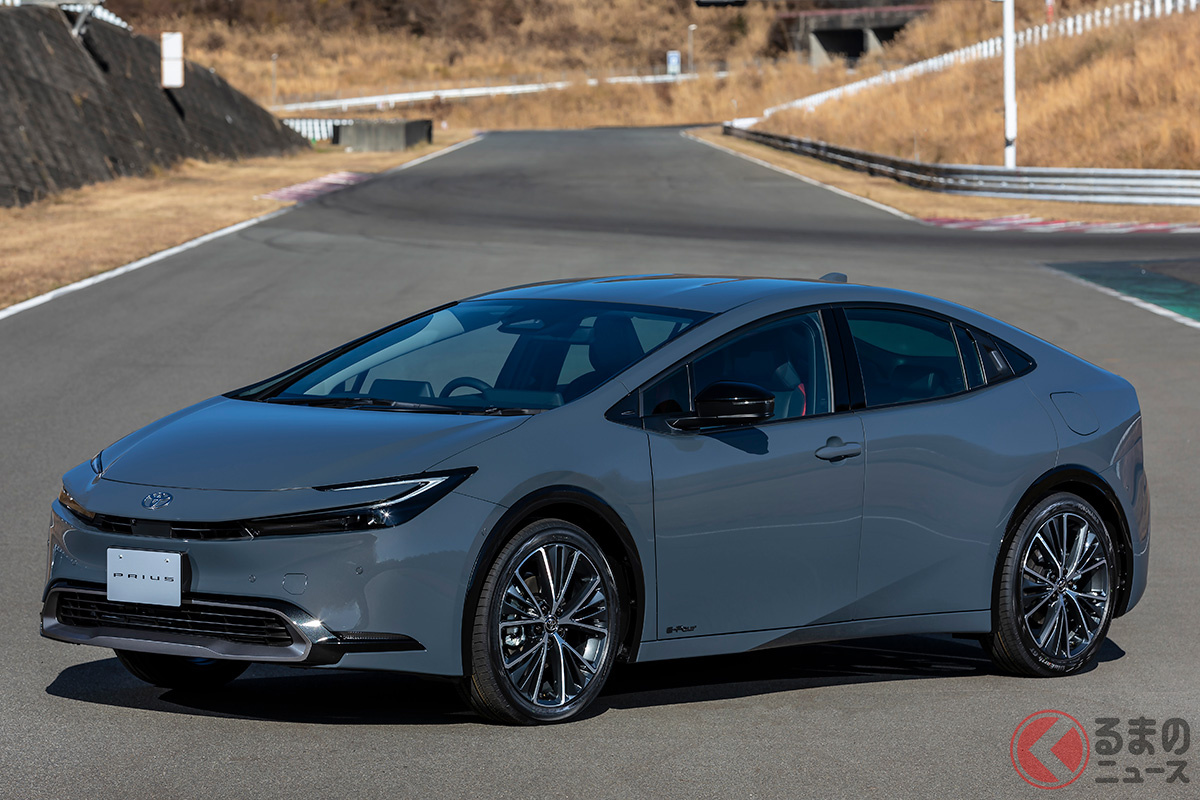
One of Japan’s most fuel-efficient eco-cars is the Toyota Prius. The current model is the fourth generation, launched in 2015, and continues to reign as one of the world’s most fuel-efficient cars.Covering the “”Toyota Hachi”” based HV and the Prius prototype! See the first generation “”Prius””
The first-generation “”Prius””, a great accomplishment and a brilliant landmark in the world’s automotive history
The first-generation Prius was born in August 1997. As the world’s first mass-produced hybrid passenger car, it changed the concept of eco-cars up until then, and is truly an epoch-making model in the world’s automotive history.
The year 2022 will mark a major milestone, 25 years since the launch of the Prius. We take a look back at what the first-generation Prius was like.
* * * *
The development of hybrid vehicles by Toyota has a long history, dating back to 1965. At the time, Toyota was focusing on gas turbine engines for hybrids because of their excellent characteristics: energy-saving, lightweight, compact, and low environmental impact. The gas turbine engine is characterized by a series of cycles of intake, compression, combustion, and exhaust that are carried out using only rotational motion, and the jet engine is also a gas turbine engine.
In 1969, Toyota began development of a hybrid vehicle equipped with a gas turbine engine, exhibiting the “”Century Gas Turbine Hybrid Test Model”” at the 21st Tokyo Motor Show in 1975, and at the 22nd Tokyo Motor Show in 1977, the “”Sports 800 Gas Turbine Hybrid Model”” with a downsized hybrid system was exhibited. The “”Sport 800 Gas Turbine Hybrid Car”” with a downsized hybrid system was exhibited at the 22nd Tokyo Motor Show in 1977.
Development of the gas turbine hybrid by Toyota then continued until the 1980s, but it was never put into practical use, and the company shifted to a hybrid system based on a reciprocating engine.
It is said that the development of a production hybrid vehicle directly linked to the Prius began in 1993.
Then, in August 1997, the first-generation Prius was launched with the catchphrase “”Just in time for the 21st century.
The car body was a four-door sedan with a unique wedge-shaped shape designed for aerodynamic performance, achieving a Cd value (coefficient of drag) of 0.30. Measuring 4275 mm (length) x 1695 mm (width) x 1490 mm (height), it was quite compact by today’s standards.
The interior was also advanced in design, with a horizontal LCD monitor at the top center of the instrument panel with a digital speedometer, fuel gauge, and various warning lights, and a 5.8-inch wide display below it as standard equipment, with an audio screen (radio/tape), vehicle information screen ( hybrid energy flow and fuel consumption & recovered energy information), AV adjustment screen (sound quality screen adjustment), and FM multiplex broadcast (visible radio), as well as a warning screen could be displayed.
It also featured a foot-operated parking brake and column-type shift lever, and side walk-throughs were available, giving it minivan-like utility.
The Prius’ development target was to achieve twice the fuel economy of gasoline-powered vehicles in the same class, and it achieved a fuel economy of 28 km/L (10-15 mode), which was astounding at the time.
In fact, this is approximately twice the fuel efficiency of a conventional gasoline engine AT vehicle, and means that CO2 emissions have been reduced to approximately one-half.
Furthermore, air pollutants such as CO, HC (hydrocarbons), and NOx (nitrogen oxides) were reduced to approximately one-tenth the levels regulated at the time.
The power unit that achieved this low fuel consumption is the Toyota Hybrid System (THS), which combines a 1.5-liter in-line four-cylinder Miller cycle engine with a maximum output of 58 hp, a 41 hp motor, and a power split mechanism that controls the drive distribution between the engine and motor and the generation of electricity.
For the running battery, nickel-metal hydride batteries were used for stability, reliability, and cost.
The THS stops the engine and runs on the motor alone (for a very short distance only) when starting off or under light load, and in normal driving, the engine power is split into two paths to drive the tires and generate electricity, with the motor assisting the engine.
In addition, the elements of the drive system are not significantly different from those of the current strong hybrid: the battery supplies power to the motor during full-throttle acceleration, the regenerated power is stored in the battery during deceleration, and when the battery needs to be charged, power is supplied to the battery while the car is in motion.
Priced at 2,150,000 yen (not including consumption tax), it was between 500,000 and 700,000 yen more expensive than a gasoline-powered car in the same class, but in reality it was quite a bargain price.
* * *
The first-generation Prius established a new genre of hybrid vehicles, but it was not a big hit because users at the time were not yet very environmentally conscious and skeptical about expensive hybrid vehicles, and the production of running batteries was not easy. The production was limited and did not become a big hit.
However, the Prius had a tremendous impact on other manufacturers, and automakers around the world followed Toyota’s lead in developing hybrid vehicles. It is truly a great car that changed the world.”
New Red Demand for Suzuki Jimny 5-Door Sparks Color Controversy.
ByPawaniHigh expectations surround the Suzuki Jimny 5-door as it made its grand entrance into the Indian market in early 2023. Impressions and videos from India have already been circulating, building anticipation for its eventual release in Japan. Yet, one question lingers: why isn’t the striking red body color available in Japan?
In India, the Jimny 5-door boasts a straightforward lineup comprising two grades: “Zeta” and “Alpha.” In addition to classic monochrome options like white, blue, and gray, Indian customers have the opportunity to choose from two-tone body colors like “yellow/black” and “red/black.” It’s the absence of the red hue that piques curiosity in Japan. While similar shades are available, red remains conspicuously absent.
The reason behind this color discrepancy appears to be rooted in regional preferences. Once upon a time, red cars were all the rage in Japan, particularly “red sports cars” that were the envy of many drivers. This penchant for red extended beyond sports cars to minivans and rugged 4WD vehicles. However, a prevailing perception emerged that “red paint fades easily,” which led people in rain-prone Japan to steer clear of the color.
Mazda played a pivotal role in reshaping the perception of red. Starting with the CX-5 in 2012, Mazda adopted red as the image color for their models, introducing hues like Soul Red Premium Metallic, Soul Red Crystal Metallic, Artisan Red Premium Metallic, and more. The rarity of red in other automakers’ offerings helped Mazda’s red colors gain popularity. These hues appealed to drivers who desired a car with a distinctive personality that set them apart.
Interestingly, there is a parallel between fashion and cars in Japan. Just as primary colors tend to be popular during good economic times and achromatic colors during bad times, a similar trend is observable in car color preferences. In the late 2010s, Japan experienced an outdoor boom, influencing fashion and car colors alike. During economic prosperity, bright outdoor fashion and car colors were prevalent, but as the trend shifted towards low-visibility colors, these too gained prominence in the automotive world.
The Jimny 5-door aligns with this trend by offering both “low-visibility colors” that blend with nature and “high-visibility colors” like yellow, catering to professionals such as forestry workers. Jungle green is the most favored color among buyers, followed closely by black and ivory, despite Suzuki initially promoting yellow as its image color.
Surveys by a research company reveal that red remains the top choice for a “cool car” in countries like India, Thailand, Vietnam, and Indonesia. In Asia, which is currently experiencing rapid motorization, the allure of the color red remains strong.
While Suzuki did have red options in some of its earlier models, such as the first-generation Escudo and X-90, the urban-oriented colors didn’t align with the image Japanese consumers had of wild SUV styles, limiting their popularity.
Suzuki, however, isn’t ruling out the possibility of offering red in Japan in the future, should the market demand it. Given current Japanese tastes, colors like sand beige and blue-gray might become more popular choices down the road.
Toyota “2-door” “Hilux” has become “invincible specification”! Hino’s “truck” too! The best solution for unstable South Africa “SVI Stop Gun”
“Toyota’s “”2-door”” “”Hilux”” is now “”invincible””! Hino’s “”truck”” too! SVI Stop Gun,”” the best solution for unstable South Africa, is too good to be true!
SVI to Convert “”2-Door”” Hilux and Hino Ranger into Armored Vehicles
SVI Engineering (SVI), a South African manufacturer of armored vehicles, has created a stir by unveiling a six-wheeled version of its MAX 3, an armored vehicle based on the Toyota Land Cruiser 79 series, on September 21, 2022.Toyota 2-door “”Armored Hilux”” and Hino’s “”Armored Truck””!
SVI has a product line called the “”SVI Stopgun Cube-in V2.0 Series,”” which converts production models such as the Toyota “”Hilux”” and the Hino “”500″” (hereinafter referred to as the “”Ranger”” in Japan) into armored vehicles.
Two-door “”Hilux”” converted into an armored vehicle by SVI
SVI is a South African manufacturer that manufactures and modifies vehicles, including armored vehicles based on Toyota, Hino, Volvo, and various other vehicles.
SVI is developing a line of armored kits that convert commercial trucks such as the Hilux and Ranger into armored vehicles that can withstand 7.62mm sniper rifle bullets and M-16 5.56mm bullets at the CEN 1063 B6 occupant protection level, among others. Stopgun Cube-in V2.0 Series.
The SVI Stopgun Cube-in V2.0 Series significantly reduces the risk of occupant injury at a fraction of the cost by installing integrated door armor with armored glass on the window frame.
The SVI Stopgun Cube-in V2.0 series includes the “”Stopgun V2.0 Plus”” for the Toyota Land Cruiser 79 series (double cab type pickup truck), the “”Stopgun V2.0 Light”” for the Hilux, and the “”Stopgun V2.0 Hino 500 Three types of “”Stop Gun V2.0 Plus”” exist.
The Stopgun V2.0 Plus for the Land Cruiser 79 series is armored all around, including the floor, sides, and each door opening, achieving occupant protection level B6. Despite the addition of these armors, the production time was only six weeks, and the vehicle is still available for servicing at authorized Toyota dealers.
The Stopgun V2.0 Light for Hilux is a package that can be applied to 2-door type single cab models, not the 4-door type Hilux sold in Japan.
Weight reduction is achieved mainly through the use of special armored steel sheets 3.5 mm thick and 32 mm bulletproof glass. This contributes to cost reduction without requiring suspension upgrades. Instead, the occupant protection level is B4+ with protection against handguns and rifles up to 7.62 x 39 mm (including AK47).
The Ranger Stopgun V2.0 Hino 500 was developed in response to the rapidly increasing number of truck hijacking incidents in South Africa. It features discreet integrated door armor and upgraded door hinges. In addition, bolt-action door locks and an improved cab tilt mechanism provide better access to the powertrain and improved serviceability.
The windshield is split and each window frame is fitted with bulletproof glass. In addition to the usual body armor, the roof is also protected, and a custom-made armored steel plate is used under the floor.
SVI lists the advantages of this vehicle as “”available at a lower price than armored vehicles built from a specially designed chassis,”” “”no special driver’s license required for most variants,”” “”maintenance ready,”” and “”service available at a local Toyota store if needed.
* * *
Although SVI is a South African company, the security situation in South Africa is said to be very dangerous. Johannesburg in particular is said to have one of the highest crime rates of any city in the world, and the “”Ponte Tower”” is said to be home to gangs.
The reason why ordinary passenger cars are converted into armored vehicles instead of luxury cars such as KLASSEN and INKAS, which are armored car manufacturers in Europe and North America, may be because “”crime”” is more familiar to people.
Translated with www.DeepL.com/Translator (free version)”