
Similar Posts
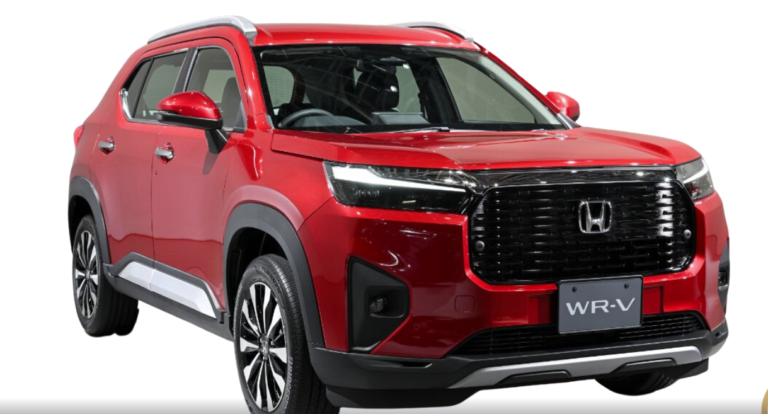 kuruma | autonews | Honda WR-V
Honda WR-V Cargo Space: 458 Liters of Powerful Value in a Stunning Compact SUV
ByPawaniHonda WR-V cargo space 2023.11.22( Honda WR-V) by RAI STAR Honda WR-V Cargo Space: 458 Liters of Compact SUV Practicality Honda WR-V cargo space is one of the biggest reasons this new compact SUV is attracting attention. With a class-leading 458-liter luggage area, the upcoming Honda WR-V promises the kind of everyday practicality many…
Mitsubishi’s new SUV “Outlander PHEV” to be sold in North America! Added to gasoline vehicles one year later than Japan .
“Mitsubishi’s new SUV Outlander PHEV goes on sale in North America! Gasoline-fueled model to be added to the lineup a year after Japan
PHEV Model Rolling Out One Year After Japan
Mitsubishi Motors Corporation (MMC) has announced that the company’s new Outlander SUV (PHEV model) will go on sale in two countries, Canada and the United States, starting in November 2022.
Mitsubishi’s “”handsome SUV”” Outlander is rugged! See the interior and exterior of the current model in 32 photos.
Also coming to North America! Mitsubishi’s flagship SUV, Outlander (PHEV model)
The Outlander is a crossover SUV that has been on sale in Japan since 2005, and the current model, the third generation, was announced on October 28, 2021.
Based on the concept of “”Bold Stride,”” the Outlander is the flagship model of Mitsubishi’s electrification and four-wheel control technologies.
The design is based on a new concept called “”Bold Stride. It also adopts the “”Dynamic Shield,”” which is the identity of Mitsubishi vehicles, and has a thick, horizontal design from front to rear.
The powertrain combines a 2.4-liter inline 4-cylinder engine with a motor that delivers 40% more power than the previous model and a large-capacity 20kWh drive battery, enabling the car to run 87km in EV mode. All Japanese versions are 4WD and available in 5- and 7-passenger configurations.
In Japan, the current model is sold exclusively as a PHEV model, but in the U.S., a PHEV model has not been introduced since the gasoline model went on sale in April 2021, ahead of other markets.
On October 13, 2022, Mitsubishi’s U.S. subsidiary announced specifications for the PHEV Outlander.
All seven grades are available with three-row seating and seven-passenger specifications. Prices will range from $39,845 to $49,995 (approximately 5.88 million yen to 7.37 million yen).
The car will also be sold in Puerto Rico in December. Starting with the launch in New Zealand in March 2022, which was the first overseas launch of the current Outlander PHEV model, the global rollout is gradually underway.
* * *
The Outlander was the world’s first SUV-type PHEV vehicle, and expectations are high for its future development to see how much its sales volume will increase as the greatly redesigned model continues to be rolled out worldwide.”
Suzuki “Jimny” with retro round eyes is now available! What should I aim for when buying a second-hand car?
“Retro Round-Eyed Suzuki “”Jimny”” is now available! What is the second generation of used Jimny? What are the points to consider when buying?
Full-fledged off-roader with ladder frame + part-time 4WD
Suzuki’s light four-wheel drive “”Jimny”” adopts a ladder frame and part-time 4WD system, which is a tradition of cross-country models originating from “”Jeep””. It boasts deep-rooted popularity as a full-fledged off-roader with top-class rough road drivability despite being a light car.The retro ruggedness is irresistible! The “”Jimny,”” an authentic four-wheel-drive vehicle popular among girls with its chunky body .
Retro Round-Eyed 2nd-Generation Jimny
The Jimny is famous for its long model cycle.
It was born in 1970 by diverting the engine and transmission for the “”Carryy”” light truck of the time and fitting them into the light standards of the time.
The first generation lasted 11 years from 1970 to 1981, the second generation 17 years from 1981 to 1998, and the third generation 20 years from 1998 to 2018.
The fact that it is an extremely long-selling model probably contributes to a sense of stability and security for Jimny fans.
The current Jimny (4th generation), which was introduced in 2018, returns to its roots, adopting a straight line body and round headlights that are typical of XC vehicles.
The current model (4th generation), however, has evolved into a model that everyone can enjoy riding in comfort and safety, with the inclusion of Suzuki Safety Support (optional for some grades), a package of advanced safety equipment that includes a camera and radar-based “”Collision Damage Mitigation Braking”” and “”Accidental Movement Control.
The recent outdoor activity boom has been a tailwind for Suzuki, and at the time of its debut, orders exceeded 15,000 units, compared to the monthly sales target of 3,000 units, and its popularity and attention soared.
The retro-modern design that combines ruggedness and charm is popular among women, and has even created a new trend, with female Jimny owners being referred to as “”Jimny girls.
However, due to the high production volume and the global shortage of semiconductors, delivery of new Jimny models is currently being delayed. As a result, used car prices have skyrocketed, and even with a mileage of 30,000 km, the price of a used car is almost the same as the price of a new car.
In addition, used car prices of previous Jimny models are also gradually rising, with the popularity of the second-generation model, which was discontinued more than 20 years ago, said to be on a resurgence.
The second-generation Jimny, which was introduced in 1981, was designed with on-road performance in mind, while continuing the tradition of a ladder frame, part-time 4WD, and leaf rigid design.
The 17-year history of the second-generation Jimny can be broadly divided into four periods.
First, the first period (SJ30) from 1981 to 1986, and the 550cc period from 1986 to 1990 (JA71), when a turbo engine (and intercooler-equipped models in 1987) was added.
The third period (JA11), from 1990 to 1995, saw the expansion of the light car standard and the change to a 660cc engine, and the fourth period (JA12/22), from 1995 to 1998, saw the introduction of standardized door mirrors and improved comfort for passenger use.
As expected, the first and second periods of the early 550 cc models have decreased in circulation as used cars, but the third and later periods, especially the fourth period, are still available in significant numbers today.
Even the last model of the second generation has been out of production for more than 20 years, making it a bit like a classic car, but what is behind its popularity even today?
According to Mr. T, an industry insider familiar with the XC market, the appeal of the 2nd generation is that it can still be used as a tool.
The second-generation models are good because of their balance between cheapness and antiquity,”” he says. Especially in the 4th generation, with its 660 cc engine, a 3-speed AT and power steering as standard, the specifications have been improved to the point where it can be used for city driving as well.
Also, while the current model (4th generation) continues to command high prices, the 2nd generation used cars are inexpensive, starting at 500,000 yen, and because they are old, you don’t have to worry too much about scratching them while driving off-road.
The second-generation model is also characterized by its air conditioning and power steering, which make it much easier to drive. 64-horsepower turbo engine and lightweight (910 kg) body make it one of the most capable off-road vehicles on the market today.
The low base price is also the reason why many used cars are boldly customized, and the popularity of these cars is also due to their affordability.
The recent boom in retro designs is also contributing to the popularity of the second generation.
The simple interior with the minimum necessary equipment is perfect for hard-core enthusiasts who like to personalize their cars or who don’t like unnecessary decoration.
Next: We recommend the JA12 or JA22, which are in their fourth generation.
The retro round-eyed Suzuki Jimny is hot right now! What to look for in a used second-generation model? What are the points to consider when buying?
Recommendation: JA12 or JA22 4th generation models
The popularity of the 2nd generation Jimny is so strong that even in the customization of the current 4th generation model, there are many parts with a design reminiscent of the 2nd generation. So which model year of the 2nd generation Jimny is actually the best to buy?Suzuki 2nd generation “”Jimny”” (1995/JA22)
The second generation Jimny is also a very long-selling model, so specifications vary considerably depending on the year, but we think the JA12/JA22, the fourth and final model (1995-1998), is the best choice.
From this model, the suspension was changed from leaf rigid to rigid with coil springs, and the ride quality was considerably improved.
Also, the engine has been increased to 64 hp, so there should be less chance of feeling a lack of power.
However, since the last model of the second generation is already about 25 years old, there is no denying the possibility of sagging and frequent breakdowns due to age-related deterioration.
As a vehicle chosen by people who drive off-road, the body must be carefully checked for scratches and rust.
It is also necessary to check if the hoses inside the engine and the rubber products used as security parts are still usable.
However, one of the reasons why we recommend this second generation is that there is a wide variety of aftermarket parts that can cover this deterioration. You can also choose a used car that has already been customized.
You can buy a used car with lift-up, larger tires, short bumpers, and other off-roader-like features at a great price, but before you buy, check how it has been customized and whether it is inspection-compliant.
The JA12 and JA22 models have different turbocharged engines, although it is difficult to tell the difference from the outside.
The JA12 is a SOHC engine that is powerful at low rpm and suitable for off-road driving, but it is not good at high rpm driving such as high-speed cruising.
On the other hand, the JA22 DOHC turbo engine is a high-revving engine that can handle urban driving and high-speed cruising, but it is said to lack power at low speeds and is often troublesome.
It is advisable to consult with a store that can properly maintain this type of engine before purchasing a car.
However, considering the fact that the car is almost 25 years old, many of them are MT (5-speed in the 4th generation models), and many of them have been customized, it is recommended to prepare 200,000-300,000 yen for the initial maintenance cost.
The 3-speed AT is not a problem in the city, but the engine speed will be high when cruising at high speeds. In this case, you need to drive with a manual transmission to lower the RPMs as much as possible, or ride with the expectation that it will be noisy at high speeds.
* * * *
The 2nd generation Jimny can be fully enjoyed as an off-roader even after more than 20 years have passed, but its strengths and weaknesses are clearly divided, such as inadequate comfort equipment due to its age and its weakness at high speeds, so some people may regret choosing it only because it is cheap.
The key to choosing the 2nd generation Jimny is whether you can ride it with an open mind or not.”
Honda adopts a new face in the new “Fit SUV”! New “Fit” released! How does it evolve with increased horsepower?
“Honda’s new “”Fit SUV”” adopts a new face! The new “”Fit”” is now on sale! How is it evolving with more horsepower?
Lots to see besides the new “”RS”” type setting
Honda released a minor-changed new model “”Fit”” on October 7, 2022.New “”Fit”” with a new face! More horsepower and more powerful! View in pictures
This is the first minor change for the current Fit, but what aspects have evolved?
New “”Fit Closter”” with minor changes
The new Fit is available in five models: BASIC, HOME, LUXE, CROSSTAR, and RS.
The shape of the front nose has been changed for a cleaner appearance, the upper grille has been raised, and the HOME and LUXE models have evolved a more elegant design with a chrome decorative line running horizontally above the grille.
The SUV-look CROSSTAR has silver-colored front, side, and rear garnishes that are exclusive to the exterior. The crossover-like appearance was further emphasized by making the design more Tough Gear-like.
The new sporty RS model features an exclusive front grille, front bumper, side sill garnish, rear bumper, rear spoiler, and aluminum wheels.
It is equipped with a special suspension for the RS, and is designed to provide both a high quality and exhilarating ride, as well as a fun-to-drive experience where the driver’s operation and the car’s behavior are pleasantly connected in various situations.
The e:HEV RS is exclusively equipped with a deceleration selector with four levels of deceleration force when the gas pedal is released and three drive mode switches (NORMAL, SPORT, and ECON).
Two powertrains are available: an e:HEV model (hybrid) and a gasoline model.
The e:HEV model achieves a maximum output of 123 hp by increasing the maximum motor output by 14 hp.
The gasoline model uses a 1.5-liter DOHC i-VTEC engine with a 0.2-liter larger displacement. Maximum output has also been increased by 20 hp to 118 hp.
The “”Honda SENSING”” driving safety support system, which is standard equipment on all model grades, includes Traffic Jam Assist (traffic jam driving support function) and Sudden Acceleration Control as new standard features in addition to the conventional functions. Blind spot information and reverse exit support have also been newly added and are available by type.
The price (including consumption tax) of the minor-changed new Fit is set at 1,997,600 yen for the e:HEV model and 1,592,800 yen for the gasoline model.
Now here is a quiz.
What is the name of the type of Fit that was sold from the launch of the current Fit in 2020 to the present?
1] Spike
2] Aria
3. NES
4] Mobilio
The correct answer is [3] Ness.
The correct answer is [3] NESS.
The current Fit, NESS, which disappeared after a minor change, features mood-enhancing color coordination and highly water-repellent materials for the seat and instrument panel soft pad covers.
It was described as a light, fashionable type of fitness sport.”
Toyota Unveils the Luxurious Alphard/Vellfire Redefining High-End Minivans with 4th Generation Upgrade
Toyota, the renowned automobile manufacturer, has taken the automotive world by storm with the highly anticipated debut of its new Alphard/Vellfire model. Officially unveiled on June 21, 2023, the Alphard/Vellfire is set to redefine the concept of luxury minivans, capturing the attention of enthusiasts and critics alike.
The Vellfire, often regarded as the epitome of opulent minivans, has undergone a significant transformation, solidifying its position as a top-tier high-end model. Toyota has gone above and beyond to ensure that the new Vellfire surpasses all expectations, providing passengers with an exceptional level of comfort and style. One notable feature of the Vellfire is the introduction of a luxurious tan leather interior, exclusive to this model and not available in the Alphard.
The Alphard first entered the scene in 2002 as Toyota’s premier minivan, catering to luxury-oriented customers during the height of the minivan boom. In 2008, Toyota introduced a fully remodeled second-generation Alphard while simultaneously giving birth to the Vellfire, designed to appeal to those seeking a more individualistic approach. This latest iteration represents the fourth generation of the Alphard and the third generation of the Vellfire.
Toyota has expressed its vision for the new Alphard and Vellfire, aiming to create a space that fosters consideration and appreciation among all occupants, whether they’re in the driver’s seat or enjoying the backseat. Referred to as “the happiness of comfortable travel,” this philosophy has been ingrained in the development process, preserving the essence of Toyota’s values passed down through generations.
To achieve “the happiness of comfortable mobility,” Toyota has focused on sublimating performance to meet global standards, using the TNGA platform (GA-K) specifically optimized for minivans. The Alphard/Vellfire will embody enhanced performance and a superior driving experience. Each model will retain its distinct personality, with the Vellfire gasoline engine variant featuring a high-output 2.4-liter in-line 4-cylinder turbo engine and additional special body rigidity parts that enhance its unique character.
The new Vellfire, positioned as a high-end model, boasts a base grade price of 6.55 million yen, surpassing the base grade price of the new Alphard (excluding the Welcab) at 5.4 million yen. Toyota has meticulously designed the Vellfire’s interior, setting different design goals for the front and rear seats. The front seat layout combines dynamic left and right movement with a robust console, creating a cruiser-like cockpit that envelops the owner in utmost comfort. At the rear, various functions such as lighting, switches, and air conditioner outlets have been integrated into the center of the ceiling, evoking a sense of elegance and refinement reminiscent of a luxury cruise experience. These interior features are shared with the Alphard, but the Vellfire sets itself apart with its unique color options.
While both the Alphard and Vellfire offer a black interior, the Alphard offers a neutral beige color that the Vellfire does not possess. In contrast, the Vellfire boasts the captivating “Sunset Brown” interior, exuding a calm and luxurious ambiance absent in the Alphard. The sunset brown interior complements the wood and black panels, creating a level of quality comparable to that of European ultra-luxury cars. For those seeking an added touch of luxury, the optional “pillar light” set enhances the ambiance, transforming the interior into a magnificent “luxury lounge.”
It is worth noting that the Vellfire’s interior color, Sunset Brown, does not incur any additional cost, allowing users to enjoy a truly luxurious and fashionable atmosphere. Discerning customers looking to elevate their driving experience to new heights can opt for the Sunset Brown interior, further accentuating the elegance of their minivan.
With the debut of the new Alphard/Vellfire, Toyota has raised the bar in the luxury minivan segment, setting a new standard for performance, comfort, and style. The Alphard/Vellfire represents the culmination of Toyota’s dedication to crafting vehicles that provide the utmost satisfaction to its discerning customers, making it a top choice for those seeking unparalleled luxury in their minivan experience.
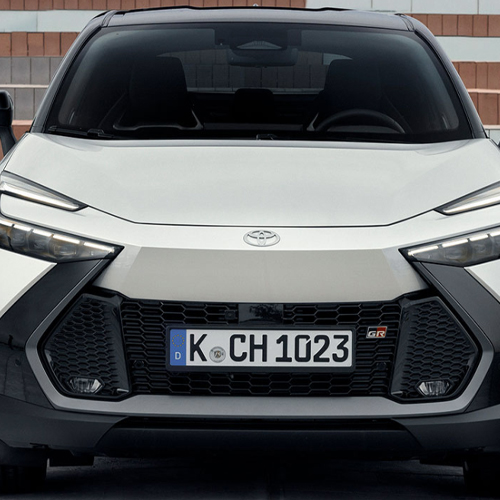
Toyota Unveils 2nd-Gen new C-HR with Positive Power: Starting at 5.71 Million Yen
ByPawaniToyota Unveils 2nd-Gen new C-HR with Positive Power 2023.11.21( Toyota CH-R) by RAI STAR Toyota C-HR 2nd Generation Debuts With Bold Design and Electrified Power Toyota C-HR 2nd generation has officially arrived, opening a new chapter for Toyota’s stylish compact SUV. On November 15, 2023, Toyota’s German subsidiary revealed the all-new second-generation C-HR,…