
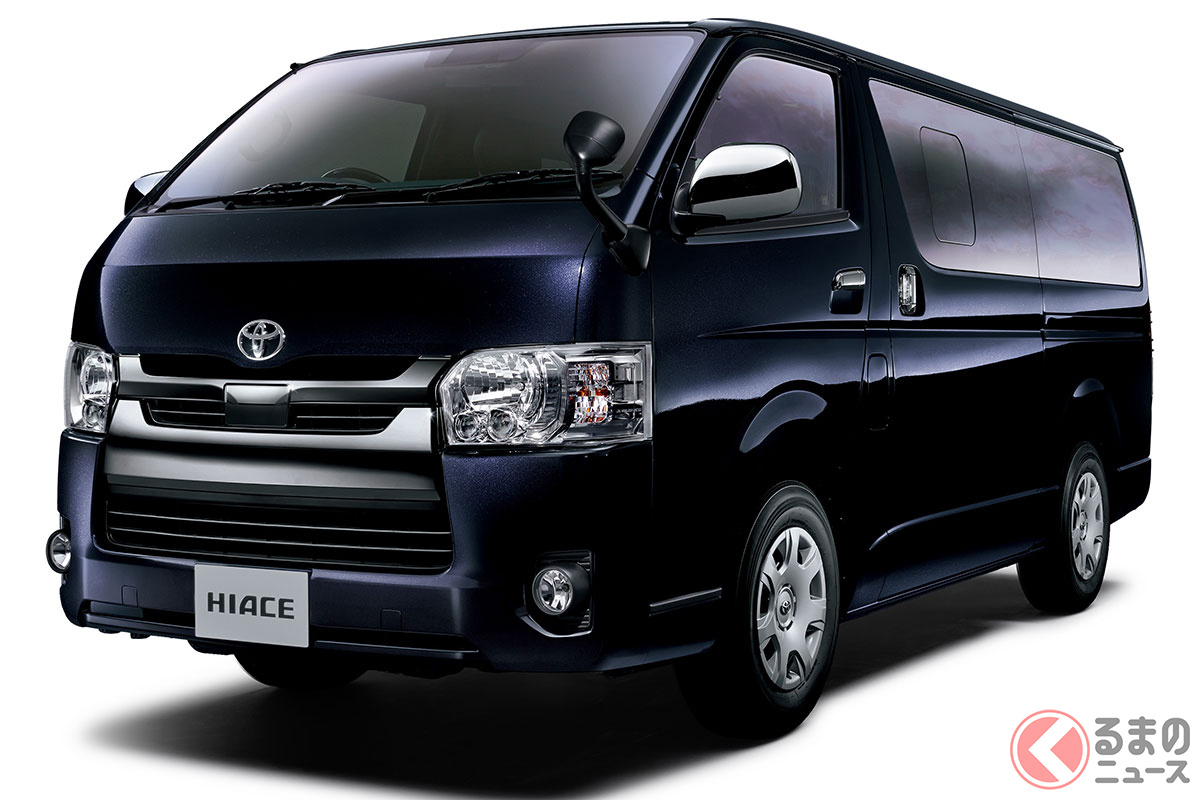
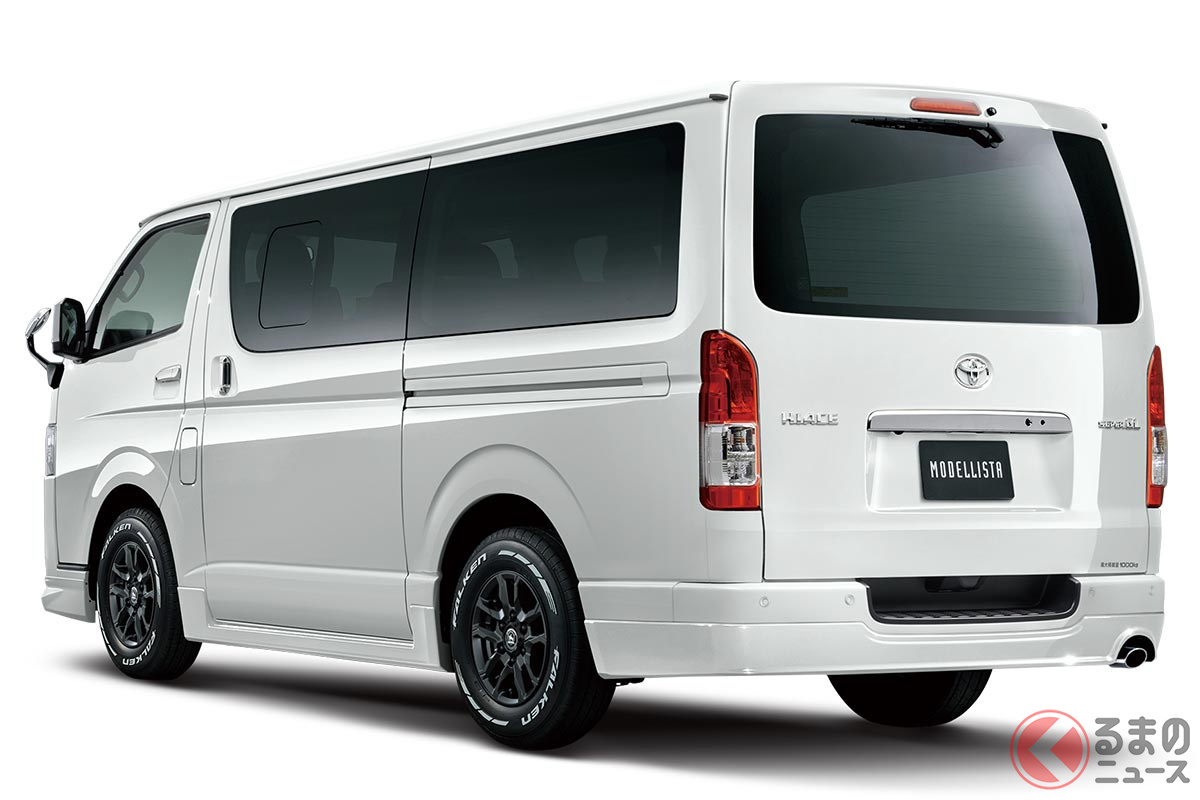
![トヨタ ハイエースバン スーパーGL 特別仕様車“ダークプライム II”[写真は2018年8月モデル追加時のモデル/最新モデルとは細部が異なります]](https://kuruma-news.jp/wp-content/uploads/2023/04/20220418_toyota_hiace_2018_darkprime_002.jpg?v=1650274270)
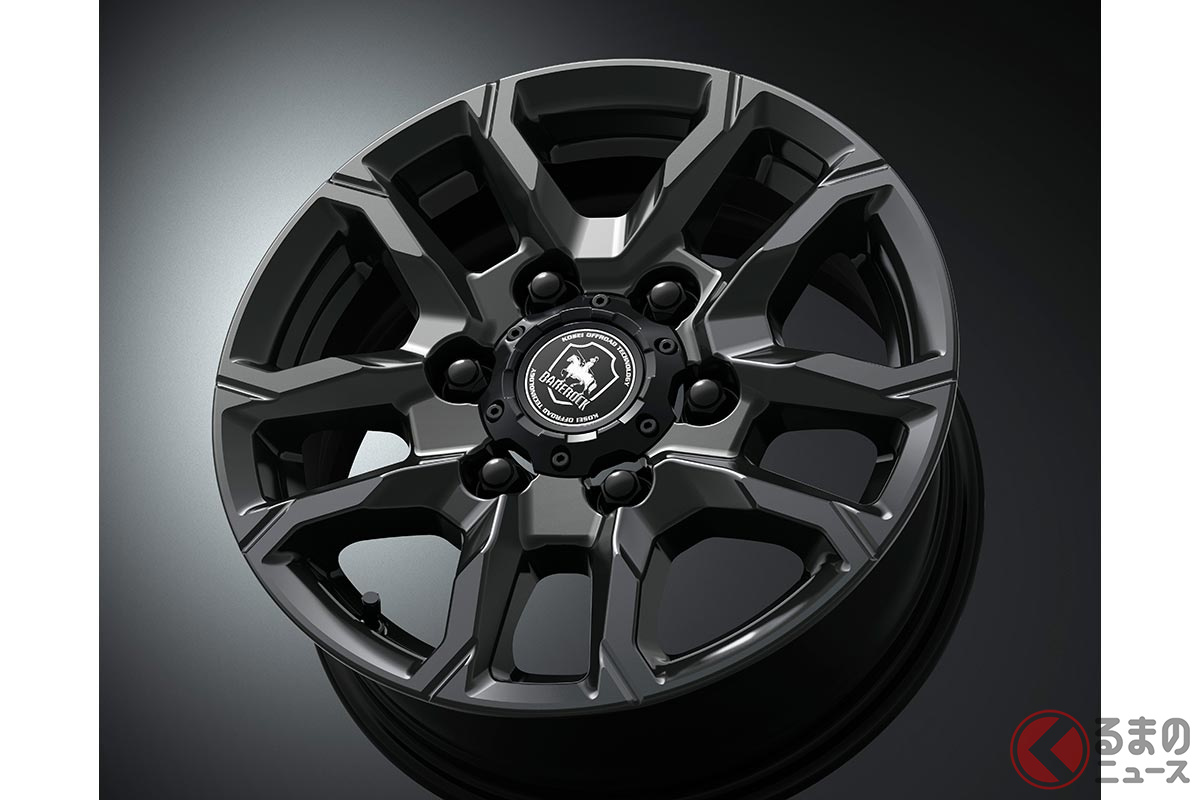
![トヨタ ハイエースバン スーパーGL 特別仕様車“ダークプライム II”[写真は2018年8月モデル追加時のモデル/最新モデルとは細部が異なります]](https://kuruma-news.jp/wp-content/uploads/2023/04/20220418_toyota_hiace_2018_darkprime_003.jpg?v=1650274272)
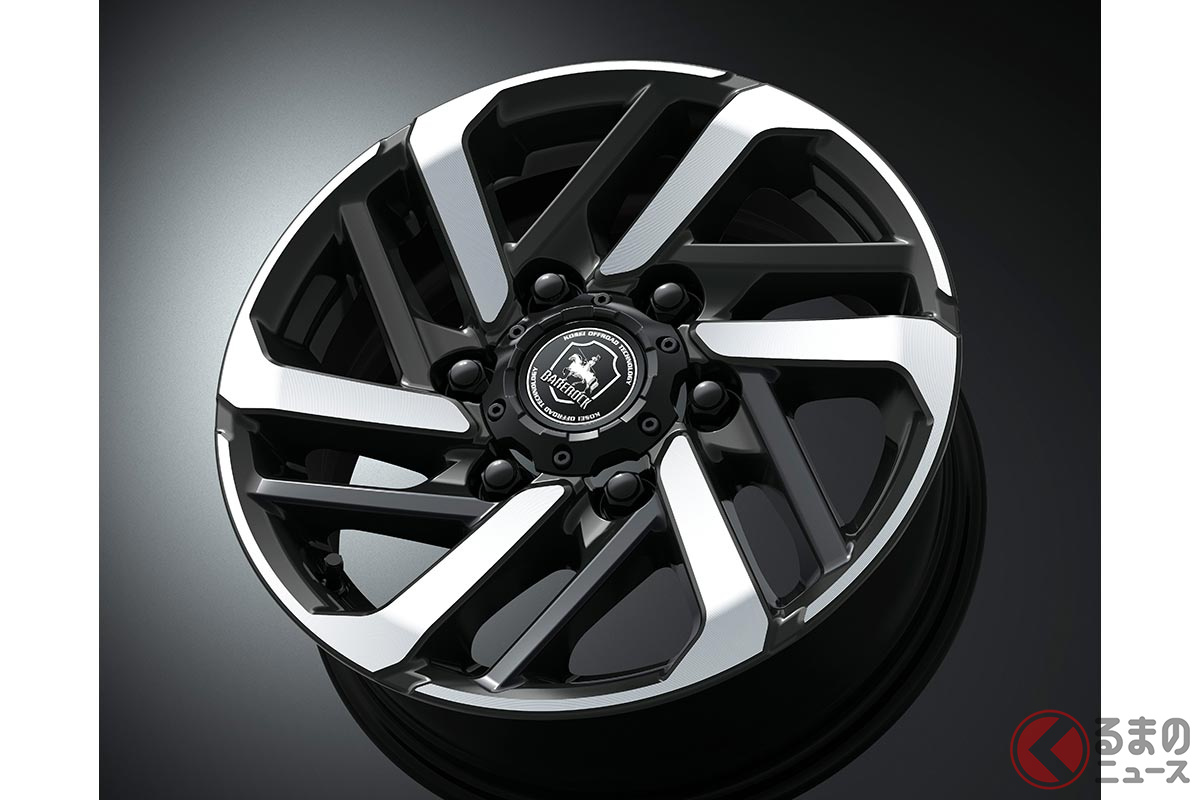
![トヨタ ハイエースバン スーパーGL 特別仕様車“ダークプライム II”[写真は2018年8月モデル追加時のモデル/最新モデルとは細部が異なります]](https://kuruma-news.jp/wp-content/uploads/2023/04/20220418_toyota_hiace_2018_darkprime_004.jpg?v=1650274274)
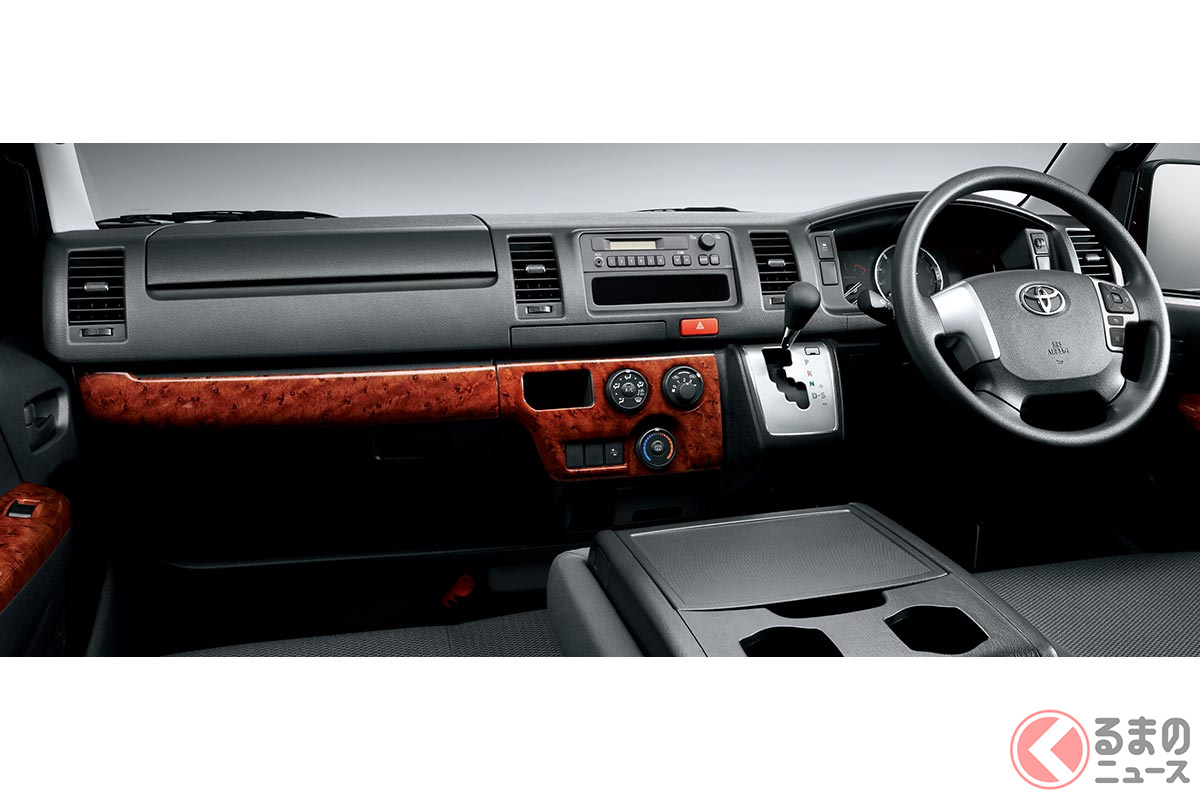
![トヨタ ハイエースバン スーパーGL 特別仕様車“ダークプライム II”[写真は2018年8月モデル追加時のモデル/最新モデルとは細部が異なります]](https://kuruma-news.jp/wp-content/uploads/2023/04/20220418_toyota_hiace_2018_darkprime_005.jpg?v=1650274275)
![トヨタ ハイエースバン スーパーGL 特別仕様車“ダークプライム II”[写真は2018年8月モデル追加時のモデル/最新モデルとは細部が異なります]](https://kuruma-news.jp/wp-content/uploads/2023/04/20220418_toyota_hiace_2018_darkprime_006.jpg?v=1650274277)

Similar Posts
Mitsubishi Outlander PHEV, side under camera image cannot be displayed … Risk of non-compliance with security standards
“Mitsubishi Outlander PHEV fails to display side-under camera image…may not comply with safety standardsJune 30, 2022, 5:45 PM
On June 30, Mitsubishi Motors Corporation (MMC) filed a recall with the Ministry of Land, Infrastructure, Transport and Tourism (MLIT) due to a defect in the navigation system of the Outlander PHEV. The affected 7,812 vehicles were manufactured between December 10, 2021 and May 26, 2022.
Due to a defective control program setting of the navigation system, the information processing in the system may not be completed when the system starts up, causing the system to restart repeatedly. In addition, when communication within the system is disrupted due to power fluctuation or other reasons, the system may not switch to the camera image and may display a black screen because the restoration process is not performed.
Currently, Article 44 of the Safety Standards requires the installation of a side-underview mirror or equivalent camera to confirm the view of the front passenger’s side. As a remedial measure, all vehicles will be equipped with the side-underview mirrors.
As a remedial measure, the control program of the navigation system will be rewritten to the countermeasure specifications for all vehicles.
There have been 203 cases of defects and no accidents. The recall was reported based on information from the market.”
Toyota’s HILUX with a chassis and wide body
Toyota’s “HILUX” with a flashy wide body and shakotan specs! Customized CG that “can’t go anywhere anymore” is amazing!
Toyota’s “HILUX” with a chassis and wide body!
Toyota’s pickup truck “Hilux” is sold worldwide. Indian artist Vishnu Suresh has created an image CG (rendering) of a customized version of the Hilux, including extreme lowering and a wide body, and released it on his social networking site.Looks really fast! Rendering of the flamboyant wide-body and shakotan spec “Hilux”
Rendering of Toyota’s “Hilux” with wide body and chakotan customization
The Hilux pickup truck has a long history, with its first model introduced in 1968. The current model is the 8th generation model, which made its return to the Japanese market in September 2017 after a 13-year absence, and underwent minor changes in August 2020.
Its body size is 5340 mm (overall length) x 1855 mm (overall width) x 1800 mm (overall height), which is large among the models offered in Japan, but it is larger than the Tundra (5814 mm (overall length) x 2030 mm (overall width) x 1925 mm (overall height)) and Tacoma (5728 mm (overall length) x 1910 mm (overall height)), which Toyota offers in North America and elsewhere. It is positioned more compact than other pickup trucks such as the Tundra (length 5814mm x width 2030mm x height 1925mm) and Tacoma (length 5728mm x 1910mm x height 1793mm).
Artist Vishnu Suresh has released an image CG (rendering) of such a Hilux that has been converted to flashy custom specifications, including extreme lowering.
In the published image CG, the Hilux has been lowered so much that it is no longer possible to drive on public roads, let alone off-road.
In addition, wide fenders are installed to increase the width of the car, giving it an unbelievably wide and low impression from the base car, and canards, under spoilers, a huge rear diffuser, and a small rear spoiler are also installed to give it a sporty atmosphere reminiscent of a racing car. The footpegs are equipped with a large, external caliper.
Large-diameter external wheels and Toyo Tires’ PROXES R888R high-performance tires are used to give the vehicle a racy look.
The car is also equipped with Toyo Tire’s high-performance PROXES R888R tires.
Vishnu Suresh creates customized renderings of various cars from Mercedes-Benz, KIA, Toyota, and others, and posts them on his social networking sites.
The renderings created by Mr. Vishnu Suresh are, of course, unrealistic, but since lowered Hilux models exist in reality, we cannot deny the possibility that such a customized model of the Hilux may one day appear in reality.
“Skyline GT-R” has a full carbon body! The powerful wide body custom CG is amazing! How much will it cost?
“Skyline GT-R”” is converted to a full carbon fiber body! The custom CG of the powerful wide body is amazing! How much does it cost to realize it?
How much will it cost… full carbon body Skyline GT-R
Nissan’s legendary sports car, the Skyline GT-R (BNR34 model) (“”GT-R””). Due to its popularity, it is traded not only in Japan but also worldwide, and it is not unusual for it to be sold for far more than the price of a new car.“”Skyline GT-R”” with a powerful carbon body! See the tremendous renderings .
Arnold Verghese, an Australian automotive CG artist, has released a custom rendering (CG) of the legendary Skyline GT-R with a full carbon body and wide body.
Rendering of the Nissan Skyline GT-R (BNR34) customized with a full carbon body widebody (Photo: Arnold Verghese)
The 10th generation (R34) “”Skyline,”” on which the Skyline GT-R is based, was introduced in May 1998, and the GT-R was added about eight months later, in January 1999.
The body size was reduced from that of its predecessor, the R33, to achieve excellent footwork and athletic performance. At the time of its launch, in addition to the standard model, a “”V-spec”” version was available, a version with a more racy exterior and sporty performance.
The body size is 4600 mm (L) x 1785 mm (W) x 1360 mm (H) with a wheelbase of 2665 mm and a vehicle weight of 1560 kg (V-Spec II, introduced in 2000).
The powertrain is a 2.6-liter twin-turbo inline 6-cylinder engine (RB26DETT type) with maximum output of 280 hp and maximum torque of 40.0 kgf/m, which is the same as the R32 and R33.
As of 2022, the Skyline GT-R, which boasts global popularity, is sold on the used car market at prices far exceeding the price of a new car, and in May 2022, a 1999 V-spec was sold for 140,000 pounds (approximately 22.6 million yen) on Collecting Cars in the UK. A 1999 V-spec sold for 140,000 pounds (about 22.6 million yen) on Collecting Cars in the U.K., and a new, unregistered V-spec II Nur fetched 60,501,000 yen at an Internet auction in Japan in 2021.
This time, Arnold Verghese has boldly revealed a rendering of the Skyline GT-R with a full carbon fiber wide-body specification.
All exterior body panels have been replaced with carbon body panels, leaving the car in its original state. The protruding front and rear fenders, huge wings, and small, simplified side mirrors give the impression of a “”racing car.
The car has been described on social networking sites as “”like a raspberry”” and “”unbeatable on the race track.
Arnold Verghese
Arnold Verghese has created customized renderings of sports cars such as the Toyota GR Supra and Chevrolet Corvette and posted them on his SNS.
The rendering created by Arnold Verghese is, of course, unrealistic, but there are several examples of full carbon body modifications, including the GT-R R35 with a full carbon body. The cost of this modification is said to be as high as 8.5 million yen, and it is clear that a large amount of money is required to “”convert”” a car to a carbon body.
Depending on the price of the base Skyline GT-R, it would cost at least 30 million yen to reproduce this car.”
25 years after its release the Nissan Skyline and Lancer Evo are in danger of going overseas .
It’s hard to believe, but 25 years have passed since the debut of some iconic Japanese sports sedans in 1998. Back then, the general belief was that a car’s lifespan was around 10 years or 100,000 km, but the roads today still echo with the purr of engines from two and a half decades ago. Among these timeless machines, three stand out – the “Altezza,” the “Skyline,” and the “Lancer Evo 5.” However, these legends now face the threat of fading away, potentially being relegated to overseas garages. Let’s delve into these cars’ histories and understand why they deserve to be saved from extinction.
The Toyota Altezza: A Modest Powerhouse
Toyota’s “Altezza” roared onto the scene in October 1998. Despite its relatively compact size – measuring 4400 mm in length and 1720 mm in width – the Altezza turned heads with its rear-wheel-drive layout, European-inspired styling, and upscale “chronograph” meters. Under the hood, the Altezza offered a range of power units, including the spirited inline 4-cylinder “3S-GE” engine and the smooth inline 6-cylinder “1G-FE” engine. This amalgamation of power and refinement created an appealing front-engine, rear-wheel-drive (FR) sedan package, tailor-made for mature enthusiasts.
As time progressed, the Altezza’s legacy evolved. A wagon variant known as the “Altezza Jita” was introduced, manual transmission options became available across all sedan grades, and the “L Edition” took shape as the luxury-oriented “Lexus IS” brand for North America. This evolution culminated in the transformation of the Altezza into the Lexus IS, a nameplate that continues to thrive today.
The Nissan Skyline R34: Fearless Performance
Nissan’s historic “Skyline” lineage, which dates back to 1957, reached its 10th generation pinnacle with the introduction of the “R34 Skyline” in May 1998. The R34 was conceived as the embodiment of a genuine sports sedan and coupe, encompassing bold design and unwavering dedication to core performance attributes: acceleration, handling, and braking.
Powered by the NEO straight-six inline six-cylinder engine, the R34 Skyline took different forms, including the high-performance variants like the turbocharged 25GT-X TURBO and 25GT TURBO, which boasted a maximum output of 280 hp from the RB25DET engine. The following year, the ultimate “Skyline GT-R (BNR34 model)” took the stage, further cementing the R34’s legacy.
Though the R34 Skyline bowed out to make way for the 11th-generation Skyline (V35 model) in 2001, its impact remains indelible in the hearts of enthusiasts and collectors.
The Mitsubishi Lancer Evolution V: Rally-Bred Dominance
Mitsubishi’s “Lancer Evolution” series, conceived to dominate the World Rally Championship (WRC), hit its stride in 1992 with the inaugural Lancer Evo 1. Fast forward to January 1998, and the fifth-generation Lancer Evolution V (“Lancer Evo 5”) roared onto the stage, building on the foundation set by its predecessors.
Sporting a wider stance and improved handling stability, the Evo 5 was armed with the “4G63” 2-liter inline 4-cylinder turbo engine, delivering impressive torque and agility. Just a year later, in January 1999, the Evo 5 was succeeded by the more advanced “Lancer Evolution VI” (“Lancer Evo 6”), marking yet another milestone in the Evolution series’ evolution.
In recent years, a wave of nostalgia has gripped the automotive world, with the 1980s and 1990s producing neo-classic Japanese sports cars that are gaining popularity worldwide. In the United States, the “25-year rule” has granted a lifeline to these classics, allowing right-hand drive cars to be registered as “classic cars” after a quarter-century of existence.
Enthusiasts and collectors alike are taking notice. Japanese sports cars that once roared exclusively in their homeland are now finding homes abroad. To secure your own piece of automotive history, it’s advisable to act sooner rather than later, as the used car market for these revered models is bound to soar. Let’s rally together to save these legends from fading into the past, ensuring that their engines continue to roar for generations to come.
The administration also acknowledged! “Seriously picking up trash” with Suzuki “Jimny” ! You can also pull up scrapped cars from the water! What is the actual situation of “Sarugashima Off Road” .
“Even the Administration Approved! Serious Garbage Pickup”” with Suzuki “”Jimny””! Even pulling up abandoned cars from the water! What is the reality of “”Sarugashima Off-road””?
Jimny Enthusiasts Dependable Even by the Government
On the banks of the Sagami River, which flows through Atsugi City, Kanagawa Prefecture, there is a place called “”Sarugashima Off-Road.
It is a free off-road course that utilizes the natural terrain almost as it is, and on holidays, it is crowded with many cross-country vehicles and off-road motorcycles, including the Suzuki “”Jimny.
Every year in March, the Sarugashima Off-Road Course hosts what is called the “”Sarugashima Clean Campaign”” led by Jimmy owners.
Why do Jimmy owners volunteer to pick up trash?Serious trash pickup with Jimny! And the ultimate customized “”5-door Jimny”” is so cool!
Why do Jimmy owners organize the “”Sarugashima Clean Campaign”” at “”Sarugashima Off-road””?
This location is recognized by Kanagawa Prefecture, Atsugi City, and other local governments. It is very rare in the Tokyo metropolitan area that the off-road portion of a riverbed is open to the public, and there are only a few places, including Sarugashima, where it is.
Why has Sarugashima been open as a free-running off-road course for so long?
The reason for this is that the local Jimmy owners and the local people have a strong desire to “”protect the place where we run by ourselves! The reason for this is the volunteer activities of local Jimmy owners and off-road motorcycle owners.
The main person behind these activities is Mr. Yutaka Nikaido of RV4 Wild Goose, a store specializing in Jimny and 4WD vehicles. We asked him what kind of activities he has been involved in and when he started them.
–When did the volunteer activities by Jimmy owners start?
The Jimny Club of Japan (JCJ) was established in 1982. Since that time, we have been involved in activities such as picking up trash at the Hamaoka Sand Dunes in Shizuoka Prefecture.
Later, we started holding off-road schools on Sarugashima on a regular basis, and we began asking participants to take home and dispose of as much trash as they could hold in their hands.
However, there was a limit to how much trash we could carry in our hands, and I felt that even if we were trying to clean up Sarugashima, it would only be a matter of self-satisfaction. We wanted to make a big deal out of it by getting the government involved.
–Is that where the Sarugashima Clean Campaign came in?
Yes, that’s right. What triggered the campaign was the increase in the illegal dumping of cars around Sarugashima.
Before the recycling ticket system was introduced in 2005, the cost of scrapping a car was about 30,000 yen.
So, bad people who did not want to pay the scrapping fee began to illegally dump their cars.
There were times when nearly 30 cars were dumped on the banks of the Sagami River.
According to the government (Atsugi City), the disposal cost was 30,000 yen if the vehicles were dumped up to the entrance of the riverbed, but if they were dumped in the river, it would cost about 300,000 yen because heavy equipment and tow trucks would be needed to pull them out of the river.
So I made a suggestion. “”Why don’t you call your friends with 4-wheel drive vehicles and have them pull it out and haul it away?”” I said.
The government officials were surprised. “”You can do that (without using heavy machinery or large-scale equipment)? He said, “”Yes, we can.
–How many 4WD volunteers did you get for pulling up the vehicles abandoned in the river?
I called my friends in the 4WD club, and we gathered 30 vehicles, including Land Cruisers and other large 4WD vehicles.
They were so happy to get into the river and help pull up the abandoned vehicles. Everyone loves to pull (laughs).
And they have all been driving 4WD vehicles for many years and have a very high level of experience in off-road driving. That’s why no one gets hurt and everyone is in control.
–I’m sure the government officials must have been very happy.
In the beginning, there were concerns such as, “”What if someone gets hurt during the work?
But after they realized that we were working at a high level, making full use of the 4WD’s off-road capabilities, they were relieved. They were very grateful.
After all, the cost reduction was amazing. If we bring it from the inside of the river to the entrance, we can reduce the cost by 270,000 yen per unit. Of course, the government took care of the rest (such as transporting the waste from the river entrance to the disposal site).
This was one of the reasons why we began to hold a large-scale Sagami River cleanup campaign once a year.
–When is the campaign held?
It is usually around March. In summer, there is so much grass that it is difficult to see the surroundings, so it is hard to find trash, and it is hard to work under the hot sun.
Therefore, we now conduct the cleanup in March, when the grass dies down and before it starts to grow back, when visibility is good and the weather is pleasant. At times, more than 300 people gather.
–I understand that there are also people who enjoy camping and BBQ at the Sarugashima off-road.
Yes, we do. It is a place to enjoy outdoor leisure activities. However, they are not the ones who throw garbage away. They bring it from outside.
People who camp on Sarugashima have very good manners. Why is that? It is because they “”assume that they will come back again.
In places closer to the city, such as the Tama River, people who BBQ or cherry blossom viewing leave their garbage behind or build fires directly on the grass, and such misdeeds are often reported in the media.
People who play on Sarugashima use the place neatly and leave it clean so that they can camp here again. The off-road course is the same.
The same is true of the off-road course.
According to Nikaido, the natural terrain of the Sarugashima off-road course is also wonderful.
It’s interesting,”” he said. The distance is quite long, and you can enjoy a variety of terrain. You can drive a Jimny or a big 4WD vehicle such as a Land Cruiser.
There is grass, mud, and sand. There is also sand. And there are lots of birds and you can even see wild pheasants.””
We protect the place where we run by ourselves. Sarugashima Off-Road has been protected for many years by well mannered owners of high quality 4WD vehicles, who have also joined hands with the local government.”
Discover Nissan Roox: Revolutionizing Urban Driving with Intelligent Features
ByPawaniNissan Roox 2025 Nissan Roox 2025-09-12 by RAI STAR Nissan Roox 2025: Redefining the Kei Car Experience with a Bold Redesign Get ready to meet the future of the kei car segment. Nissan has unveiled the fully redesigned Roox, a super-high mini wagon that promises to revolutionize expectations for small cars. After five years of…