


Similar Posts
New Alphard-faced “van” about to be unveiled.
Completely cloned! New Alphard-faced “”van”” about to be unveiled! 3.5m long mini Alphard to be launched in China soon!
A small model that looks exactly like Toyota’s Alphard is scheduled to appear?
A decade ago, China was even called a “”pacri powerhouse,”” but nowadays, there are few opportunities to see “”pacri cars”” in the Chinese auto market.Too much pacri! The new “”van”” with an Alphard face is bad…! Look at the actual vehicle design!
Nevertheless, “”cars that look a little weird”” still infest the market outside of the powerful major manufacturers.
This time, we have learned that a small EV that looks exactly like the Toyota “”Alphard”” is about to make its debut.Is this a complete clone? The “”BOMA,”” which looks very similar to the Toyota “”Alphard”” face and Nissan “”Days”” design (image source: Ministry of Industry and Information Technology of the People’s Republic of China, commonly known as the Ministry of Industry and Information Technology of the People’s Republic of China).
This information was discovered on the website of the Ministry of Industry and Information Technology of the People’s Republic of China (commonly known as the Ministry of Industry and Information Technology).
The Ministry of Industry and Information Technology (MITI) is an agency that handles the business of Japan’s Ministry of Economy, Trade and Industry (METI) and Ministry of Internal Affairs and Communications (MIC), and in China, automobile manufacturers are required to submit information on new models to MITI before manufacturing and selling them.
The manufacturer preparing to unveil the EV, which can be considered a mini-Alphard, is called Zhongxing Automobile (ZX Auto), which originated as an auto repair shop for the Chinese People’s Liberation Army, founded in 1949.
The name is similar to, but unrelated to, ZTE, a Chinese IT company sanctioned by the United States.
Based in Baoding, Hebei Province, ZTE was one of the first Chinese manufacturers to go overseas when Chinese manufacturers had their hands full at home, and was the first Chinese manufacturer to build a complete car factory overseas.
During the Libyan Civil War in the 2010s, pickup trucks produced by CMC, along with those of Japanese manufacturers, were used as “”technical vehicles”” (simple combat vehicles with anti-aircraft machine guns, etc. on the back) and were very active on both sides.
For Japanese manufacturers that do not export their vehicles for combat use, they definitely do not want to be used as combat vehicles in conflicts.
In contrast, however, CMC advertised that the 7,000 vehicles it exported to Libya played an active role in the conflict, and even today it is proudly listed in the company’s history on its official website.
Although Zhongxing Automobile is such a company, its current lineup consists of only three types of pickup trucks, and its power in the market tends to be weakening.
In the pickup truck market, Great Wall Motor, which is also based in Baoding, is gaining momentum and has completely lost market share.
The company has decided to launch the small EV in order to change the situation where a manufacturer that only offers pickups is losing influence even in the only market where it can compete. Completely cloned! New Alphard-faced “”van”” about to be unveiled! 3.5m long mini Alphard to be launched in China soon!
Just like… an Alphard? What is this 3.5m long mini Alphard-like model?
This compact EV will be marketed under the brand name “”Mioku,”” which itself is a newly launched brand.The model name is “”BOMA,”” and with dimensions of 3517 mm (overall length) x 1495 mm (overall width) x 1660 mm (overall height), it will be roughly equivalent to Nissan’s “”Days”” mini-car.
In fact, even the rear quarter and front fenders are almost the same as those of the Days.
And the extreme feature is the front mask.
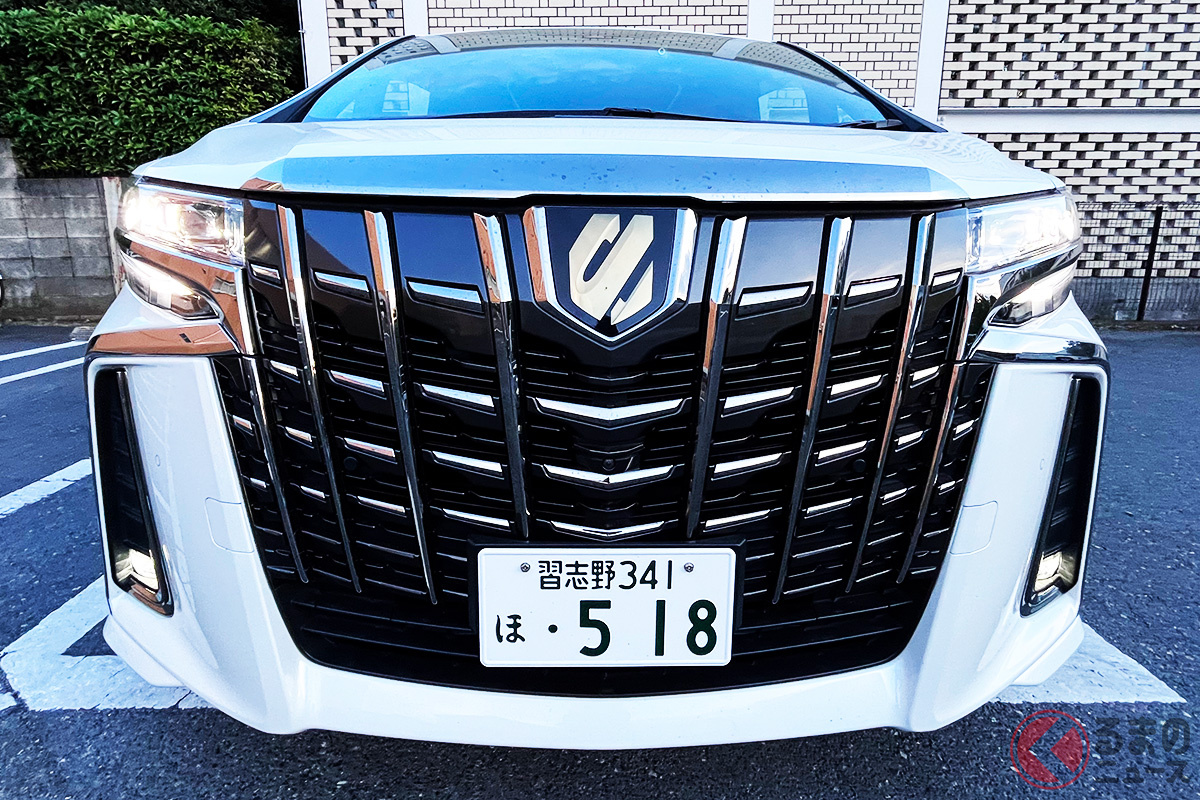
It looks as if the entire face of the Alphard, which is also popular in China, has been transplanted.
Not only the characteristic grille, but also the fog lamp housings and headlights look exactly the same.
The motor has an output of 30 kW, but no information is available regarding battery specifications.
The information from the Engineering Department shows two specifications with different weights, each weighing 40 kg, so it is highly likely that two different battery capacities will be available.
In addition, two types of tire sizes, 155/65R14 and 165/55R15, are listed, and at least two grades will be available.
Other than that, no other details, including the announcement, release date, and price, are known.
CMC may be planning to take advantage of the recent “”small EV”” boom to make a comeback, but I believe that this is next to impossible.
Consumers are not likely to pay attention to a hastily launched EV by a manufacturer that has only been involved in pickup trucks up until now.
Not only are the designs hastily prepared, but the quality is a carbon copy of Japanese manufacturers, and one is tempted to question whether they really intend to make an EV at all.
Chinese consumers are becoming increasingly aware of the shame of “”pakuri-kuri,”” and major manufacturers with abundant financial resources are pulling out designers from overseas manufacturers to create original, cool designs.
In contrast, the makers that have fallen into a bubble, such as CJK, do not have the strength to do so, and have no choice but to repeatedly produce inferior products.
Moreover, the small EV market is a “”red ocean market”” with countless competitors, so there is a high possibility that CMC’s EV, which is a manufacturer that can fly when it blows, will be a flop.
We will be keeping a close eye on the future of CXC, as it is destined to disappear without a fight if it does nothing to tarnish the face of the Chinese auto industry, which is emerging from the trend of piracy.
Groundbreaking Toyota Hilux Champ Defies Norms with 20% Price Drop Breaking Barriers
ByPawaniFurthermore, it was inducted into the Hall of Fame on the British public broadcaster BBC’s car show Top Gear, where it was praised for its sturdiness that withstood extreme challenges such as being dropped from the roof of a building. , and in the same program, another Hilux reached the North Pole, Toyota Motor Corporation’s venerable pickup truck that has been active all over the world. The first model debuted in 1968, and has a history of more than 50 years.
Under 2 million yen! New model “Hilux Champ” with a good sense of discretion
Toyota, a global automotive giant, has officially introduced its latest model, the “Hilux Champ,” signaling a return to the roots of its renowned pickup truck line. The Hilux, a fixture in the automotive world for over 50 years, has made its mark in pop culture, from its appearance in the 1985 movie “Back to the Future” to enduring extreme challenges on BBC’s Top Gear.
In recent years, the Hilux has seen a transformation, incorporating more comfort features and higher-quality interiors, leading to a significant increase in price. Toyota’s response to this trend is the Hilux Champ, designed to cater to customers looking for a more basic and affordable option. This new model, unveiled at the “Thailand Motor Expo” in Bangkok, is not a successor to the existing Hilux Revo but will be sold alongside it as a distinct offering.
One of the key highlights of the Hilux Champ is its pricing strategy. In Thailand, where it is manufactured, the Hilux Revo standard model starts at 564,000 baht (approximately 2.3 million yen), while the Hilux Champ comes in at a more budget-friendly 459,000 baht (approximately 1.88 million yen), a nearly 20% reduction in price. The move aims to make the Hilux accessible to a broader range of consumers.
During an on-site inspection by automotive journalist Takahiro Kudo, the Hilux Champ’s classic design immediately caught attention. Departing from the modern aesthetics of the Hilux Revo, the Champ exudes a timeless charm with its almost flat windshield and straightforward exterior panels. The grille design, resembling Lego blocks, adds a touch of casual familiarity.
Inside the Hilux Champ, cost-cutting measures are evident. The door trim, largely crafted from a single piece of resin, and the fixed passenger seat without adjustments reflect the vehicle’s commitment to simplicity. Notably, the air conditioning system, designed for practicality, lacks the option to switch the cold air outlet—a decision made to further streamline costs.
The Hilux Champ caters to a specific market, acknowledging that some customers prioritize affordability over luxury. The model’s unveiling also showcased a racing version with a full bucket seat, appealing to the popular pickup truck racing scene in Thailand.
Toyota’s Hilux Champ is not just a new addition to its lineup; it represents a strategic move to address diverse consumer needs by offering a budget-friendly, back-to-basics commercial vehicle option with a touch of classic appeal.
Game-Changing Toyota Alphard Crossover: Embrace 6-Inch Lift for Unstoppable Adventures!
On June 20, 2023, Exia Co. Ltd. a renowned automotive manufacturer, introduced the world to its latest innovation – the “Alphard Crossover.” This custom car has captured the attention of car enthusiasts and adventurers alike, as it promises an unparalleled experience from city streets to off-road adventures. Developed based on the concept of “Lift Up Your Life,” the Alphard Crossover is a one-of-a-kind SUV version of the popular Toyota “Alphard” luxury minivan, making it a unique and powerful addition to the automotive market.
The highlight of this striking vehicle lies in its extensive customization, which is based on the third-generation Alphard model. Exia has lifted the suspension by an impressive 6 inches (approximately 152mm), ensuring that the Alphard Crossover stands tall and confident on any terrain. The addition of 265-size mud tires and fender covers further enhances its rugged appearance and capability.
For outdoor enthusiasts, the Alphard Crossover boasts an array of convenient features. A bull bar, carrier, and hitch ball mount have been thoughtfully integrated to accentuate its wild appeal and practicality during outdoor activities. This vehicle’s versatility is a testament to the meticulous design, allowing it to seamlessly transition from sophisticated city driving to thrilling wilderness escapades.
Despite the adventurous customization, Exia ensures that comfort is not compromised. The company’s proprietary lifting method ensures that the Alphard Crossover maintains a smooth and comfortable ride even in urban settings. To achieve this, Exia collaborated with the renowned parts manufacturing store, “Heartland,” which has a proven track record in lift-up customization. Safety is also a top priority, and the Alphard Crossover meets high-quality standards in both design and construction.
Following the announcement, numerous reactions flooded social media platforms, with users expressing their excitement and admiration for the Alphard Crossover’s appearance and styling. Many enthusiasts voiced their appreciation, with comments such as “I personally love this look,” “I like the design!” and “It’s also interesting as fashion.” The vehicle’s bold and luxurious design garnered widespread attention, showcasing its potential to become a trendsetter in the automotive world.
However, some individuals raised concerns about its off-road capabilities. As a luxury minivan at its core, there were comments expressing hesitance towards taking the Alphard Crossover off the beaten path, fearing potential damage to the pristine interior. Nonetheless, Exia has designed this vehicle to strike the perfect balance between ruggedness and elegance, catering to the demands of modern-day adventurers seeking both style and substance.
Pricing for the Alphard Crossover, including consumption tax, starts from 5.8 million yen and ranges up to 6.58 million yen, depending on the base vehicle and customization options chosen. For those seeking a personalized and luxurious all-round minivan, the Alphard Crossover offers an enticing proposition.
In conclusion, Exia Co., Ltd.’s Alphard Crossover stands as a groundbreaking creation, fusing the allure of a luxury minivan with the power and versatility of an SUV. Its innovative customization and attention to detail have sparked widespread interest and discussion on social media. As automotive enthusiasts and adventurers eagerly await the opportunity to experience this marvel on wheels, the Alphard Crossover is poised to make a lasting impact on the automotive landscape.
Introducing the new Civic SUV! Will the new “ZR-V” become Honda’s mainstay instead of the “CR-V” withdrawn from Japan?
“A New “”Civic SUV”” is on the Way! Will the new ZR-V replace the CR-V, which has been withdrawn from the Japanese market, to become Honda’s mainstay?
Both the CR-V and ZR-V were based on the “”Civic!””
Honda’s new ZR-V crossover SUV, which has been available for pre-order since September 8, 2022, was originally scheduled to go on sale in the fall of 2022, but due to a shortage of conductors, overseas conditions, and other factors, the launch has been postponed until spring 2023. Those who have already placed orders are probably eagerly awaiting delivery of their vehicles.Is this really a Honda car? The new ZR-V is equipped with a novel grille that looks like an imported car! The new “”ZR-V”” is stylish!
The new Honda “”ZR-V”” with its powerful vertical grille
And while the new ZR-V is making its debut, the CR-V is quietly disappearing.
Production of the vehicle has already been completed, and when the remaining inventory is sold out, it will put an end to its history.
The new CR-V will be introduced overseas, but there are currently “”no plans”” to introduce this new model to Japan.
The first-generation CR-V was a passenger car-based crossover SUV that surpassed even the Toyota RAV4 in popularity. It can be said to be one of the vehicles that laid the foundation for the popularity of crossover SUVs in Japan.
The first-generation CR-V and ZR-V had something in common. The base model was the Civic.
The first-generation CR-V, introduced in 1995, was based on the chassis of the sixth-generation Civic (EK model), and was equipped with a 2-liter engine and a suspension that secured minimum ground clearance.
The 4WD system was the same dual-pump standby 4WD used in the Civic Ferio, and while it was not suitable for serious off-road driving, it was not inadequate for everyday use, which was one of the reasons for its popularity.
The first generation CR-V, which became a big hit, was fully remodeled into the second generation model in 2001. The second-generation model continued to be based on the Civic, and the design and other aspects of the design were based on a kept-concept that left a strong impression of the first-generation model.
However, by this time, rivals from other manufacturers had appeared in the domestic market, and the second-generation CR-V did not gain the same popularity as the first-generation model.
On the other hand, the CR-V became explosively popular in the North American market, and from then on, the CR-V’s main focus was on the North American market.
As a result, the third generation CR-V broke away from the Civic base and expanded its body size. The CR-V was reborn as a completely higher class vehicle with only a 2.4-liter engine.
While the Civic continued to be popular in the North American market, its popularity in Japan declined, and sales of the Japanese version were terminated in the middle of the fourth generation.
In 2016, the fifth generation model was reintroduced to the Japanese market, but it was hidden from the market by strong rivals, and although the car itself was well received, it failed miserably in terms of sales.
The new ZR-V, to be launched this year, will have a body size in between that of the Vezel and the CR-V, and will share the same powertrains as the current Civic, a 1.5-liter gasoline turbo and a hybrid.
It is not too big to be driven in Japan, and its urban and sophisticated interior and exterior design are sure to appeal to Japanese customers.
In the North American market, as the successor to the former Vezel, the new “”HR-V”” has been on sale since June 2022, and orders have been strong there.
The new ZR-V, which has a different worldview from the CR-V, may become the company’s new signature crossover SUV in Japan, as Honda has planned.
“
DS 7 Crossback Improved New, Refreshed with New Mask … Orders start in Europe .
“DS 7 Crossback Refreshed with New Mask…Orders Now Available in Europe
Larger grille and newly designed daytime running lightsNew “”OPERA”” interior
DS Performance Line”” version available
Wednesday, July 13, 2022, 7:45 p.m.
DS 7 UpgradedOn July 12, DS began accepting orders for the all-new DS 7 CROSSBACK in Europe. The base price in France is announced to be 44,700 euros (approximately 6,150,000 yen).
The DS 7 Crossback is the DS brand’s top-of-the-line SUV, and has undergone its first major upgrade since its debut in 2017. The car’s name has been changed to DS7 following the major improvement.
◆ Larger grille and newly designed daytime running lights
The front mask of the new model has been changed. The new front mask features a larger grille and newly designed “”DS LIGHT VEIL”” daytime running lights. The headlights use the latest version of the DS Pixel LED, 3.0.
Also new are the LED taillights with a swirl design inside the lens. These LED tail lamps have a dark metallic finish. The trunk lid and emblem have been changed to sharper lines. The “”DS AUTOMOBILES”” logo replaces the traditional “”CROSSBACK”” to visually emphasize the stretched rear design.
The aluminum wheels also have a new design. The new 19-inch “”EDINBURGH”” and “”SILVERSTONE”” wheels with inserts improve aerodynamic performance, while the new design gives the wheels a larger diameter appearance.
◆New “”OPERA”” interior
The “”OPERA”” interior, which is unique to DS, is available in Basalt Black or Pearl Gray Nappa leather. The Nappa leather trim has a new drape-effect finish on the dashboard and door panels. The leather is said to feel and look like natural leather without seams or seams, and the quality of the leather is further enhanced by embossed lines reminiscent of the DS LIGHT VEIL signature.
The attention to detail in the interior is also expressed in the pearl stitching on the new White and Zephyr interior colors, the full-grain leather steering wheel with leather-covered airbags, and the unique DS “”Clous de Paris”” embossed inserts. For the first time, a watch strap pattern is available in the Pearl Gray interior color.
A new interior color called “”RIVOLI”” Black was introduced. The RIVOLI interior with stitch pad trim combined with a more prominent Claudia leather version is also available.
◆””DS Performance Line”” specification lineup
The DS Performance Line specification lineup is also available. The chrome DS wing and rear garnish of the standard version are replaced with a matte black finish for the DS Performance Line. The diamond-shaped grille on the front grille and roof rails are finished in glossy black. While keeping the details in black, the aim is to create a rich expression by using a variety of gloss, materials, and textures.The dashboard, center console, and door trim covered in Art Finish leather are finished in Alcantara. In addition, carmine red and gold stitching accents the Alcantara seat stitching in a diamond pattern that expresses the originality unique to DS, and a sporty perforated D-shape steering wheel.
Floor mats and front door step guards exclusive to the Performance Line were also adopted. Exclusive 19-inch wheels are paired with 235/50R19 size tires. These 19-inch aluminum wheels are highlighted by a machined shine. The center caps are accented with carmine red.
Translated with www.DeepL.com/Translator (free version)”
Triumph of the 5th Gen Toyota Prius A 25-Year Legacy Defying the Odds with Global Acclaim and 3 COTY Wins
ByPawaniIn the fast-evolving landscape of the automotive industry, one car has managed to stand the test of time and continuously capture the hearts of eco-conscious drivers—the Toyota Prius. Celebrating its 25th anniversary, the iconic hybrid has not only maintained its relevance but has once again claimed the spotlight with the fifth-generation Prius winning the 2023-2024 Japan Car of the Year (COTY) award.
The journey of the Prius, pioneered as the world’s first practical hybrid in 1997, has been a testament to innovation and resilience. Mitsuhiro Kunisawa, a seasoned car critic and a serial Prius owner, reflects on the 25 years of Prius history and explores the reasons behind the fifth generation’s remarkable resurgence.
With a history of three COTY wins, the Prius has consistently been recognized for its groundbreaking hybrid technology and eco-friendly design. Kunisawa acknowledges having owned various Prius models, including the first-generation ones with their innovative yet initially problematic power units. Despite early challenges, Toyota’s commitment to customer satisfaction shone through, offering free replacements for driving batteries over the years and ensuring the longevity of these eco-friendly vehicles.
However, the fourth-generation Prius faced a downturn in popularity, leading many within Toyota to question the future of the model. Some even suggested limiting it to taxi use only. Undeterred, Toyota Vice President Nakajima and the development team took a bold approach, deciding to cater to car enthusiasts with the ultra-stylish design of the fifth generation.
The fifth-generation Prius, introduced in response to the lackluster reception of its predecessor, has not only redeemed the Prius badge but has become a global sensation. The development team, anticipating potential disappointment, focused on creating a car that not only appealed to eco-conscious drivers but also embraced powerful driving dynamics. The result was a stunning success, with the fifth generation receiving acclaim worldwide and surpassing production expectations.
The recent release of a fifth-generation Prius with endurance racing specifications in Thailand further highlights the model’s adaptability and appeal. The coupe-look body silhouette designed for circuits showcases Toyota’s commitment to merging performance with eco-consciousness.
As the Prius continues to evolve and capture the imagination of drivers worldwide, it’s clear that the fifth generation has not only resurrected the model but has solidified its place as a pioneer in the eco-friendly automotive landscape. The Prius stands tall, proving that even after 25 years, innovation and dedication can breathe new life into a beloved icon.